
Vande Mataram is more than a song — it is an emotion connected to India’s freedom struggle. Yet even after 150 years, it continues to spark debate. Many people do not fully understand why the controversy exists, which lines create objections, or how the issue started.
This blog explains the history, meaning, and modern-day concerns around Vande Mataram in simple language.
1. What Is Vande Mataram? — The Origin
-
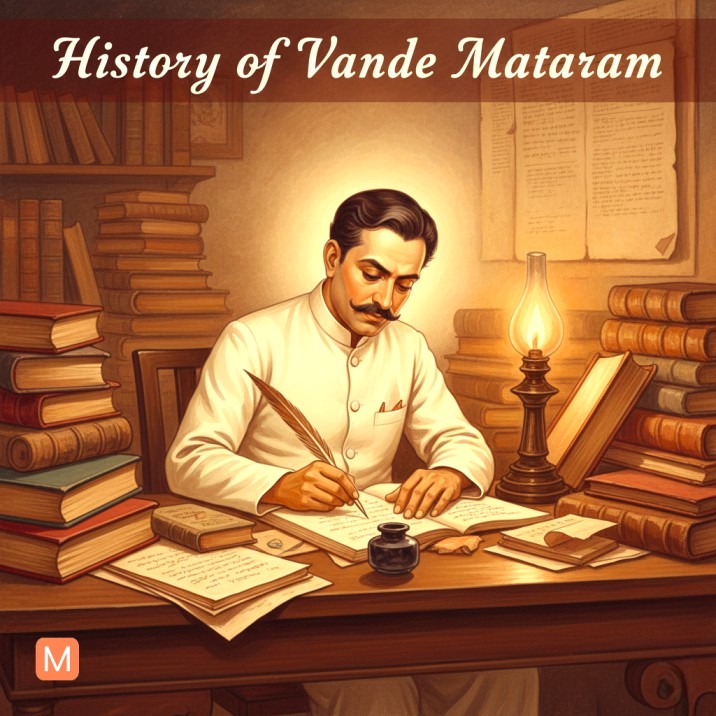
Bankim Chandra Chattopadhyay wrote Vande Mataram in the 1870s.
-
It first appeared in his famous novel Anandamath in 1882.
-
The song was meant to inspire people to fight against British rule.
-
During the freedom movement, it became the war cry of revolutionaries.
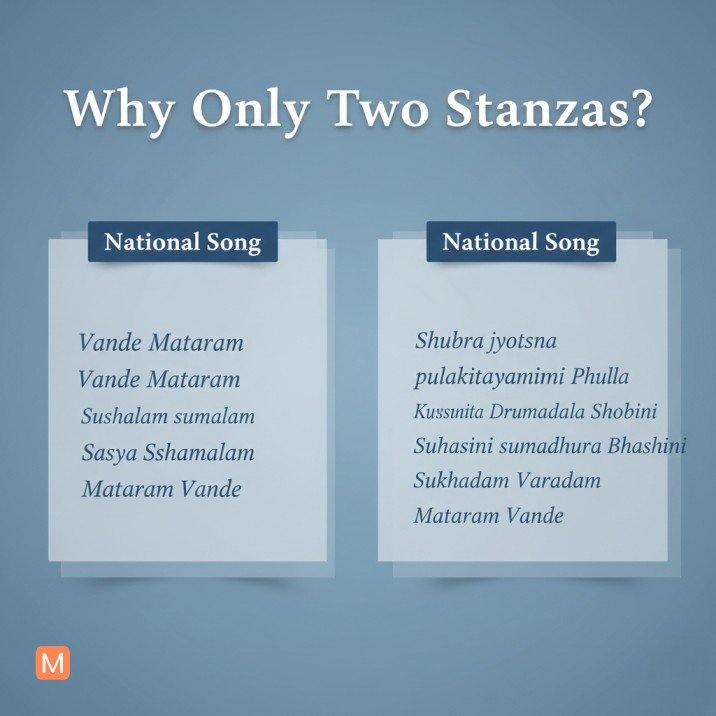
In 1950, independent India declared only the first two stanzas of Vande Mataram as the National Song.
2. Why Was Vande Mataram So Powerful?
-
It united people during protests.
-
Freedom fighters used to shout “Vande Mataram!” at demonstrations.
-
British officials feared gatherings where this song was sung.
This emotional power made it a symbol of patriotism.
3. Then Why the Controversy?
The controversy mainly comes from:
A. Religious References in Later Stanzas
Only the first two stanzas are simple and patriotic.
But the full poem has religious imagery, like:
-
Describing “Mother India” as a Goddess
-
Using terms like Durga, Lakshmi, and divine forms
-
Presenting the country as a deity to be worshipped
Some Muslim groups and leaders in the early 1900s believed that:
-
Worshipping a divine form is against Islamic teachings,
-
And therefore they could respect the song,
-
But not sing certain lines that look like a prayer to a goddess.
This is where the primary objection comes from.
4. Which Lines Are Considered Sensitive?
Muslim bodies objected mainly to the stanzas referring to:
-
“Thou art Durga”
-
“Thou art Lakshmi”
-
“Mother, I bow to thee” (as a form of worship)
These parts appear in the later stanzas, not in the first two.
Therefore, in 1937, the Congress Working Committee decided:
👉 Only the first two stanzas will be sung at national events.
This decision was made to avoid religious conflict during the freedom movement.
5. Why Is It in News Again Today?
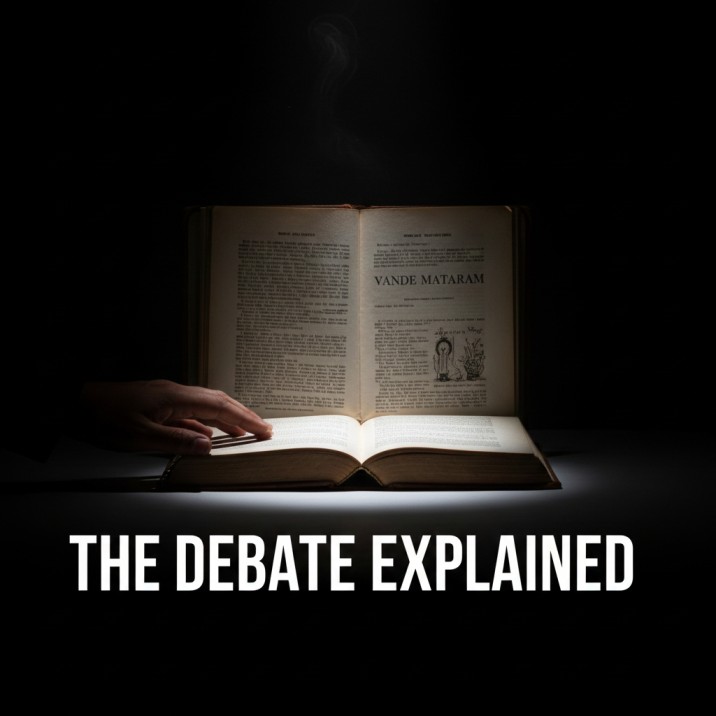
-
2025 marks nearly 150 years of Vande Mataram’s creation.
-
There has been a special debate in Parliament on its history.
-
Some leaders accuse earlier governments of removing stanzas under minority pressure.
-
Others argue that limiting the song to two stanzas was necessary to keep it inclusive for all religions.
This has reopened the old controversy.
6. Is Vande Mataram a Religious Song?
Short answer:
👉 No — the first two stanzas are not religious.
👉 The controversy is about later stanzas, which contain goddess imagery.
The National Song uses only the first two stanzas, which talk about:
-
The land
-
Its beauty
-
Its rivers
-
Its blessings
These are universally acceptable.
7. Why Do Some People Still Object Today?
Some groups say:
-
Singing the full Vande Mataram is equal to doing a Hindu-style prayer, which they cannot perform.
Others say:
-
It is a symbol of India’s freedom, and everyone should sing it proudly.
Both sides have strong emotional reasons.
8. The Balanced View
-
The first two stanzas are historically accepted and patriotic.
-
The debate mainly exists due to religious imagery in the remaining stanzas.
-
Understanding the history reduces misunderstanding.
Vande Mataram should unite us — not divide us.