

Sita Ashtami is a sacred Hindu observance dedicated to Mata Sita, the divine consort of Lord Shri Ram and an eternal symbol of purity, devotion, and inner strength. The day is believed to mark the earthly appearance of Mata Sita, as per traditional Hindu calendars and Panchangs followed mainly in North India.
In 2026, Sita Ashtami will be observed on Monday, 9 February.
The festival falls on the Ashtami Tithi (eighth lunar day) of the Krishna Paksha (waning phase of the Moon) in the Phalguna month, which corresponds to February–March in the Gregorian calendar.
Spiritual Significance of Sita Ashtami
Mata Sita represents the highest ideals of dharma, patience, devotion, and sacrifice. She is revered not only as the wife of Lord Ram but also as a guiding force for spiritual seekers and householders alike.
According to ancient scriptures, King Janaka discovered Sita while ploughing a field, after which she was adopted by him. Because of her divine emergence from the Earth, she is lovingly called Bhumi Putri, the daughter of Mother Earth.
Sita is believed to be an incarnation of Goddess Lakshmi, and worshipping her on Sita Ashtami is considered especially beneficial for marital harmony, emotional stability, and devotion to dharma.
Mata Sita in the Ramayana
The life of Mata Sita, as narrated in the Ramayana, is central to Hindu spiritual thought.
Her abduction by Ravana and her unwavering faith during captivity highlight her immense spiritual strength. It is believed that her chastity and constant meditation on Lord Ram created a divine protective energy, preventing Ravana from ever approaching her.
After her rescue by Lord Ram, Lakshman, Hanuman, and the Vanar Sena, Mata Sita underwent the Agni Pariksha to affirm her purity. Despite this, public doubt later forced Lord Ram to send her away from Ayodhya.
Mata Sita spent her final years in the forest, where she gave birth to Lava and Kusha. Eventually, she returned to Mother Earth, completing her divine journey in the same sacred manner in which it began.
Why Mata Sita’s Life Still Inspires
For centuries, Mata Sita’s life has inspired millions of women and devotees across generations. Her story reflects courage in adversity, dignity in suffering, and unwavering faith in righteousness.
Even today, her life is studied, discussed, and reflected upon worldwide, making her one of the most respected figures in Hindu philosophy and cultural history.
Sita Ashtami vs Sita Navami – Key Difference
Many devotees often confuse Sita Ashtami with Sita Navami, but they are observed differently across regions:
-
Sita Ashtami
Observed in the Phalguna month (Feb–Mar), mainly in North India -
Sita Navami (Sita Jayanti)
Observed in the Vaishakha month (Apr–May), especially in Western and Eastern India
Both days honor Mata Sita but follow different regional traditions.
Sita Ashtami Rituals & Observances
On Sita Ashtami, devotees typically:
-
Wake up early and take a ritual bath
-
Offer flowers, fruits, and sweets to Mata Sita
-
Recite verses from the Ramayana
-
Chant Sita–Ram mantras using a Tulsi Mala or Jaap Counter
-
Observe fasting or maintain a sattvic diet
Devotion performed with sincerity is considered more important than elaborate rituals.
Sita Ashtami Mantra
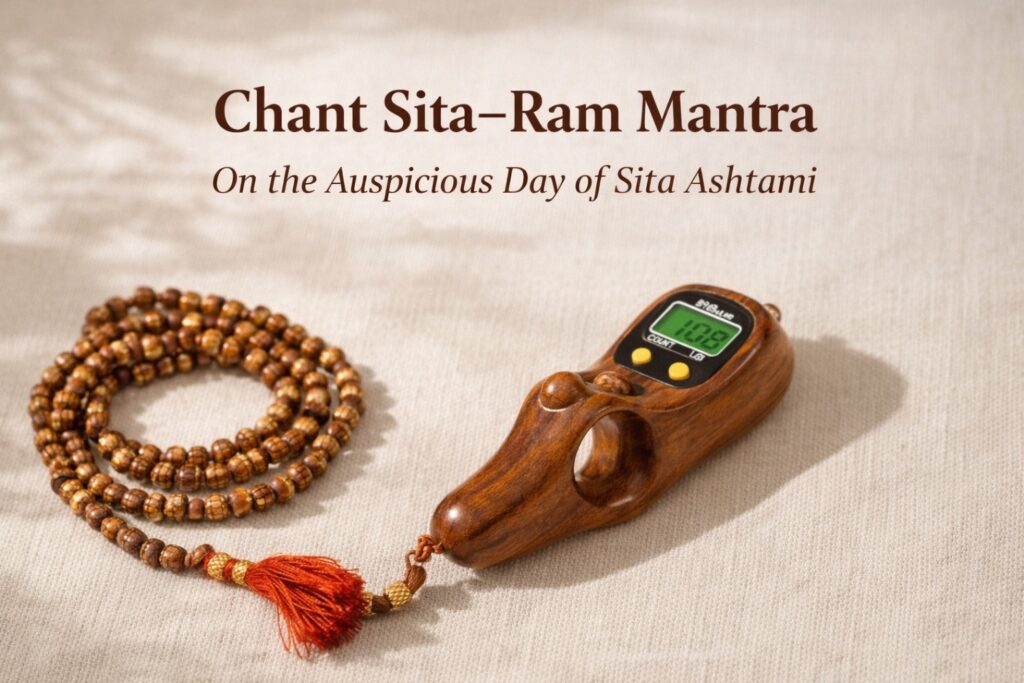
श्रीं सीता-रामाय नमः॥
Devotees are encouraged to chant this mantra 108 times in the morning or during evening prayers.
Benefits of Chanting
-
Helps resolve marriage-related obstacles
-
Strengthens emotional and spiritual bonds
-
Brings peace, stability, and divine grace
-
Supports sincere desire fulfillment
Devotional Note from MalaMantra.in
At MalaMantra.in, we believe that true devotion grows through regular mantra practice. Using authentic Tulsi Malas, Jaap Counters, and sacred accessories can help deepen focus and spiritual discipline during daily sadhana.