
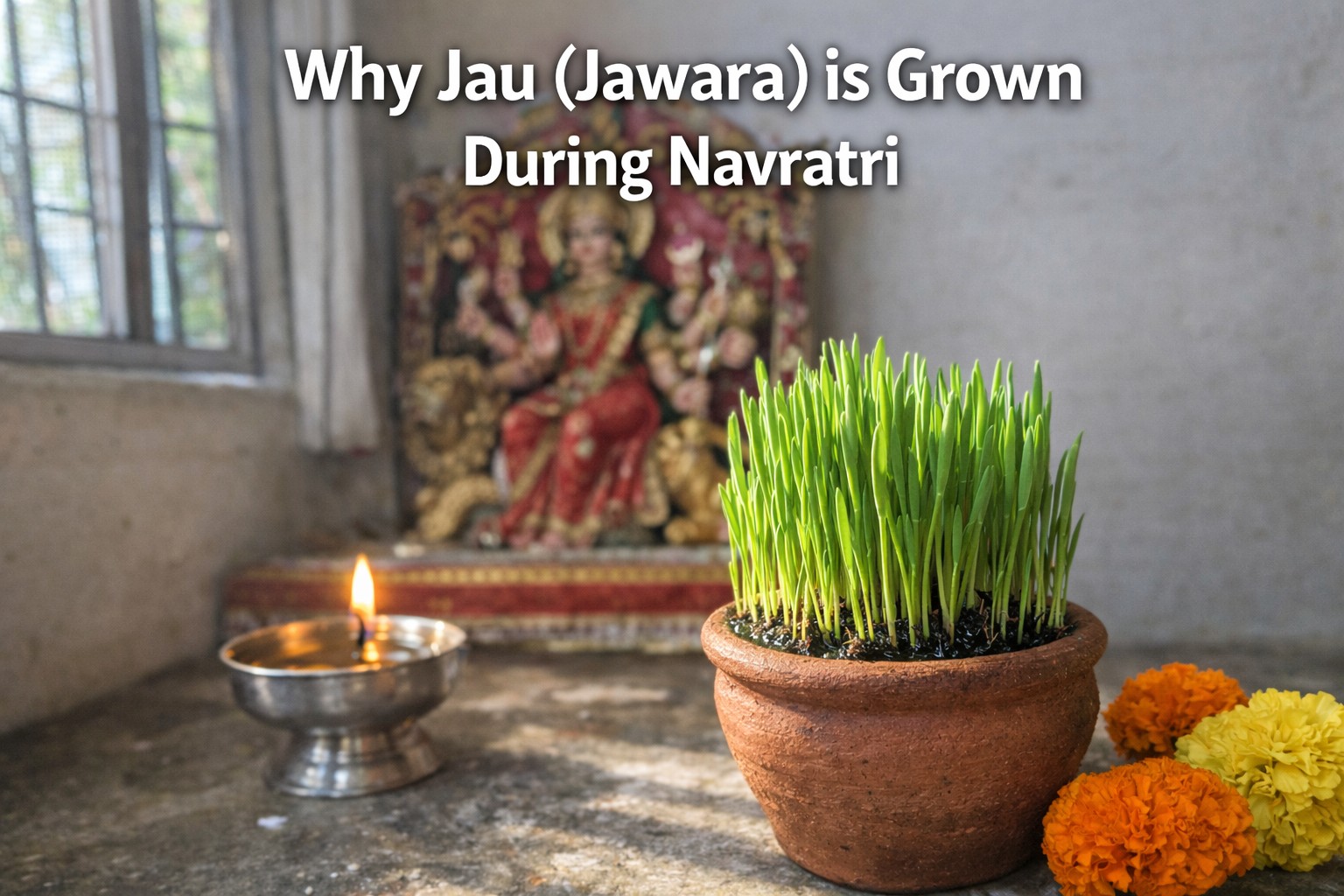
During the sacred festival of Navratri, many Hindu families follow the beautiful tradition of growing Jau (barley) at home. These growing green shoots are commonly known as Jawara or Khetri in different parts of India.
If you have ever visited a home temple during Navratri, you may have noticed a small pot or earthen container filled with fresh green barley sprouts placed near the Goddess Durga idol. This simple yet powerful ritual carries deep spiritual, cultural, and symbolic meaning.
In this article, we will understand why Jau is planted during Navratri, its spiritual significance, benefits, and the proper method to grow healthy Jawara at home.
What is Jawara or Khetri in Navratri?
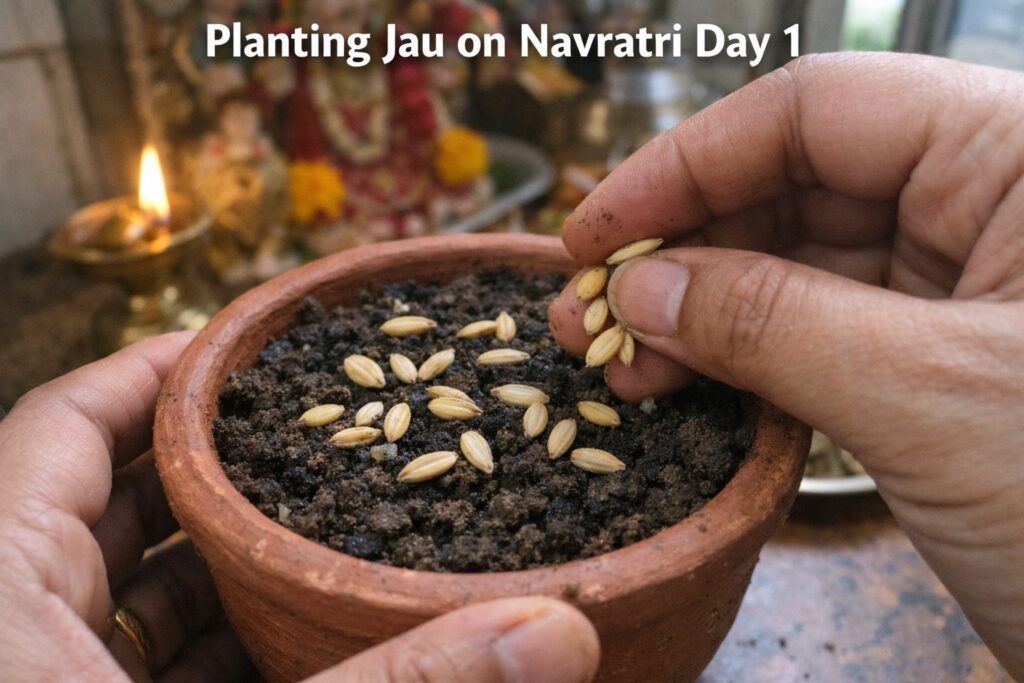
Jawara or Khetri refers to barley seeds (Jau) that are sown on the first day of Navratri and allowed to grow for nine days as part of the festival rituals.
These green shoots symbolize:
-
Prosperity
-
Growth
-
Fertility
-
Blessings of Goddess Durga
The pot in which the barley is grown is usually placed inside the home mandir (temple) where devotees perform daily prayers during Navratri.
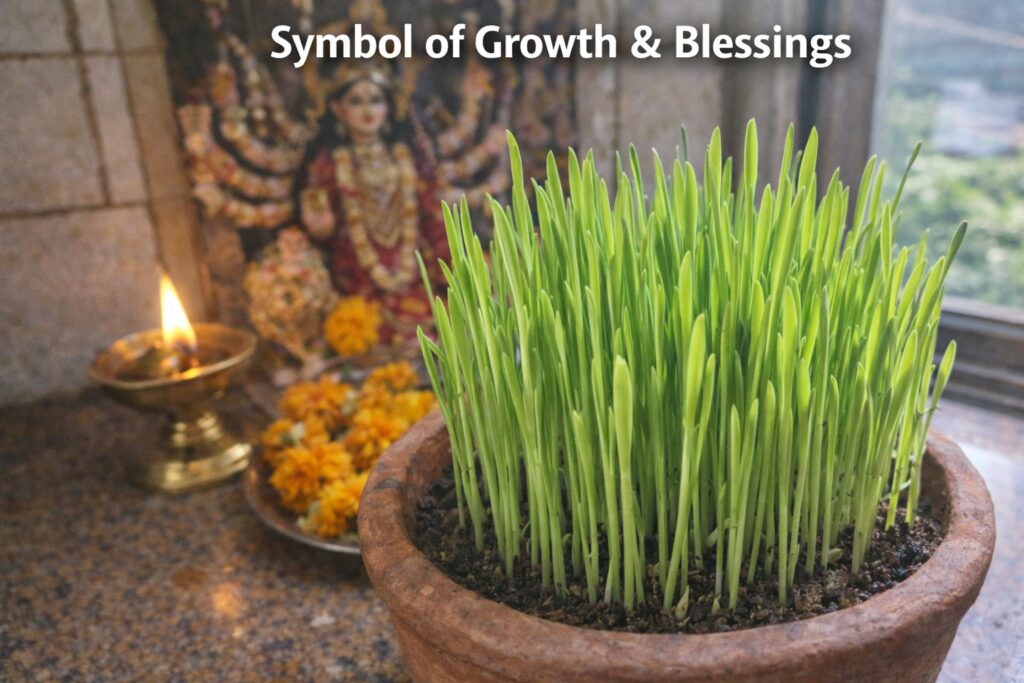
By the end of the ninth day, the barley sprouts become tall and lush green, which is considered a sign of positive energy and divine blessings in the house.
Why Jau (Barley) is Grown During Navratri
There are several spiritual and traditional reasons behind growing Jau during Navratri.
1. Symbol of Growth and Prosperity
Barley grows quickly and represents growth, prosperity, and new beginnings.
Navratri marks the victory of divine energy and the start of positive transformation. Watching the barley grow during these nine days is believed to symbolize progress and success in life.
2. Ancient Vedic Tradition
Growing barley during Navratri is an ancient Vedic practice. In earlier times, farmers used this ritual to predict the quality of upcoming crops.
Healthy green sprouts were believed to indicate good harvest and prosperity in the coming year.
3. Representation of Goddess Durga’s Blessings
The green Jawara shoots are considered a symbol of Goddess Durga’s energy and blessings.
Devotees pray for:
-
happiness
-
prosperity
-
protection
-
success in life
The growing barley reflects divine growth and positivity entering the household.
4. Spiritual Energy and Positivity
It is believed that growing plants inside the prayer space increases positive vibrations.
The fresh green shoots represent life energy, purity, and harmony, which enhances the spiritual environment during Navratri.
Benefits of Growing Jawara During Navratri
Apart from religious importance, this ritual also has several symbolic and practical benefits.
1. Brings Positive Energy in the Home
Green plants naturally create a peaceful and positive atmosphere. Growing Jawara during Navratri is believed to bring good fortune and harmony in the household.
2. Teaches Patience and Devotion
Watching the barley grow each day reminds devotees about faith, patience, and dedication during spiritual practice.
3. Connection with Nature
Navratri Jawara connects people with nature and agricultural traditions, reminding us of the importance of soil, seeds, and growth.
4. Symbol of New Beginnings
The sprouting barley is seen as a sign of new opportunities, fresh starts, and spiritual growth.
How to Grow Jau (Jawara / Khetri) at Home During Navratri
Growing Jawara at home is simple and requires only a few basic items.
Things You Need
-
Barley seeds (Jau)
-
Small earthen pot or container
-
Clean soil or sand
-
Water
-
A place near the home temple
Step-by-Step Method to Grow Navratri Jawara
Step 1: Prepare the Pot
Fill a small pot with clean soil or sand. Traditionally, an earthen pot (mitti ka kalash) is used.
Step 2: Sow the Barley Seeds
Spread the barley seeds evenly on the soil surface.
Cover them lightly with a thin layer of soil.
Step 3: Water the Seeds
Sprinkle a small amount of water gently so the soil becomes moist.
Do not overwater.
Step 4: Place the Pot Near the Temple
Keep the pot near the home mandir where Navratri prayers are performed.
This is usually done on the first day of Navratri (Ghatasthapana).
Step 5: Water Daily
Lightly sprinkle water once every day to keep the soil moist.
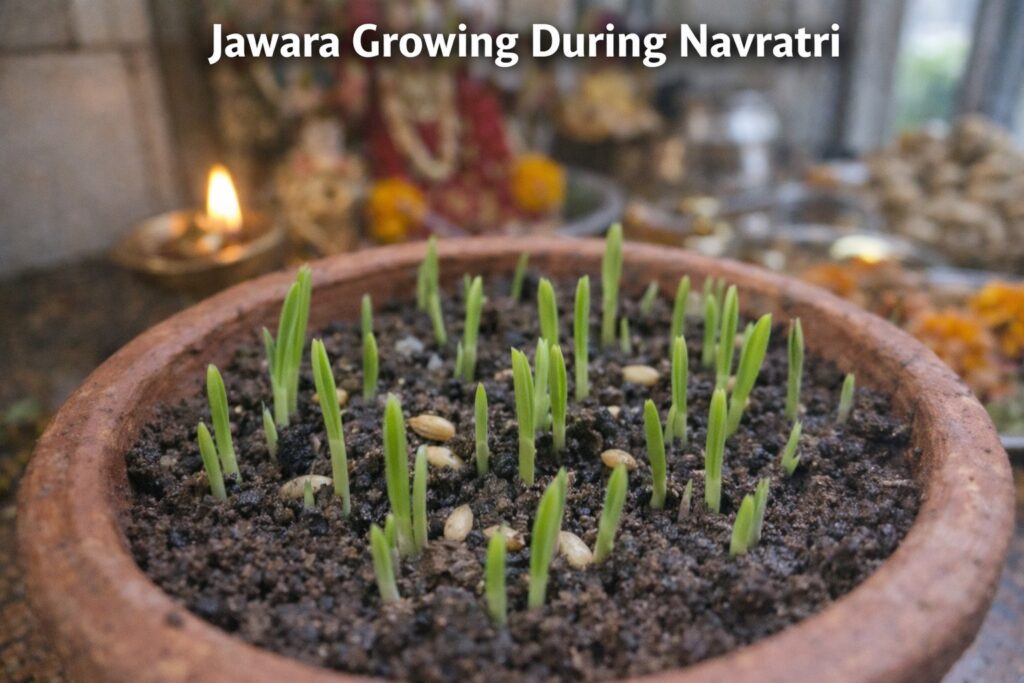
Within 3–4 days, you will start seeing small green sprouts.
Step 6: Observe the Growth
By the ninth day of Navratri, the barley shoots grow tall and green.
These shoots are considered very auspicious and are sometimes distributed as blessings.
What Happens to Jawara After Navratri?
After the festival ends, the grown barley shoots are usually:
-
immersed in flowing water
-
placed in fields
-
or respectfully returned to nature
This act symbolizes gratitude to nature and divine blessings.
Final Thoughts
Growing Jau (Jawara / Khetri) during Navratri is a beautiful tradition that combines spiritual devotion, symbolism, and connection with nature.
The green barley shoots remind us that just like seeds grow into plants, faith and devotion also grow into blessings and prosperity.
This simple ritual continues to be followed in many households across India, making Navratri not only a festival of devotion but also a celebration of growth, life, and positivity.