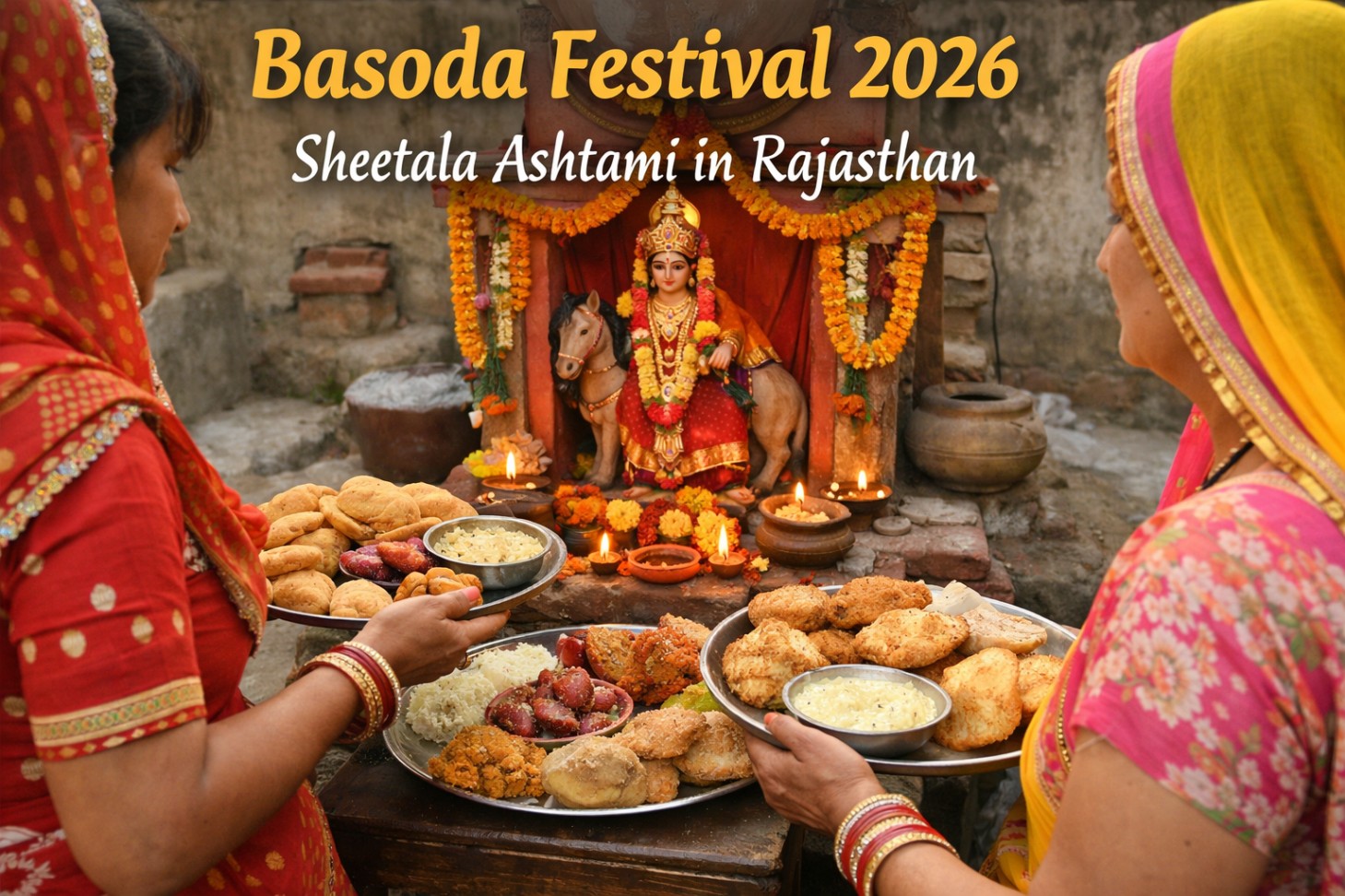
India is known for its diverse cultural traditions, and many festivals are celebrated differently in each region. One such unique festival is Sheetala Ashtami, popularly known as Basoda in Rajasthan.
Basoda is a traditional Hindu festival dedicated to Sheetala Mata, the goddess believed to protect people from diseases and bring health and prosperity. The most unique aspect of this festival is that devotees eat food prepared the previous day, which is why the festival is also known as Basoda (Basi Khana Festival).
Let’s explore the history, significance, rituals, and traditions of the Basoda Festival.
Basoda 2026 Date
In 2026, Sheetala Ashtami (Basoda) will be observed on:
Date: 11 March 2026
Day: Wednesday
The festival is celebrated on the Ashtami Tithi (eighth day) of Krishna Paksha in the month of Chaitra according to the Hindu calendar.
In many parts of Rajasthan, people also observe the festival on the next day, known as Basoda or Basiyoda.
Who Is Sheetala Mata?
Sheetala Mata is revered as the goddess of health, healing, and protection from infectious diseases.
In ancient times, people believed she protected families from diseases like:
-
Smallpox
-
Chickenpox
-
Fever outbreaks
The word “Sheetala” means coolness, symbolizing calmness and healing energy.
Devotees worship the goddess to protect their families and children from illness.
Why Is It Called Basoda?
The word Basoda comes from “Basi Khana”, meaning stale or previously cooked food.
On this day:
-
No fresh food is cooked.
-
All meals are prepared one day before the festival.
-
Devotees offer this food to Sheetala Mata and then eat it as prasad.
This tradition represents the belief that fire and heat should be avoided on this day to keep the goddess calm and pleased.
Basoda Festival Traditions in Rajasthan
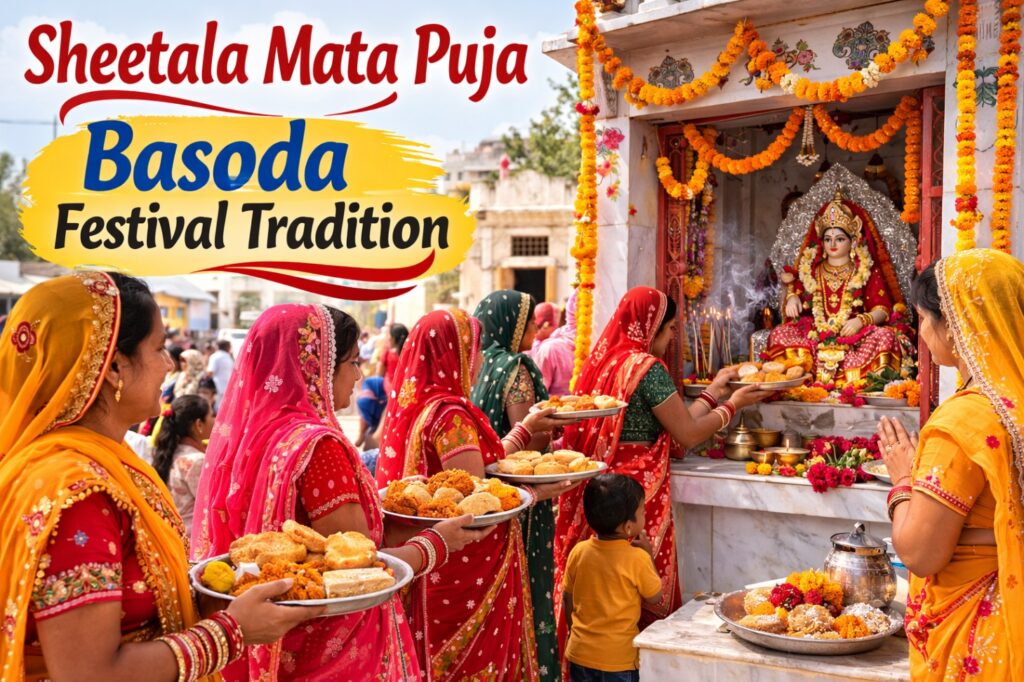
In Rajasthan, Basoda is celebrated mainly by women and mothers who pray for the health and well-being of their children.
The day begins early in the morning with temple visits and prayers.
Common Rituals Include
-
Cooking Food a Day Before
All food for Basoda is prepared on the previous day. -
Offering Food to the Goddess
Devotees visit the temple of Sheetala Mata and offer the prepared food. -
No Cooking on Basoda Day
Lighting the stove or cooking fresh food is avoided. -
Temple Visits
Families visit local temples dedicated to Sheetala Mata. -
Community Celebrations
In villages, people gather together to celebrate and share prasad.
Traditional Basoda Food
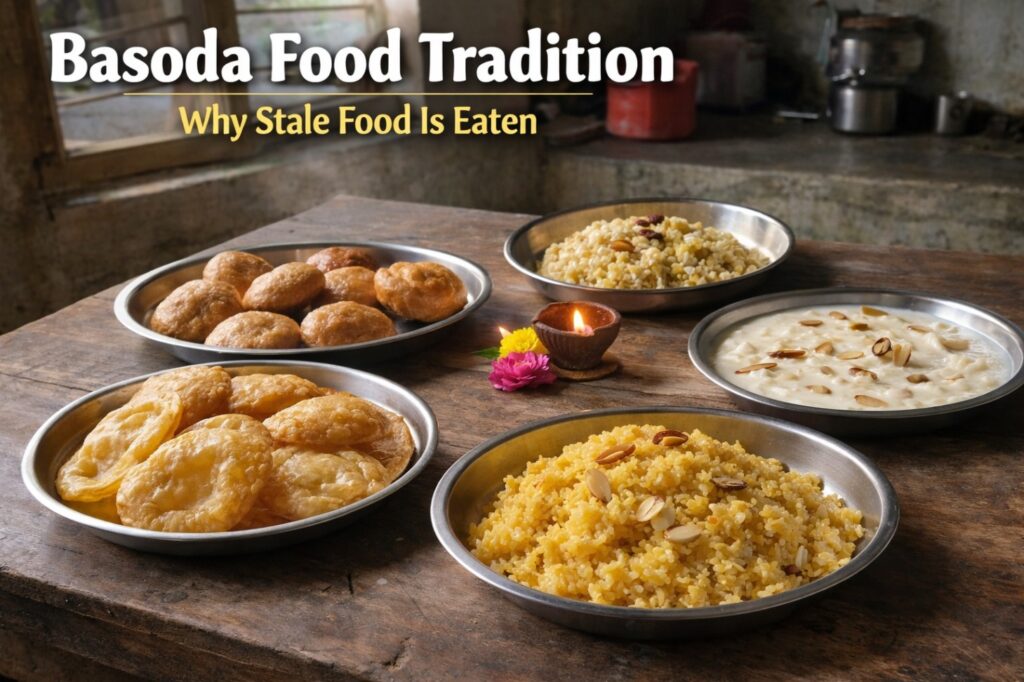
The festival is famous for its basi (stale) food tradition, which is believed to be sacred on this day.
Popular Basoda dishes include:
-
Puri
-
Kachori
-
Sweet Halwa
-
Rabri
-
Gulgule
-
Pakoras
-
Sweet rice
These dishes are prepared a day earlier and offered to Sheetala Mata before being consumed by the family.
Religious Significance of Basoda
Basoda has both religious and cultural significance.
1. Worship of Goddess for Health
Devotees pray to Sheetala Mata for protection from diseases.
2. Symbol of Faith
The tradition of eating stale food shows devotion and trust in the goddess.
3. Community Bonding
Families and communities come together to celebrate the festival.
4. Ancient Health Beliefs
Historically, the festival was linked to preventing disease outbreaks in villages.
Basoda Festival in Other States
Although Basoda is most popular in Rajasthan, similar celebrations of Sheetala Ashtami take place in several other states, including:
-
Gujarat
-
Madhya Pradesh
-
Haryana
-
Uttar Pradesh
However, the tradition of Basoda food and stale meals is especially famous in Rajasthan.
Cultural Importance of Basoda in Rajasthan
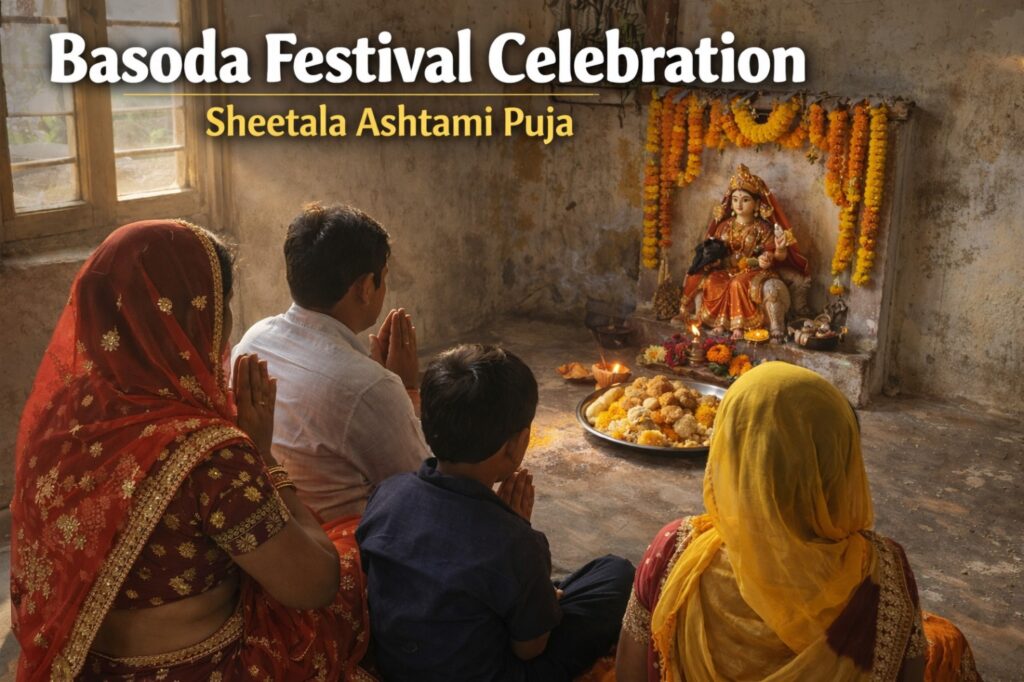
In many towns and villages of Rajasthan, Basoda is celebrated with great devotion.
Local temples of Sheetala Mata become crowded with devotees offering prayers and food. Women sing devotional songs, perform rituals, and pray for their children’s health and happiness.
The festival beautifully reflects Rajasthan’s deep spiritual traditions and community culture.
Conclusion
Basoda, also known as Sheetala Ashtami, is one of the most unique festivals celebrated in Rajasthan. Dedicated to Sheetala Mata, the festival highlights faith, tradition, and cultural heritage.
The practice of eating food prepared a day earlier, offering prayers to the goddess, and avoiding cooking on the festival day makes Basoda a truly distinctive celebration.
For people outside Rajasthan, Basoda offers a fascinating glimpse into the rich traditions of Indian festivals and the deep devotion people have toward protecting their families’ health and well-being.
FAQs About Basoda Festival
What is Basoda Festival?
Basoda is the local name for Sheetala Ashtami, a festival dedicated to Sheetala Mata, celebrated mainly in Rajasthan.
Why do people eat stale food on Basoda?
Eating food prepared the previous day is a traditional offering to the goddess and symbolizes avoiding heat and fire on the festival day.
When is Basoda in 2026?
Basoda will be celebrated on 11 March 2026.
Which goddess is worshipped on Basoda?
Devotees worship Sheetala Mata, the goddess believed to protect people from diseases.