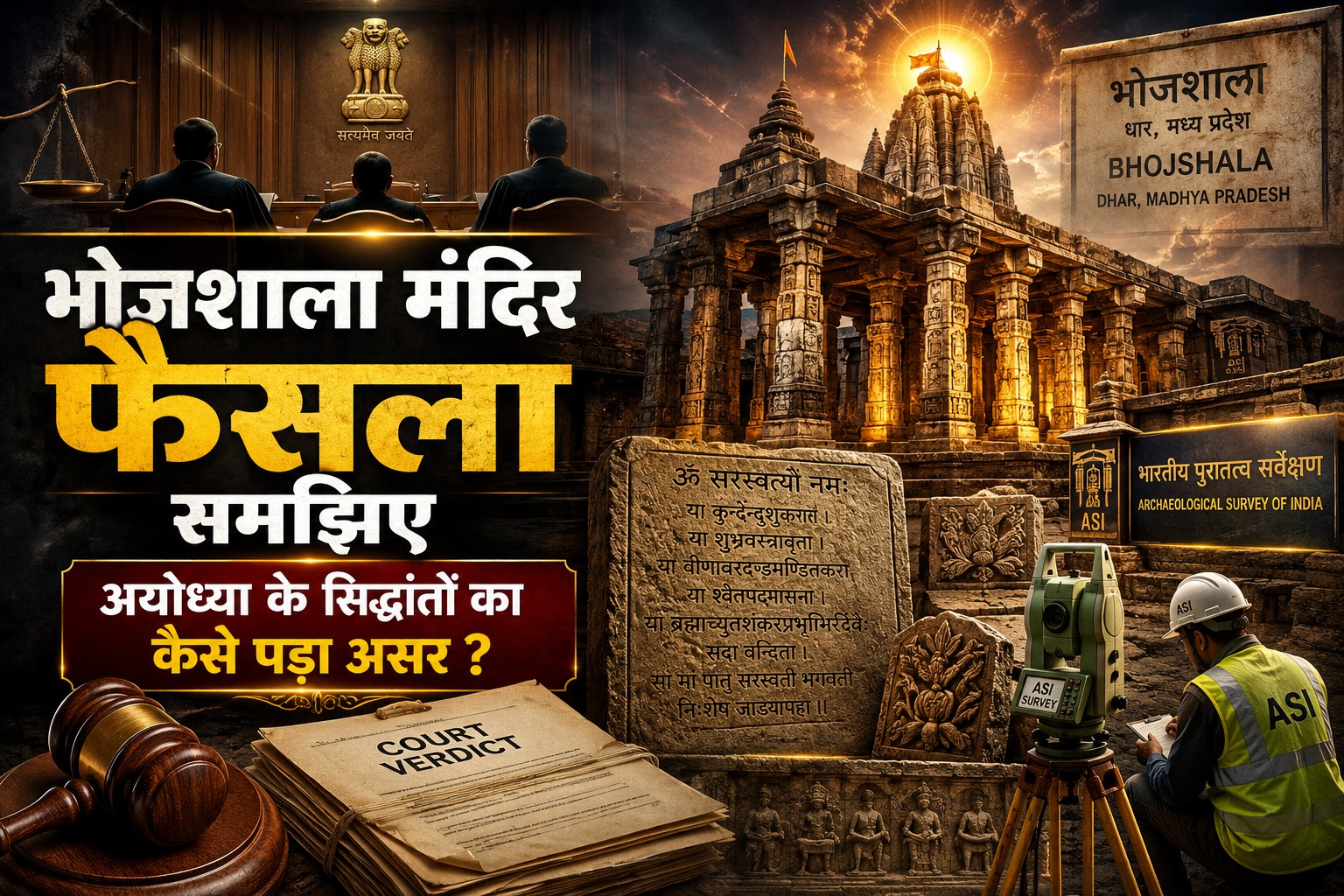
The Bhojshala Temple case has become one of the most discussed religious and legal topics in India after the recent Madhya Pradesh High Court Bhojshala verdict. Many people are comparing it with the Ayodhya Ram Mandir judgment because the court used several similar legal principles while giving its decision.
In this article, we will explain the Bhojshala dispute in simple words, its history, ASI survey findings, the latest Bhojshala news, and how Ayodhya verdict principles influenced the final court decision.
What is Bhojshala?
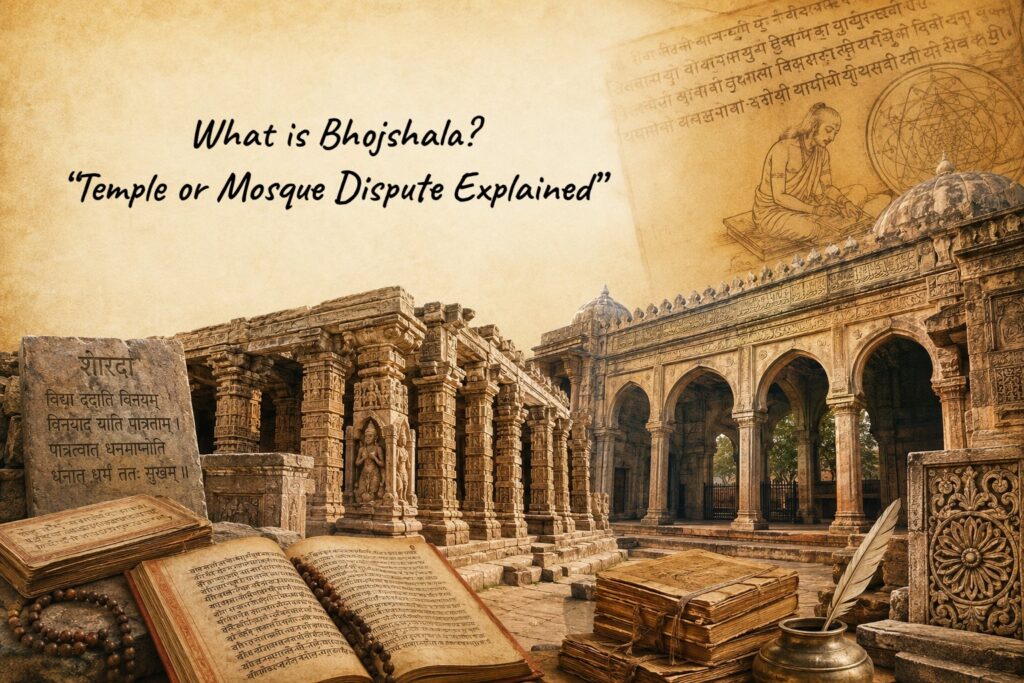
Bhojshala is a historical religious complex located in Dhar district of Madhya Pradesh. Hindus believe it is an ancient Saraswati temple and a center of learning established during the rule of Raja Bhoj.
Muslims refer to the same structure as the Kamal Maula Mosque and have offered prayers there for many years.
Because both communities claimed religious rights over the site, the Bhojshala Dhar controversy continued for decades.
Why is the Bhojshala Temple Case Important?
The Bhojshala temple case became nationally important because it is not only about ownership of land but also about:
- Religious identity of the structure
- Historical evidence
- Archaeological findings
- Worship rights
- Legal interpretation of disputed religious sites
The recent Bhojshala verdict has now changed the future of the site completely.
Bhojshala Dispute Explained in Simple Words
For many years:
- Hindus claimed Bhojshala was originally a Saraswati temple.
- Muslims claimed the structure functioned as the Kamal Maula Mosque.
In 2003, the Archaeological Survey of India (ASI) created a shared arrangement:
- Hindus were allowed worship on Tuesdays and Basant Panchami.
- Muslims were allowed Friday namaz.
This arrangement continued until the latest Madhya Pradesh High Court Bhojshala verdict.
What Did the Court Decide?
The court declared that Bhojshala is primarily a Hindu temple dedicated to Goddess Saraswati.
The judgment:
- Recognized the site as a temple
- Ended the previous shared worship arrangement
- Allowed Hindu worship rights at the complex
- Recommended alternative arrangements for mosque prayers elsewhere
This decision immediately became major Bhojshala temple latest news across India.
Why Was Bhojshala Declared a Temple?
Many people are searching:
“Why was Bhojshala declared a temple?”
The court relied on multiple forms of evidence:
1. ASI Survey Report
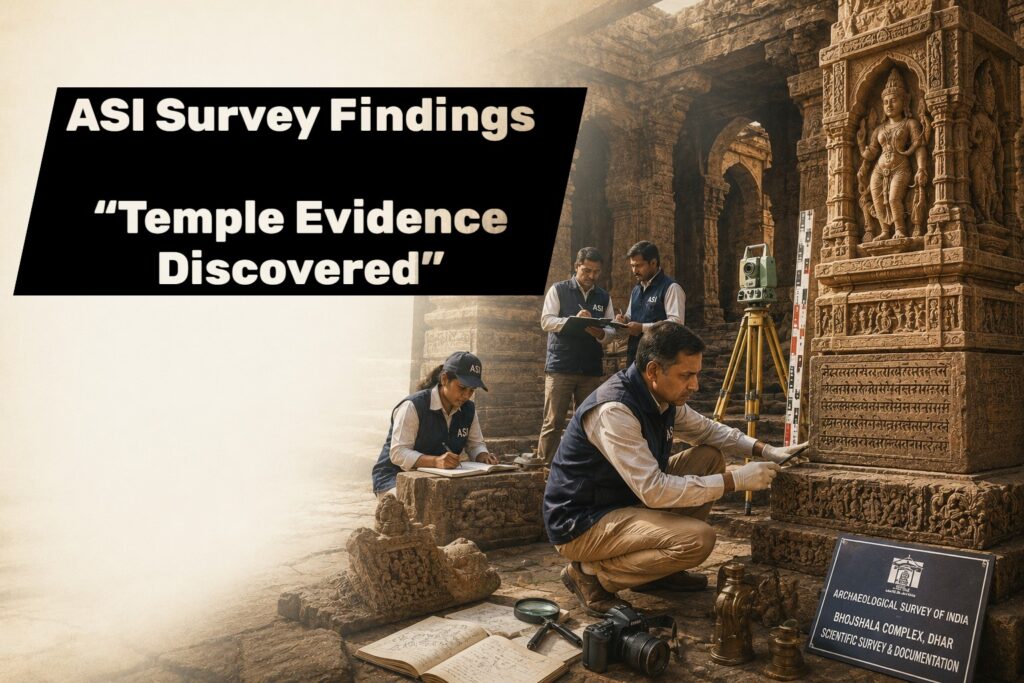
The Bhojshala ASI survey report reportedly found:
- Temple-style pillars
- Hindu carvings and sculptures
- Sanskrit inscriptions
- Architectural patterns linked to temples
The court treated these findings as important evidence.
2. Historical Records
Old gazetteers, documents, and historical texts were studied during the hearing.
The court observed that many historical references described Bhojshala as a Saraswati temple and educational center.
3. Continuous Hindu Worship
One major legal point was the long-standing belief and worship associated with Goddess Saraswati at the site.
The court said continuous faith and religious association matter in civil disputes involving religious structures.
How Ayodhya Verdict Principles Influenced the Bhojshala Case
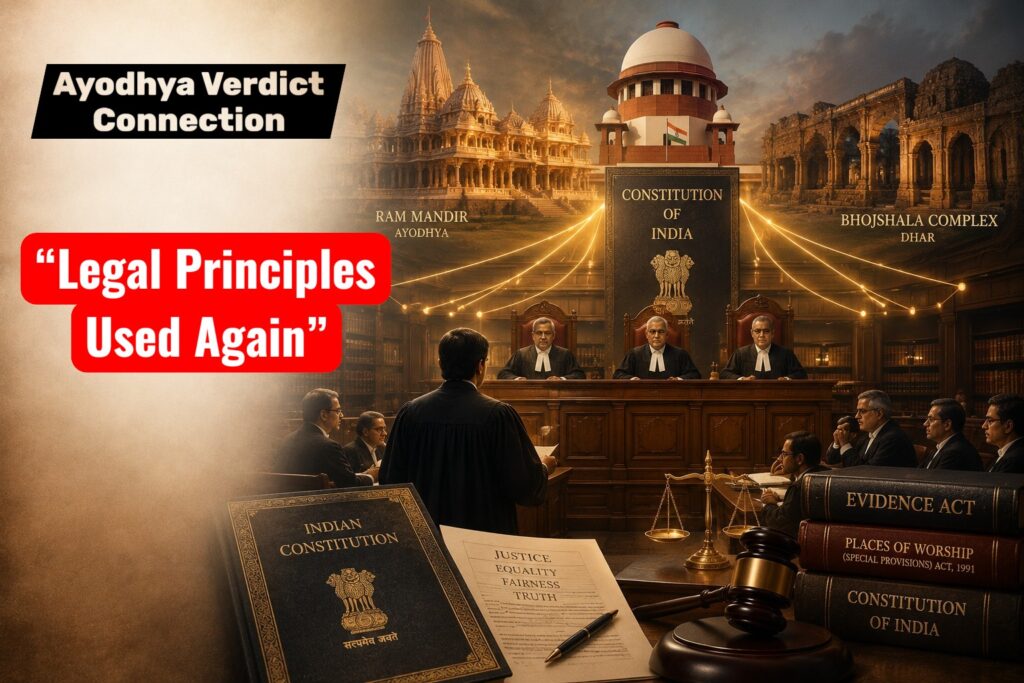
One of the biggest reasons this case gained attention is because the court reportedly used Ayodhya verdict principles while deciding the Bhojshala dispute.
The Ayodhya Ram Mandir verdict by the Supreme Court established several important legal principles for religious disputes.
The Bhojshala judgment applied similar ideas.
Key Ayodhya Principles Used in the Bhojshala Verdict
Archaeological Evidence Matters
Like the Ayodhya case, the court accepted ASI reports and archaeological findings as important supporting evidence.
Temple remains, carvings, and inscriptions played a major role.
Faith and Historical Continuity
The court considered whether a community had continuously associated faith with the site.
This principle was also important in the Ayodhya judgment.
Courts Examine Evidence, Not Religion
The court clarified that it was not deciding which religion is correct.
Instead, it examined:
- Historical records
- Worship patterns
- Archaeological evidence
- Physical structure
- Documentary proof
Preponderance of Probability
Another legal principle used was “preponderance of probability.”
This means courts decide what appears more likely based on available evidence rather than requiring impossible absolute proof.
This approach was also central to the Ayodhya verdict.
Bhojshala Temple Latest News
After the Bhojshala verdict:
- Hindu devotees gathered at the complex for prayers
- Religious organizations welcomed the decision
- Some Muslim organizations criticized the ruling
- Legal experts began debating its impact on future religious disputes in India
The case has now become one of the most talked-about religious and constitutional discussions in the country.
Why the Verdict is Controversial
Critics believe the ruling may encourage more disputes involving historical religious sites.
Some organizations also expressed concern regarding the Places of Worship Act, 1991, which was created to maintain the religious status of places as they existed after Independence.
Supporters of the decision argue that:
- The ruling is evidence-based
- ASI findings were significant
- Historical records strongly supported the temple claim
Bhojshala Case and the Future
The Bhojshala temple case may influence future legal debates involving disputed historical structures in India.
Because the judgment used legal reasoning similar to the Ayodhya verdict, many legal experts believe it could become an important reference point in future court cases.
Final Conclusion
The Bhojshala dispute explained in simple words is essentially a legal battle over the religious identity of a historical structure in Dhar, Madhya Pradesh.
The court concluded that available historical, archaeological, and worship evidence strongly supported the Hindu temple claim. By using Ayodhya verdict principles, the court declared Bhojshala a Saraswati temple and ended the earlier shared worship arrangement.
As discussions continue across the country, the Bhojshala verdict has become a major moment in India’s ongoing debate about history, faith, law, and archaeology.