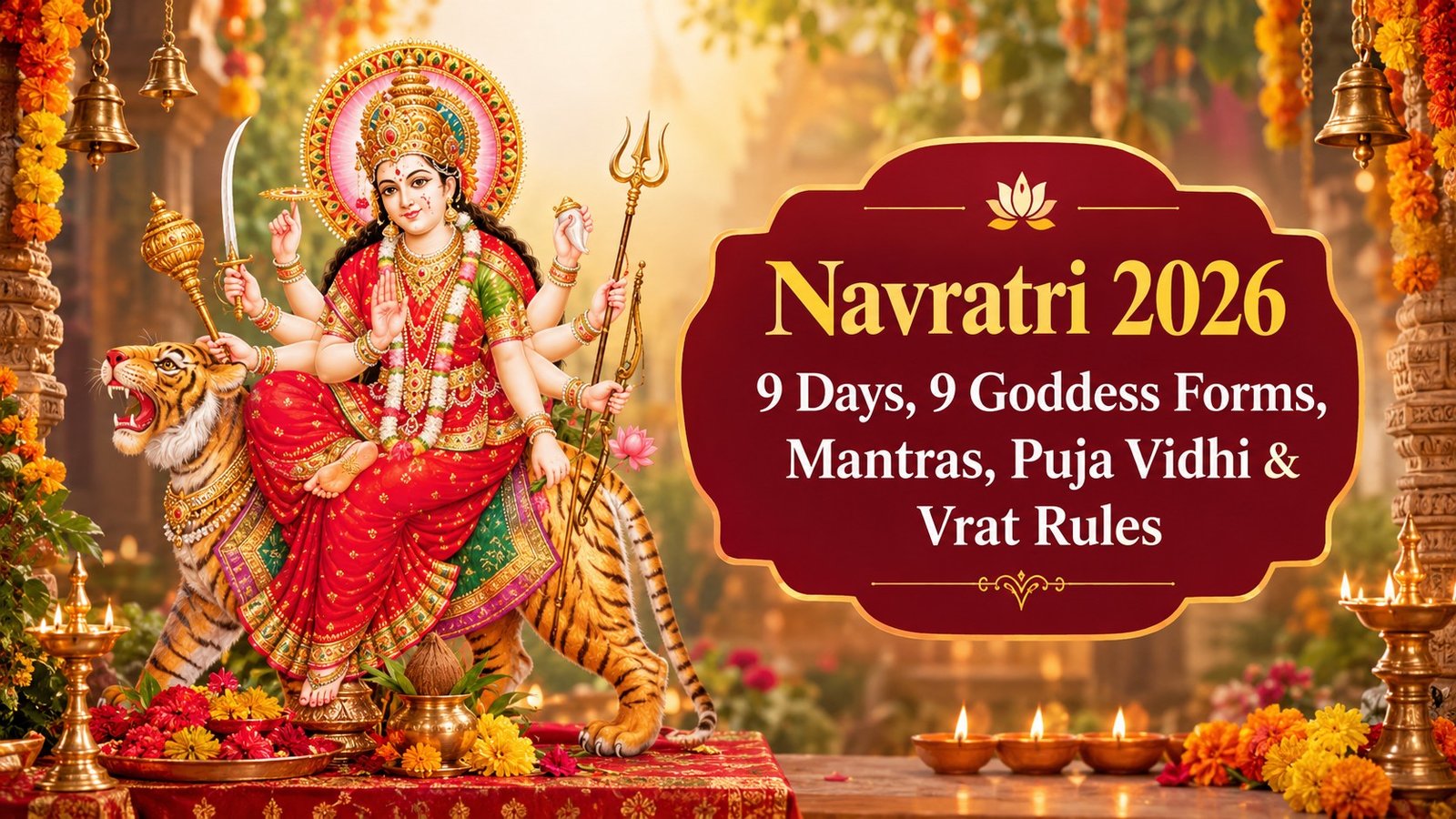
Navratri is one of the most important Hindu festivals dedicated to Goddess Durga and her different forms. The word Navratri means “nine nights,” and during Sharad Navratri, devotees worship the nine forms of Goddess Durga, traditionally known as Navdurga.
In 2026, Sharad Navratri begins on Sunday, October 11, 2026. The nine-day worship period continues through Navami, followed by Vijayadashami or Dussehra.
During these nine days, devotees perform puja, observe vrat or fasting according to their tradition, chant mantras, offer bhog, perform aarti and spend more time in prayer and naam jaap.
In this guide, we will cover the Navratri 2026 dates, nine forms of Goddess Durga, daily mantras, puja vidhi, fasting rules, bhog and important rituals.
When Is Navratri 2026?
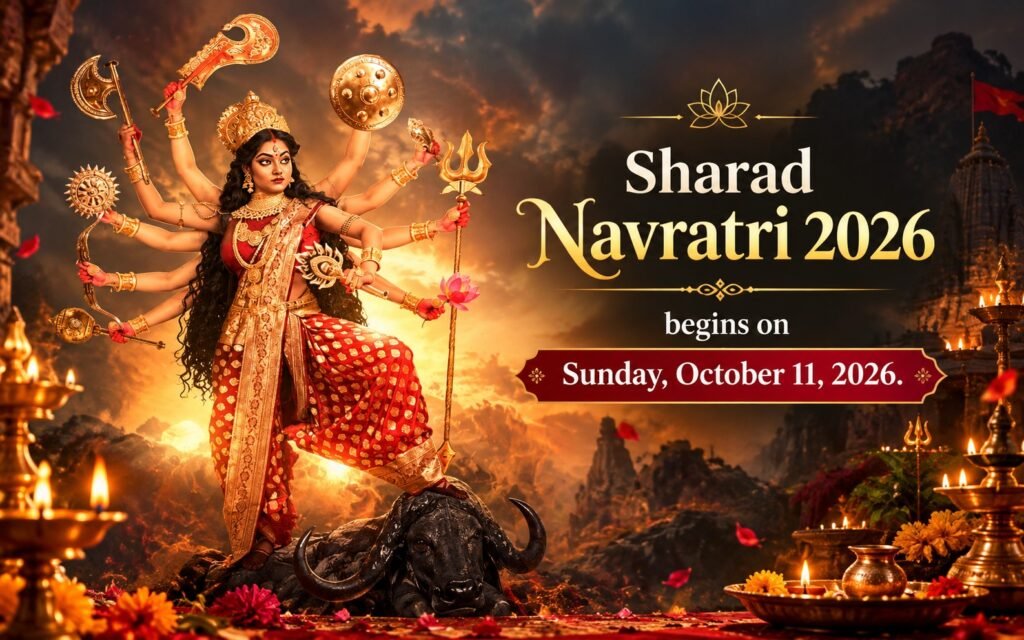
Sharad Navratri 2026 begins on Sunday, October 11, 2026.
For Jaipur, Rajasthan, the Ghatasthapana muhurat on October 11 is listed as 6:24 AM to 10:17 AM, with an Abhijit muhurat of 11:50 AM to 12:37 PM. Puja timings can vary by location, so devotees should check their local panchang before performing time-sensitive rituals.
Important Navratri 2026 Dates
| Day | Date | Goddess |
|---|---|---|
| Day 1 | October 11, 2026 | Maa Shailputri |
| Day 2 | October 12, 2026 | Maa Brahmacharini |
| Day 3 | October 13, 2026 | Maa Chandraghanta |
| Day 4 | October 14, 2026 | Maa Kushmanda |
| Day 5 | October 15, 2026 | Maa Skandamata |
| Day 6 | October 16, 2026 | Maa Katyayani |
| Day 7 | October 17, 2026 | Maa Kalaratri |
| Day 8 | October 18, 2026 | Maa Mahagauri |
| Day 9 | October 19, 2026 | Maa Siddhidatri |
| Vijayadashami | October 20, 2026 | Dussehra |
The first day is observed with Ghatasthapana and Shailputri Puja. Durga Ashtami and Maha Navami fall on October 19 in the 2026 calendar used by Drik Panchang.
Why Is Navratri Celebrated?
Navratri is dedicated to the worship of Goddess Durga and her manifestations. Hindu traditions associate the festival with the triumph of divine power over evil, particularly Goddess Durga’s victory over Mahishasura.
The festival is observed in different ways throughout India. In many regions, devotees worship the nine forms of Durga, while celebrations can include Durga Puja, Garba, Dandiya, fasting, devotional singing and special temple rituals.
The exact rituals and even the forms worshipped can vary according to regional and religious traditions. The nine-form sequence commonly followed in North India is Shailputri, Brahmacharini, Chandraghanta, Kushmanda, Skandamata, Katyayani, Kalaratri, Mahagauri and Siddhidatri.
9 Days of Navratri 2026
Day 1 – Maa Shailputri
The first day of Navratri is dedicated to Maa Shailputri. The name Shailputri means “daughter of the mountain.” She is traditionally associated with Parvati in this form.
Devotees begin Navratri by performing Ghatasthapana and worshipping Maa Shailputri.
Simple mantra:
Om Devi Shailputryai Namah
Devotees may also spend time doing naam jaap and Durga naam smaran after the puja.
Day 2 – Maa Brahmacharini
The second day is dedicated to Maa Brahmacharini. This form is associated with penance, devotion and spiritual discipline.
Simple mantra:
Om Devi Brahmacharinyai Namah
Many devotees use this day to focus on prayer, self-discipline and meditation.
Day 3 – Maa Chandraghanta
The third day is dedicated to Maa Chandraghanta, traditionally depicted with a crescent moon on her forehead.
She is associated with courage and protection in devotional traditions.
Simple mantra:
Om Devi Chandraghantayai Namah
Devotees can chant the mantra during morning or evening puja.
Day 4 – Maa Kushmanda
The fourth day is dedicated to Maa Kushmanda.
Her name is traditionally associated with cosmic energy and the creation of the universe.
Simple mantra:
Om Devi Kushmandayai Namah
Devotees may offer bhog and perform aarti after the puja.
Day 5 – Maa Skandamata
The fifth day is dedicated to Maa Skandamata, the mother of Lord Skanda or Kartikeya.
She is worshipped as a motherly form of Goddess Durga.
Simple mantra:
Om Devi Skandamatayai Namah
Devotees may offer fruits or other traditional bhog according to their family tradition.
Day 6 – Maa Katyayani
The sixth day is dedicated to Maa Katyayani.
She is an important form of Goddess Durga and is traditionally associated with the destruction of Mahishasura.
Simple mantra:
Om Devi Katyayanyai Namah
Many devotees also recite Durga-related stotras or spend additional time in naam jaap.
Day 7 – Maa Kalaratri
The seventh day is dedicated to Maa Kalaratri, one of the fierce forms of Goddess Durga.
She is traditionally worshipped as a powerful form associated with the removal of darkness and protection from negative forces.
Simple mantra:
Om Devi Kalaratryai Namah
Devotees can perform their regular puja and chant the mantra with concentration.
Day 8 – Maa Mahagauri
The eighth day is dedicated to Maa Mahagauri.
Ashtami is an important day of Navratri and, depending on the tradition, may include special puja, Kanya Puja and other rituals.
Simple mantra:
Om Devi Mahagauryai Namah
Devotees may offer coconut, fruits or other traditional bhog.
Day 9 – Maa Siddhidatri
The ninth and final day is dedicated to Maa Siddhidatri.
She is traditionally worshipped as the ninth form of Navdurga.
Simple mantra:
Om Devi Siddhidatryai Namah
Maha Navami may include special puja, homa and devotional activities depending on the family and regional tradition.
The nine forms and their day-wise sequence are documented in traditional Navratri references, although different sampradayas and regions can follow different deity lists.
Navratri 2026 Puja Vidhi
The exact puja procedure can vary between families and traditions. A simple home puja can include the following steps:
1. Clean the Puja Area
Clean the place where you will perform Navratri puja. Take a bath and wear clean clothes before beginning the worship.
2. Set Up the Puja
Place an image or murti of Goddess Durga on a clean platform. Keep flowers, fruits, diya, incense and other puja items nearby.
3. Perform Ghatasthapana
On the first day, many devotees perform Ghatasthapana, also called Kalash Sthapana. The Kalash is installed according to the prescribed ritual and muhurat.
The exact procedure and auspicious timing should be followed according to your local panchang and family tradition.
4. Light a Diya
Light a diya before the Goddess. Some devotees maintain a continuous jyoti throughout the nine days according to their tradition.
5. Offer Flowers and Bhog
Offer fresh flowers, fruits and suitable bhog to Maa Durga.
6. Chant a Mantra
You can chant a simple Durga mantra or the mantra associated with the day’s Navdurga form.
For example:
Om Dum Durgayai Namah
You can chant it slowly and with concentration.
7. Perform Aarti
Complete the puja with Durga Aarti or another aarti followed by pranam.
Navratri Vrat Rules 2026
Fasting during Navratri is a personal religious practice, and rules can differ considerably between regions and families.
Common practices may include:
- Avoiding grains and regular cereals during the fast.
- Eating fruits and permitted vrat foods.
- Using rock salt instead of regular table salt.
- Avoiding onion and garlic according to one’s tradition.
- Avoiding meat, fish and eggs.
- Drinking sufficient water.
- Eating foods such as fruits, milk, curd, makhana, sabudana, kuttu and singhara according to one’s fasting tradition.
- Maintaining a simple and devotional routine.
- Spending time in prayer, meditation or naam jaap.
Not everyone observes the same type of fast. Some devotees observe a strict fast, while others eat one sattvic meal or follow a modified fast.
Therefore, it is best to follow your family tradition, sampradaya and personal dietary requirements rather than assuming that one fasting rule applies to everyone.
People with medical conditions, those taking regular medicines, children, older adults and pregnant or breastfeeding women should follow appropriate medical and dietary guidance rather than undertaking a restrictive fast without professional advice.
What Can You Eat During Navratri Vrat?
Commonly used vrat foods include:
- Fruits
- Milk and dairy products
- Makhana
- Sabudana
- Kuttu flour
- Singhara flour
- Rajgira
- Potatoes and some other permitted vegetables
- Peanuts
- Rock salt
Food traditions vary, so check the rules followed by your family or local tradition.
Navratri Bhog
Offering bhog to Goddess Durga is an important part of devotional practice.
One traditional reference associates different offerings with the nine forms of Navdurga, including ghee for Shailputri, sugar for Brahmacharini, kheer for Chandraghanta, malpua for Kushmanda, banana for Skandamata, honey for Katyayani, jaggery for Kalaratri, coconut for Mahagauri and sesame seeds for Siddhidatri. These offerings are traditions rather than universal rules, so families may follow different bhog practices.
The most important part of bhog is the spirit of devotion and offering.
Can You Do Naam Jaap During Navratri?
Yes. Naam jaap and mantra chanting are commonly included in devotional practices during Navratri.
You can choose a mantra according to your faith and tradition.
For devotees of Goddess Durga, one simple mantra is:
Om Dum Durgayai Namah
You can chant it using a japa mala, keeping your attention on the mantra rather than focusing only on the number of repetitions.
A simple daily routine can be:
Morning:
Bath → Puja → Diya → Mantra Jaap → Aarti
Evening:
Diya → Durga mantra → Naam Jaap → Aarti
If you use a japa mala, traditionally the mala is held in the right hand and the beads are counted using the thumb and middle finger. Different traditions may have their own practices.
How Many Times Should You Chant a Durga Mantra?

There is no single number that every devotee must follow.
You may choose a manageable count such as:
- 11 repetitions
- 21 repetitions
- 51 repetitions
- 108 repetitions
- One or more mala rounds
The key is consistency, attention and devotion.
If you are new to mantra chanting, starting with one mala of 108 repetitions can be a simple routine.
Navratri and Meditation
Navratri can also be a meaningful period for meditation and quiet prayer.
You can sit in a clean and peaceful place, light a diya, take a few slow breaths and then begin your mantra jaap.
Instead of rushing through a large number of repetitions, try to maintain awareness of each mantra.
Even 10–15 minutes of peaceful naam jaap can become a regular devotional practice.
What Should You Avoid During Navratri?
Practices vary, but devotees who observe Navratri traditionally may choose to avoid:
- Non-vegetarian food
- Alcohol and intoxicants
- Foods prohibited by their fasting tradition
- Excessive consumption of processed or heavy foods
- Unnecessary arguments and negative behavior
- Disrespectful conduct during puja
Navratri is not only about food restrictions. For many devotees, it is also a period of prayer, discipline, self-reflection and devotion.
Why Are There 9 Forms of Goddess Durga?
The nine forms are collectively called Navdurga.
The commonly followed sequence is:
- Shailputri
- Brahmacharini
- Chandraghanta
- Kushmanda
- Skandamata
- Katyayani
- Kalaratri
- Mahagauri
- Siddhidatri
Each form represents a different aspect of the Goddess in Hindu devotional traditions. Different regions and sampradayas may follow different forms or traditions.
Navratri 2026: A Simple Daily Routine
If you want to keep your Navratri practice simple, you can follow this routine:
Step 1: Wake up and take a bath.
Step 2: Clean your puja space.
Step 3: Light a diya.
Step 4: Offer flowers and bhog.
Step 5: Worship the Navdurga form associated with that day.
Step 6: Chant the day’s mantra.
Step 7: Do naam jaap using a japa mala if you prefer.
Step 8: Perform aarti.
Step 9: Maintain a peaceful and devotional mindset throughout the day.
You do not need to make the routine complicated. Regular prayer and sincere devotion are central to the practice.
Frequently Asked Questions About Navratri 2026
When does Navratri 2026 start?
Sharad Navratri 2026 begins on October 11, 2026, with Ghatasthapana and Shailputri Puja.
When is Durga Ashtami 2026?
Durga Ashtami falls on October 19, 2026, according to the cited 2026 Navratri calendar. Maha Navami is also observed on October 19 in this calendar.
When is Maha Navami 2026?
Maha Navami is on October 19, 2026 according to the cited calendar. Navami Homa is listed for October 20.
What are the 9 forms of Goddess Durga?
The nine commonly worshipped forms are Shailputri, Brahmacharini, Chandraghanta, Kushmanda, Skandamata, Katyayani, Kalaratri, Mahagauri and Siddhidatri.
Can I chant a mantra during Navratri fasting?
Yes. Mantra chanting and naam jaap can be included in a Navratri devotional routine. Choose a mantra appropriate to your tradition and chant with concentration.
Can I use a japa mala during Navratri?
Yes. Many devotees use a japa mala for mantra or naam jaap. You can choose a mala according to your spiritual tradition and personal practice.
What food can I eat during Navratri vrat?
Common vrat foods include fruits, milk, makhana, sabudana, kuttu, singhara, rajgira and foods prepared with rock salt. Exact rules vary by tradition.
Is Navratri only about fasting?
No. Navratri includes many devotional practices, including Goddess worship, puja, aarti, mantra chanting, naam jaap, meditation and other regional traditions. Fasting is one part of the observance.
Final Thoughts
Navratri 2026 is an opportunity to spend nine days in devotion to the different forms of Goddess Durga. Whether you observe a strict vrat, perform a simple home puja, chant a mantra or spend a few minutes doing naam jaap, the festival can be observed according to your family tradition and spiritual practice.
The most important thing is not to make the rituals unnecessarily complicated. Keep your puja sincere, follow the traditions that are meaningful to your family and use Navratri as a time for prayer, discipline and devotion.
Jai Mata Di!