
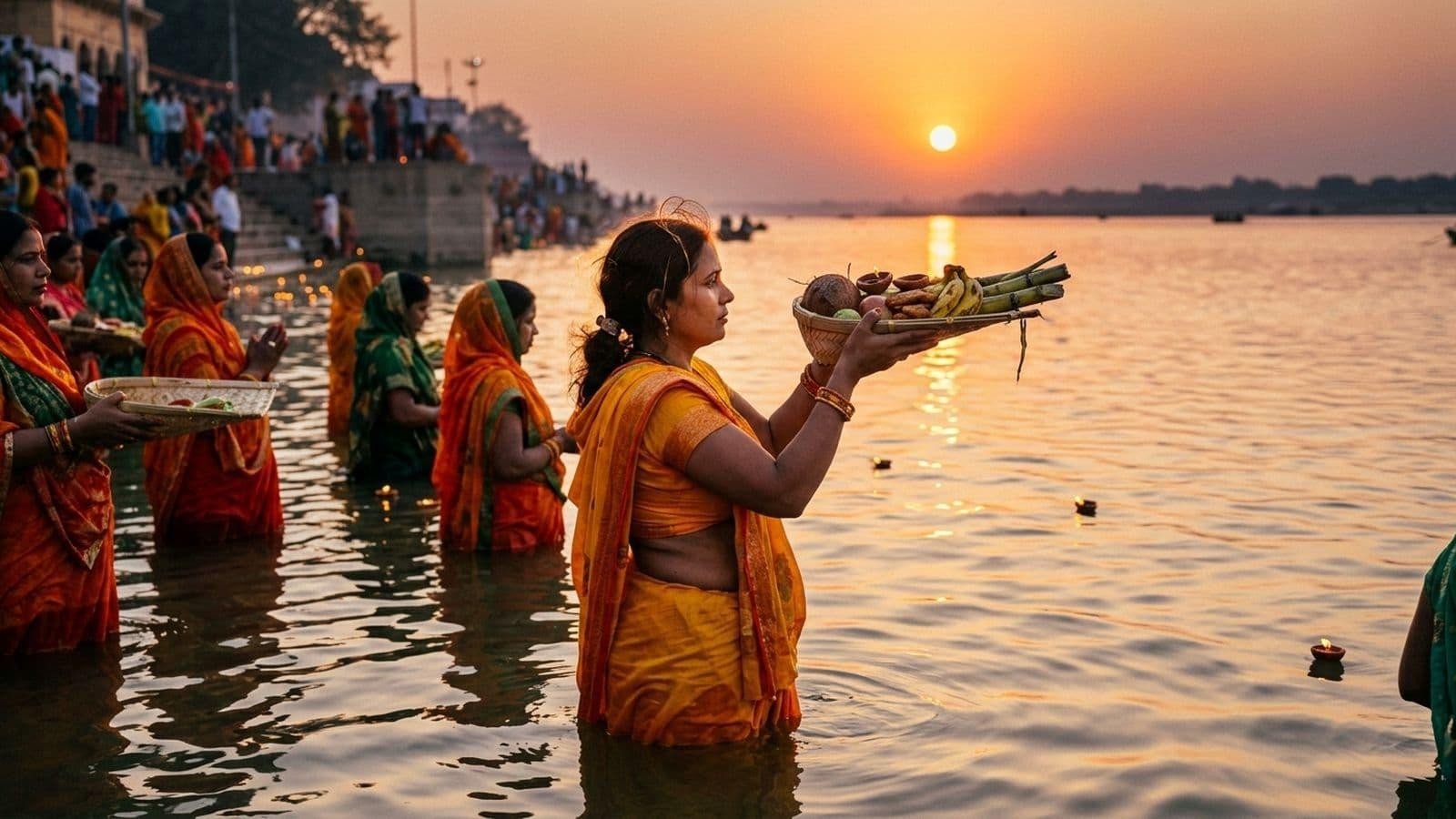
Chhath Puja is one of the most sacred Hindu festivals dedicated to Surya Dev, the Sun God, and Chhathi Maiya. The festival is celebrated with deep devotion, fasting, prayers, and offerings to the setting and rising Sun. It is especially popular in Bihar, Jharkhand, eastern Uttar Pradesh, and among Hindu communities around the world.
Chhath Puja is a time to express gratitude to the Sun for providing light, energy, and life. Devotees observe traditional rituals, prepare special prasad, and pray for the health, happiness, and prosperity of their families.
In 2026, Chhath Mahaparv will be observed from 13 November to 16 November. The main evening offering to the setting Sun will take place on 15 November, followed by the morning offering on 16 November.
Chhath Puja 2026 Date and Calendar
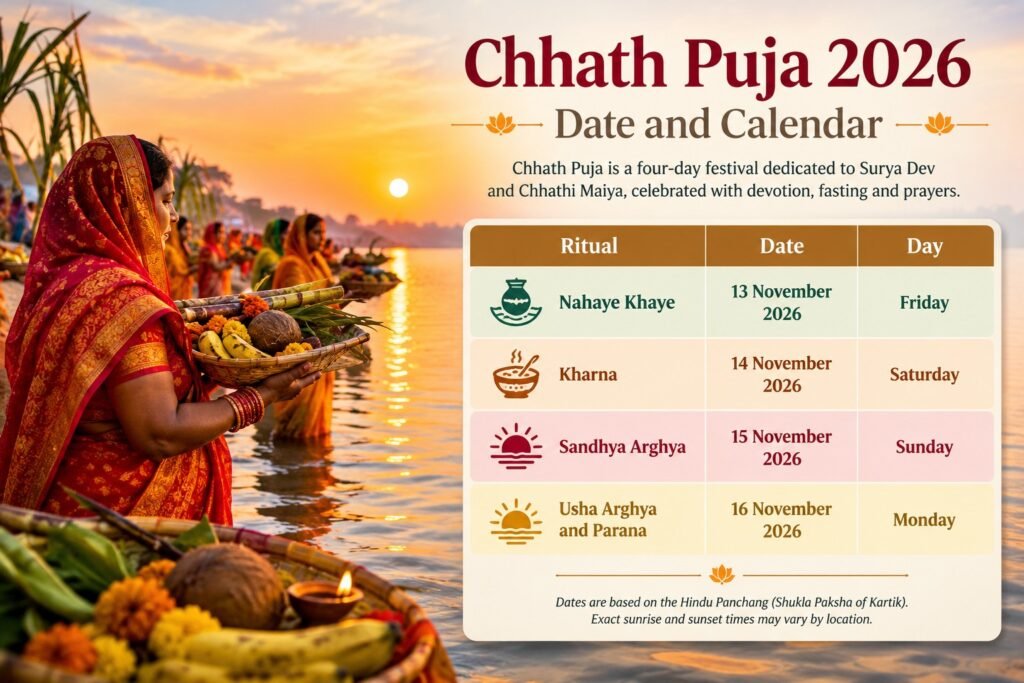
Chhath Puja is a four-day festival observed during the Shukla Paksha of the Hindu month of Kartik.
| Ritual | Date | Day |
|---|---|---|
| Nahaye Khaye | 13 November 2026 | Friday |
| Kharna | 14 November 2026 | Saturday |
| Sandhya Arghya | 15 November 2026 | Sunday |
| Usha Arghya and Parana | 16 November 2026 | Monday |
These dates follow published Indian Panchang calendars. Exact sunrise and sunset times vary by location, so devotees should check their local Panchang for the appropriate Arghya timings.
What Is the Significance of Chhath Puja?
Chhath Puja is dedicated to Surya Dev and Chhathi Maiya. In Hindu tradition, the Sun represents energy, light, vitality, and the power that sustains life on Earth.
Devotees offer prayers to express gratitude for nature and seek blessings for their families. Many observe a strict fast as an expression of discipline, devotion, and faith.
The festival also teaches people to respect the natural world. Water bodies, sunlight, seasonal fruits, and traditional offerings all have an important place in the celebrations.
One special feature of Chhath Puja is that devotees worship both the setting Sun and the rising Sun. This practice reflects gratitude for the entire cycle of life, including both endings and new beginnings.
Day 1: Nahaye Khaye – 13 November 2026
Nahaye Khaye marks the beginning of Chhath Puja. On this day, devotees focus on cleanliness, purity, and preparing for the upcoming rituals.
The person observing the Chhath vrat, often called the vrati, takes a bath and prepares a clean space for worship. Traditional utensils and cooking areas are carefully cleaned before the food is prepared.
A simple, sattvic meal is traditionally prepared for the occasion. Common foods include rice, chana dal, and bottle gourd (lauki), depending on family customs.
The purpose of Nahaye Khaye is to begin the festival with a pure mind and body. Families also start preparing the ingredients and materials needed for the remaining days.
Day 2: Kharna – 14 November 2026
Kharna is the second day of Chhath Puja. Devotees usually observe a fast throughout the day and perform evening worship before eating the traditional prasad.
A common Kharna offering is jaggery kheer, often prepared with rice and milk. Roti and other traditional preparations may also be included according to family customs.
After the evening prayer, the prasad is shared with family members and others. Following Kharna, the main period of fasting begins for devotees who undertake the traditional nirjala vrat.
Many devotees observe this fast without food or water until the morning Arghya. However, fasting practices can vary, and people should follow a form of vrat that is safe for their health.
Day 3: Sandhya Arghya – 15 November 2026
Sandhya Arghya is one of the most important rituals of Chhath Puja. On this day, devotees gather near rivers, ponds, lakes, or other suitable water bodies to offer Arghya to the setting Sun.
The offerings are arranged in traditional bamboo baskets or soop. Common items include thekua, seasonal fruits, sugarcane, coconuts, and other family-specific offerings.
As the Sun approaches the horizon, devotees stand near the water and offer water to Surya Dev while praying for their family’s well-being and prosperity.
The atmosphere at Chhath ghats is often filled with devotional songs, traditional prayers, and the spirit of community worship.
The evening Arghya also reminds devotees to remain grateful for the blessings they receive in daily life.
Day 4: Usha Arghya – 16 November 2026
Usha Arghya is the final major ritual of Chhath Puja. Devotees return to the water body early in the morning to offer prayers to the rising Sun.
The rising Sun represents hope, renewal, and the beginning of a new day. Devotees offer water and traditional prasad while praying for health, happiness, and peace in their families.
After completing Usha Arghya, devotees conclude the vrat with Parana, following their family’s customary practice.
The four-day festival ends with gratitude, prayer, and the sharing of prasad among family members and the wider community.
Chhath Puja Samagri List
Preparing the puja materials in advance helps families observe the rituals without unnecessary difficulty.
Common Chhath Puja samagri includes:
- Bamboo basket or soop for arranging offerings
- Thekua and other traditional prasad
- Sugarcane
- Bananas, coconuts, and seasonal fruits
- Rice and other traditional food offerings
- Jaggery, milk, and ingredients for Kharna kheer
- A clean vessel for offering water
- Diya and cotton wicks
- Flowers and traditional puja items
- A clean cloth for arranging the offerings
The exact list can vary according to regional traditions and family customs. Devotees should prepare offerings in accordance with the practices followed in their household.
Chhath Puja Vidhi: How to Perform the Rituals
The traditional Chhath Puja vidhi takes place over four days.
Step 1: Observe Nahaye Khaye. Begin with bathing, cleaning the worship area, and preparing the traditional sattvic meal.
Step 2: Perform Kharna Puja. Observe the day’s fast according to your tradition, prepare the customary prasad, and offer prayers in the evening.
Step 3: Prepare for Sandhya Arghya. Arrange the fruits, thekua, sugarcane, and other offerings in a basket. Reach the chosen worship location safely and offer Arghya to the setting Sun.
Step 4: Perform Usha Arghya. Return before sunrise on the final day and offer water and prayers to the rising Sun.
Step 5: Complete Parana. After the morning worship, conclude the fast according to your family’s tradition and share prasad.
The precise procedure may differ between families and regions. Devotees who are observing Chhath for the first time can seek guidance from an experienced family member or a trusted priest.
Surya Dev Mantras for Chhath Puja
Devotees may chant Surya Dev mantras during their daily prayers and while offering Arghya.
1. Surya Beej Mantra
ॐ ह्रां ह्रीं ह्रौं सः सूर्याय नमः॥
Om Hraam Hreem Hraum Sah Suryaya Namah.
This is a traditional Surya mantra that devotees chant as an expression of reverence for the Sun God.
2. Surya Dev Mantra
ॐ सूर्याय नमः॥
Om Suryaya Namah.
This short mantra is suitable for simple daily worship. Devotees can chant it with concentration and devotion.
3. Gayatri Mantra
ॐ भूर्भुवः स्वः। तत्सवितुर्वरेण्यं भर्गो देवस्य धीमहि। धियो यो नः प्रचोदयात्॥
Om Bhur Bhuvah Swah, Tat Savitur Varenyam, Bhargo Devasya Dheemahi, Dhiyo Yo Nah Prachodayat.
The Gayatri Mantra is associated with Savitur, the divine source of illumination. Many devotees recite it during prayer and meditation.
There is no need to chant a mantra with a particular count unless that is part of your personal practice or family tradition. Sincere prayer, attention, and respect for the observance are important.
What Is the Significance of Offering Arghya to the Sun?
Offering Arghya to Surya Dev is central to Chhath Puja. The ritual expresses gratitude for sunlight, which supports life, agriculture, and the natural environment.
The evening Arghya is offered to the setting Sun, while the morning Arghya welcomes the rising Sun. Together, these rituals reflect the continuity of life and the importance of remaining thankful through changing circumstances.
Devotees also pray for their children’s well-being, family happiness, good health, and prosperity. These are traditional religious beliefs and prayers rather than guaranteed outcomes.
Important Things to Remember During Chhath Puja
- Keep the puja area and utensils clean.
- Prepare prasad with care and follow your household traditions.
- Respect the customs of the person observing the vrat.
- Keep rivers, ponds, and ghats clean and avoid throwing plastic or waste into water.
- Follow local instructions and safety arrangements at crowded ghats.
- Check local sunrise and sunset times before planning Arghya.
- People with medical conditions, pregnant people, children, and anyone for whom fasting may be unsafe should seek appropriate medical advice rather than undertake a strict fast without guidance.
Frequently Asked Questions About Chhath Puja 2026
When is Chhath Puja in 2026?
Chhath Puja will be observed from 13 November to 16 November 2026. Sandhya Arghya falls on 15 November, and Usha Arghya takes place on 16 November.
When is Nahaye Khaye in 2026?
Nahaye Khaye will be observed on Friday, 13 November 2026.
What is the date of Kharna in 2026?
Kharna falls on Saturday, 14 November 2026. Devotees traditionally prepare special prasad and perform evening worship.
When is Sandhya Arghya in 2026?
Sandhya Arghya will take place on Sunday, 15 November 2026, around sunset. The exact time depends on the location.
When is Usha Arghya in 2026?
Usha Arghya will take place on Monday, 16 November 2026, around sunrise.
Which God is worshipped during Chhath Puja?
Chhath Puja primarily honours Surya Dev, the Sun God, and Chhathi Maiya, who is revered in popular tradition for blessings and protection.
Which mantra can be chanted during Chhath Puja?
Devotees may chant “Om Suryaya Namah” or other traditional Surya mantras during worship and Arghya.
Why do devotees offer Arghya to both the rising and setting Sun?
The two offerings express gratitude for the Sun’s life-giving energy throughout the day. The setting Sun and rising Sun also hold symbolic significance in traditional worship.
Conclusion
Chhath Puja is a beautiful celebration of devotion, gratitude, discipline, and respect for nature. From Nahaye Khaye and Kharna to Sandhya Arghya and Usha Arghya, each day carries its own meaning and traditional practices.
In 2026, the festival will be observed from 13 to 16 November. Devotees can prepare for the occasion by arranging the required samagri, learning the traditional rituals, and chanting Surya Dev mantras with devotion.
May Surya Dev and Chhathi Maiya bless all devotees with peace, happiness, good health, and prosperity.