
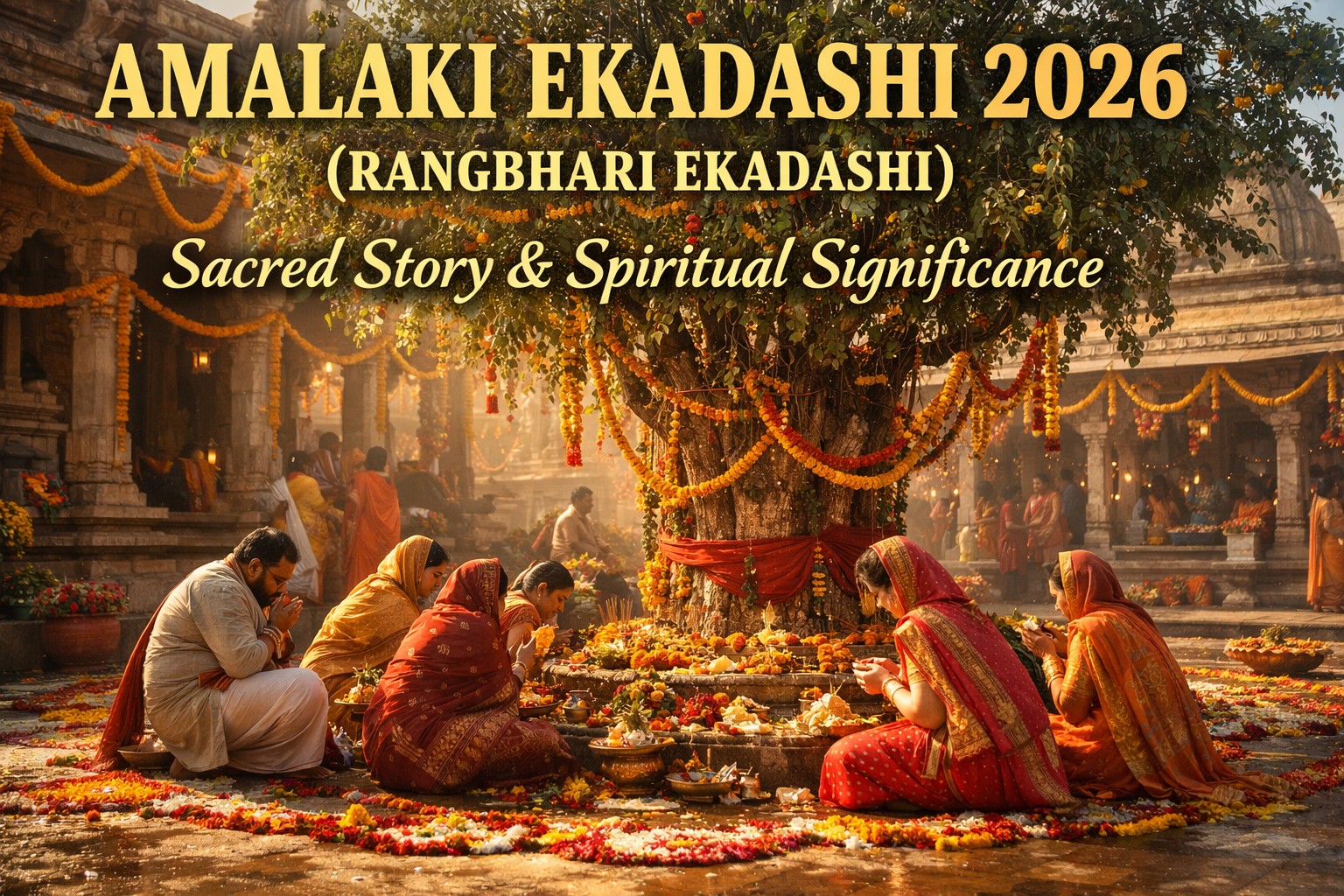
Amalaki Ekadashi is one of the most spiritually powerful Ekadashi observances in the Hindu calendar. Celebrated during the Shukla Paksha of the Phalguna month, this sacred day is dedicated to devotion, purification, and divine blessings.
In many parts of India, especially in the holy city of Varanasi, this auspicious Ekadashi is also known as Rangbhari Ekadashi — marking the joyful beginning of Holi celebrations in a deeply spiritual way.
This day beautifully blends fasting, devotion, sacred rituals, and festive joy — making it a truly divine occasion.
📅 Amalaki Ekadashi 2026 Date
Friday, February 27, 2026
✨ Why Is Amalaki Ekadashi Called Rangbhari Ekadashi?
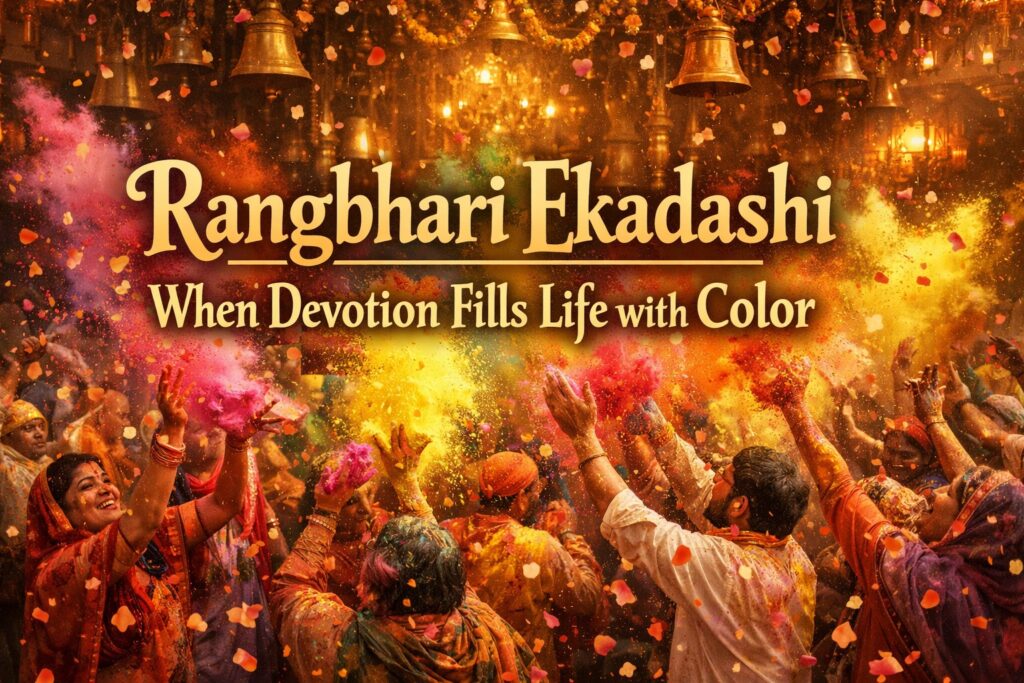
The name Rangbhari means “filled with colors.” Spiritually, this day represents the arrival of divine joy and celebration.
Traditionally, after Maha Shivratri, this Ekadashi marks the ceremonial beginning of Holi festivities. Devotees celebrate with devotion first — and colors later — symbolizing that spiritual purity comes before worldly joy.
In sacred tradition, Lord Shiva is believed to return home with Goddess Parvati after their divine union, and devotees welcome them with colors, music, and devotion — hence the name Rangbhari Ekadashi.
📖 The Sacred Story Behind Amalaki Ekadashi
According to ancient scriptures, once there was a righteous king who ruled his kingdom with truth, compassion, and devotion. The entire kingdom observed Ekadashi fasts with great discipline.
On Amalaki Ekadashi, devotees worshipped the Amalaki tree (Indian gooseberry), believing it to be a sacred symbol of divine presence and purity. They prayed with full devotion and spent the day chanting holy names and performing rituals.
One day, a hunter accidentally joined the gathering of devotees observing the fast. Though he had no intention of worship, simply being present in the sacred environment and hearing prayers purified his heart.
After his death, the hunter was reborn as a noble king, blessed with prosperity and spiritual wisdom. His life transformed completely — all because of the divine merit of Amalaki Ekadashi.
This story teaches that sincere devotion — even in small measure — brings immense spiritual blessings.
🌳 Spiritual Significance of the Amalaki Tree

The Amalaki tree is considered sacred and is worshipped on this day as a symbol of divine energy, nourishment, and life.
Spiritually, it represents:
✔ Purification of body and mind
✔ Protection from negativity
✔ Divine grace and prosperity
✔ Spiritual growth and renewal
Devotees perform rituals near the tree, offer prayers, and seek blessings for health and harmony.
🪔 Rituals and Observances
Devotees observe the day with deep faith and discipline.
Common practices include:
-
Fasting from sunrise to the next day
-
Worshipping the Amalaki tree
-
Offering prayers and devotional chanting
-
Listening to sacred stories
-
Performing charity and acts of kindness
Many devotees also visit sacred temples, including the famous Kashi Vishwanath Temple, where Rangbhari celebrations are especially vibrant.
🌈 Spiritual Meaning of Rangbhari Celebration
Rangbhari Ekadashi reminds us that divine life is not only about renunciation — it is also about joy.
Colors represent:
🎨 Love
🎨 Devotion
🎨 Divine playfulness
🎨 Celebration of life
This sacred day teaches that when the heart is pure, life naturally becomes colorful and joyful.
🙏 Benefits of Observing Amalaki Ekadashi
Devotees believe that observing this Ekadashi brings:
✨ Removal of past sins
✨ Inner peace and clarity
✨ Blessings of prosperity and protection
✨ Spiritual upliftment
✨ Divine grace and happiness
🌸 Conclusion
Amalaki Ekadashi, also celebrated as Rangbhari Ekadashi, is a beautiful union of devotion and celebration. It reminds us that spiritual discipline leads to divine joy — and that faith fills life with color and meaning.
By fasting, praying, and celebrating with devotion, devotees seek blessings for a peaceful and prosperous life.
This sacred day invites everyone to purify the heart, deepen devotion, and welcome divine joy into life.