Karma and rebirth are two of the most important spiritual concepts in Asia.
Both Hinduism and Tibetan Buddhism speak about them, and the Dalai Lama often explains these ideas in simple, practical ways.
Many people wonder:
“Are Hindu and Buddhist beliefs about karma and rebirth the same?”
The answer is: similar, but with deep philosophical differences.
This blog explains everything clearly.
🌟 Who Is the Dalai Lama?
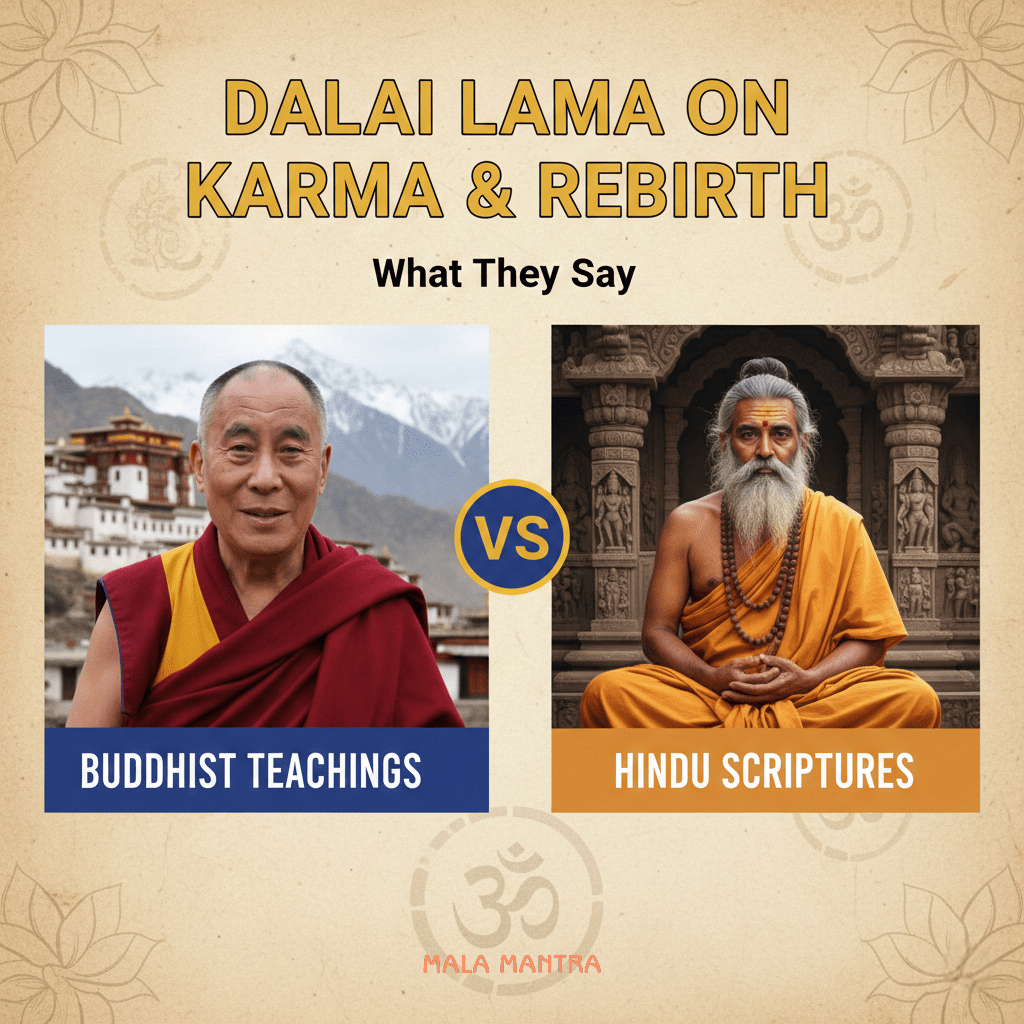
The 14th Dalai Lama, Tenzin Gyatso, is the global spiritual leader of Tibetan Buddhism.
He teaches:
-
Compassion
-
Mindfulness
-
Non-violence
-
Karma
-
Rebirth
-
Inner peace
His teachings attract millions across the world, including many Indians.
🧿 1. What the Dalai Lama Says About Karma
The Dalai Lama explains karma very simply:
“Every action—good or bad—creates a consequence. Karma is like energy that follows you.”
🔸 Key Points From Dalai Lama
-
Karma is created by intention
-
Good karma brings peace and happiness
-
Negative karma brings suffering
-
Our present circumstances are shaped by past actions
-
Karma continues even after death
🧘 Buddhist Karma: No Creator God
Buddhism does not involve a god who gives karma.
Instead, karma arises naturally from:
-
Thoughts
-
Words
-
Actions
Just like a seed grows into a plant.
🕉️ 2. What Hindu Scriptures Say About Karma
Hinduism describes karma in texts like:
-
Bhagavad Gita
-
Upanishads
-
Manu Smriti
🔸 Key Hindu Teachings on Karma
-
Karma is of three types: Sanchit, Prarabdha, Kriyaman
-
God (Ishwar) oversees the result of karma
-
Karma binds the soul (Atman) to rebirth
-
Good deeds lead to good results
-
Selfless karma (Nishkam Karma) leads to liberation
Krishna says in the Gita:
“Karma decides destiny. One becomes pure by performing duty without attachment.”
🔍 3. Are Buddhist & Hindu Karma Theories Similar?
✔️ Yes, Similarities
| Concept | Hinduism | Buddhism |
|---|---|---|
| Karma | Actions shape destiny | Actions shape destiny |
| Intention matters | Yes | Yes |
| Ethics important | Dharma | Right Action |
| Rebirth | Yes | Yes |
| Cause–effect law | Karma phala | Karma vipaka |
Both agree:
Your life is shaped by your choices.
🔍 4. Major Differences in Karma (Hindu vs Buddhist)
❌ Hinduism believes in Atman (soul)
Your soul continues through rebirths.
❌ Buddhism denies permanent soul (Anatta)
No permanent “I” travels.
❌ Hinduism says God oversees karma
Buddha did not include a creator god.
❌ Hindu goal = Moksha (union with God)
Buddhist goal = Nirvana (freedom from suffering)
Dalai Lama explains:
“There is no permanent self in Buddhism. Karma continues, but the ‘self’ changes every moment.”
🔁 5. Dalai Lama on Rebirth
The Dalai Lama explains rebirth like this:
“Your consciousness continues after death. It takes a new form depending on karma.”
🔸 Key Points:
-
Rebirth is not the same as the soul moving
-
It is a continuation of mental energy
-
This energy carries karma
-
Rebirth can happen in many realms (human, animal, celestial)
The Dalai Lama himself is believed to be the 14th rebirth of the same compassionate consciousness.
🔥 6. What Hindu Scriptures Say About Rebirth
Hinduism says:
The soul (Atman) leaves the body and takes a new birth based on karma.
Key references:
-
Bhagavad Gita 2.22:
“Just as a person changes old clothes, the soul takes a new body.” -
Garuda Purana:
Describes the journey of the soul after death -
Upanishads:
“The Atman is eternal.”
🔸 Hindu rebirth is soul-based
Buddhism makes it energy-based.
🌈 7. Where Both Traditions Meet
Although philosophies differ, both emphasize:
-
Good actions
-
Compassion
-
Non-violence
-
Meditation
-
Mind purification
-
Letting go of greed and anger
This is why many people from Hindu backgrounds also follow Dalai Lama’s teachings.
🌟 Conclusion
Both Hinduism and Tibetan Buddhism have rich teachings on karma and rebirth, but with different foundations.
Dalai Lama focuses on:
-
Mind
-
Compassion
-
Intention
-
Inner peace
Hindu scriptures focus on:
-
Eternal soul
-
God’s guidance
-
Dharma and duty
-
Liberation through devotion or wisdom
Together, these teachings offer a complete path for spiritual growth.