In the vast ocean of Sanatan wisdom, two divine terms often create curiosity — Parambrahm and Brahma. Though both sound similar, their meanings are vastly different. To understand the Supreme Truth and the foundation of creation, it’s important to know this difference clearly.
What is Parambrahm?
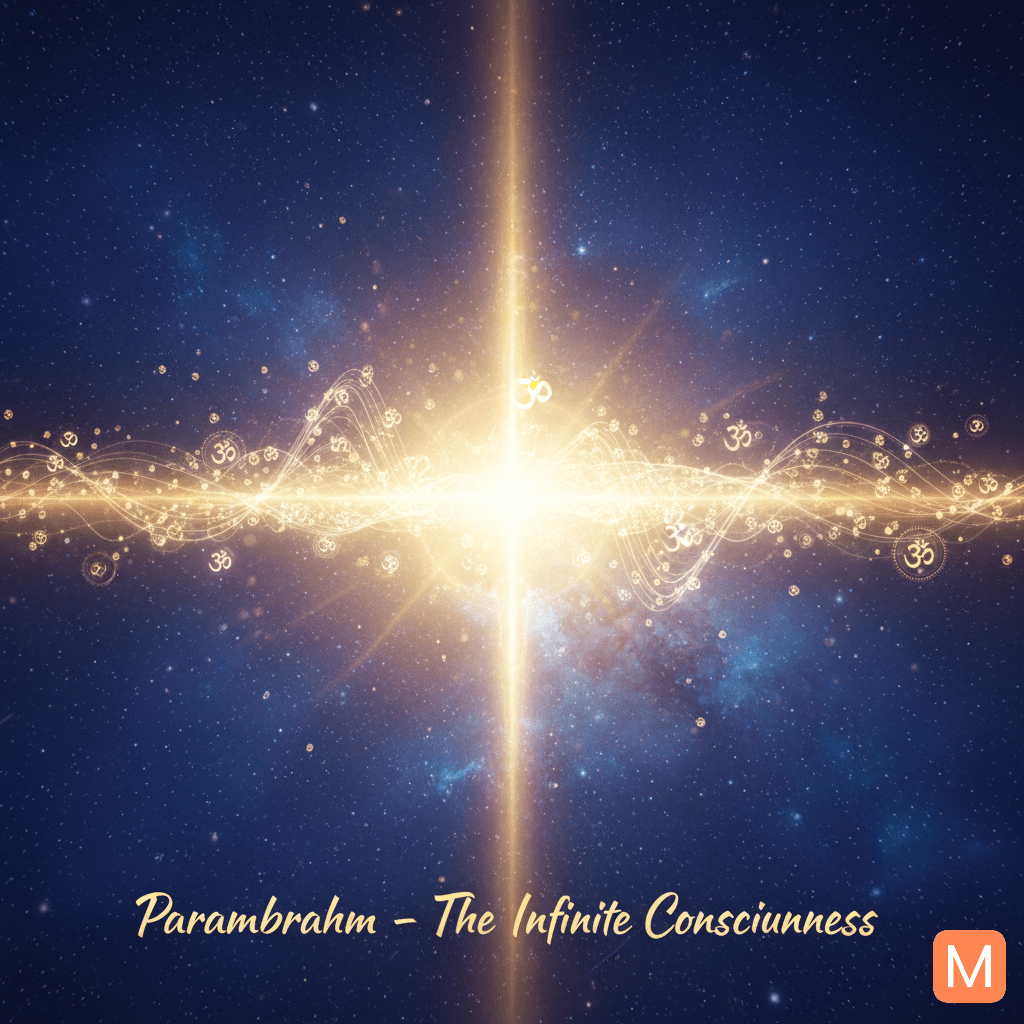
Parambrahm (परब्रह्म) is the Supreme Reality, beyond all names, forms, and attributes. It is the ultimate source of everything — eternal, infinite, and unchanging.
In the Upanishads, Parambrahm is described as “Sat-Chit-Ananda” — pure existence, pure consciousness, and pure bliss.
Parambrahm is not a person or a deity but the divine energy that pervades all beings. It cannot be seen with physical eyes or described fully in words. It is the Absolute Truth (Param Tattva) that lies beyond illusion (Maya).
Example: Just as the ocean remains vast and formless, and waves arise from it — all creation arises from Parambrahm.
Who is Brahma?

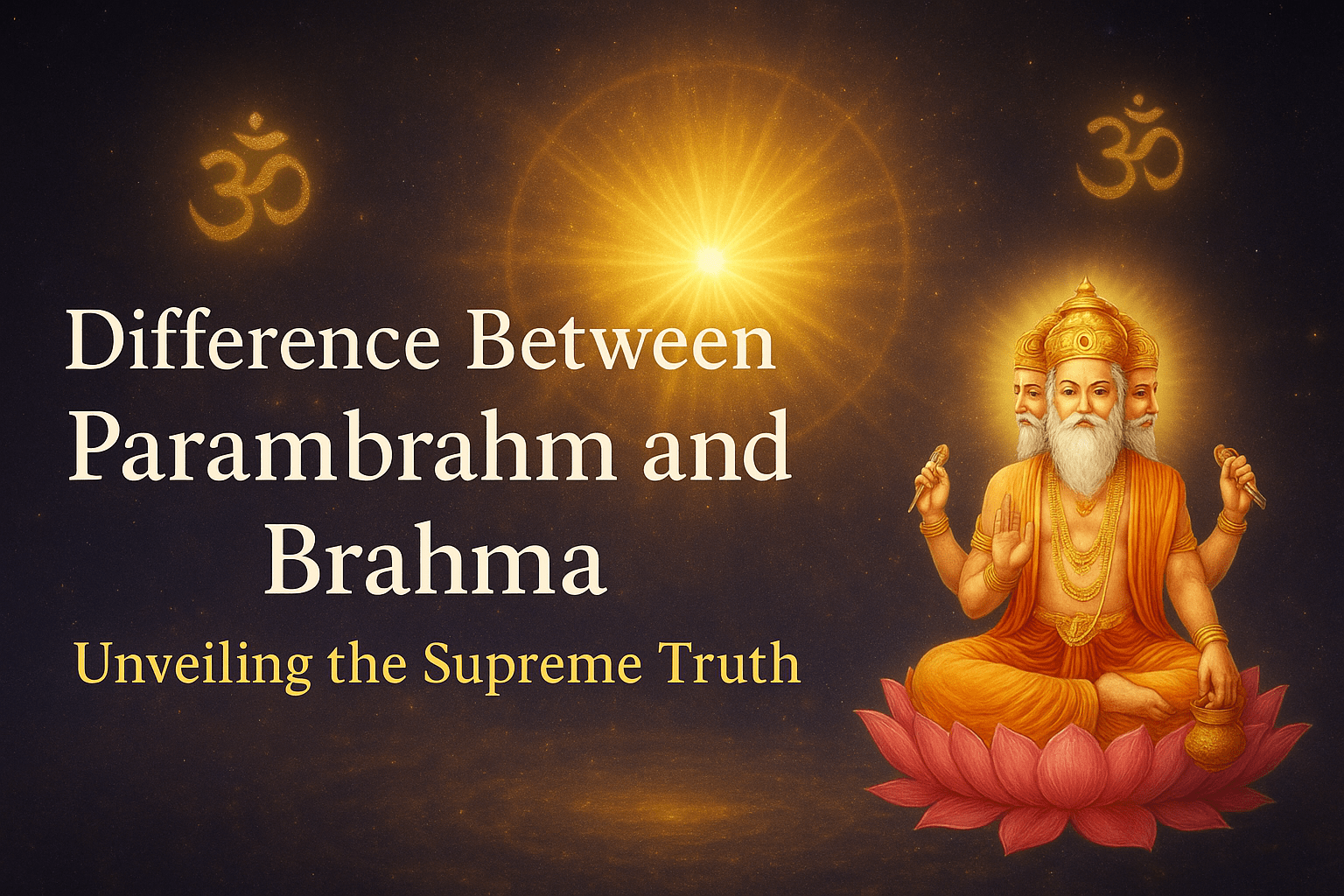
Brahma (ब्रह्मा) is the Creator God, one of the Trinity (Trimurti) — along with Vishnu (the Preserver) and Mahesh or Shiva (the Destroyer).
Brahma’s role is to create the universe, living beings, and cosmic laws. He is depicted with four faces, symbolizing the four Vedas — Rigveda, Yajurveda, Samaveda, and Atharvaveda.
However, Brahma is not eternal like Parambrahm. His lifespan is measured in kalpas (cosmic ages), and when creation ends, even Brahma dissolves back into the Supreme Source — Parambrahm.
Key Differences Between Parambrahm and Brahma

| Aspect | Parambrahm | Brahma |
|---|---|---|
| Meaning | Supreme Reality beyond form | The Creator God in the Trimurti |
| Nature | Formless, eternal, infinite | With form, limited lifespan |
| Role | Source of all existence | Creates the universe |
| Mentioned in | Upanishads, Vedanta | Puranas, Vedas |
| Worship form | Meditated upon as the Absolute | Worshipped as the creator |
| End of Existence | Eternal, never ends | Dissolves after each cosmic cycle |
| Analogy | The ocean itself | A wave in that ocean |
Scriptural References
-
Bhagavad Gita (14.27):
“Brahmano hi pratishthaham” — Lord Krishna says, “I am the foundation of Brahman.”
This means that the Lord (Parambrahm) is the base of even Brahma, the creator. -
Mundaka Upanishad (1.1.9):
“Brahmavid āpnoti param” — One who knows Brahman attains the Supreme (Parambrahm).
Spiritual Understanding
To understand the divine hierarchy:
-
Parambrahm → The infinite, formless truth (like the sun).
-
Brahma, Vishnu, and Mahesh → Manifestations of that truth (like rays of the sun).
When a devotee meditates deeply and crosses the realm of duality, they experience oneness with Parambrahm — a state beyond gods and forms, where only the divine light of consciousness remains.
Why This Knowledge Matters in Sadhana
Knowing the difference between Brahma and Parambrahm helps us focus on the highest goal of human life — realizing the Supreme Truth.
While worshipping deities purifies our heart, understanding Parambrahm leads to spiritual liberation (moksha).
In the path of Bhakti and meditation, we move from the worship of form (Brahma and other deities) to the realization of the formless truth (Parambrahm).
Conclusion
Brahma is the divine creator who brings the universe into existence, while Parambrahm is the infinite reality from which even Brahma arises.
When we meditate, chant, or perform sadhana with pure devotion, we gradually rise beyond all limitations and experience Parambrahm — the Supreme Consciousness that dwells within us.