In recent years, spiritual seekers around the world—especially in the USA, Canada, Australia, New Zealand, and Europe—have shown growing interest in Eckankar, its HU mantra, and how it compares with Hindu spirituality.
Both paths talk about Soul, karma, meditation, and divine sound, yet they are very different in practice and origin.
This simple and detailed guide explains:
✔ What is Eckankar?
✔ Which countries follow it?
✔ What is the HU mantra?
✔ How it compares with Hinduism and Indian Sant traditions
✔ Key similarities & differences
Perfect for beginners seeking clarity.
What Is Eckankar?
Eckankar is a modern spiritual movement founded in 1965 by Paul Twitchell in the United States.
The word “Eckankar” roughly means Path of the Divine Light and Sound.
Its core idea:
➡ Soul is eternal
➡ Soul can travel beyond the physical body
➡ We can connect to God through Light and Sound
This is achieved mainly through the practice of HU chant meditation.
Countries Where Eckankar Is Followed
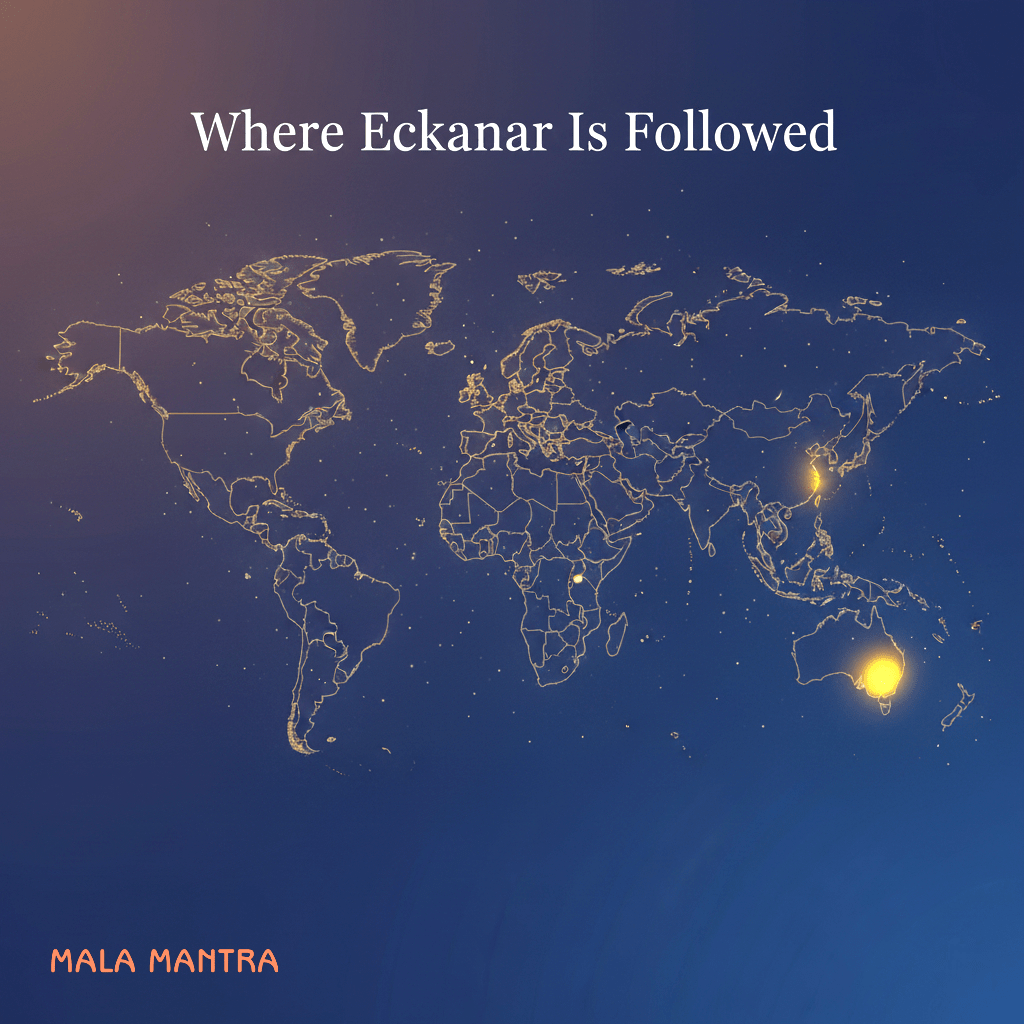
Eckankar has an active presence in more than 40+ countries, with the largest communities in:
-
United States (main center)
-
Canada
-
Australia
-
New Zealand
-
United Kingdom
-
France & Germany
-
Nigeria & South Africa
-
Singapore & Malaysia
It is popular among people seeking a non-religious, simple meditation path.
What Is the HU Mantra?
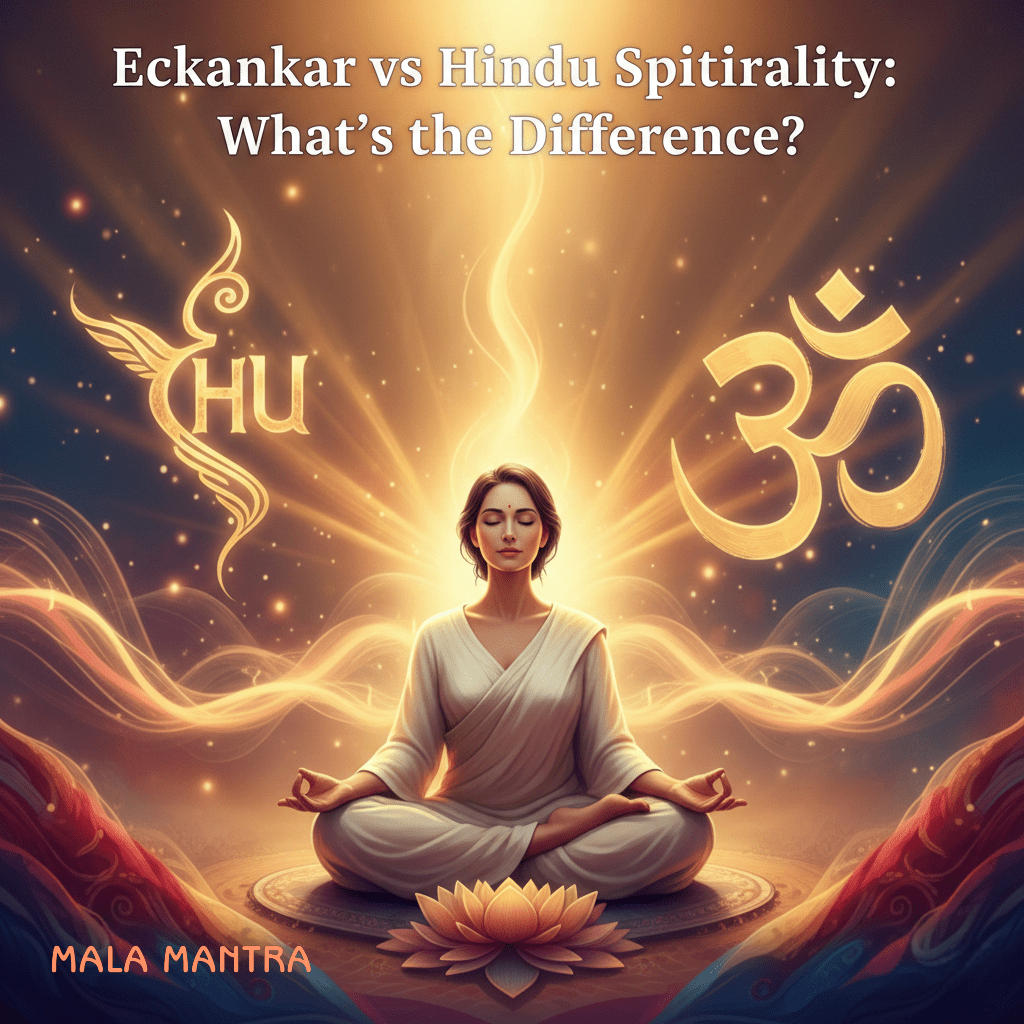
The HU mantra (pronounced “Huuuu…”) is the central practice of Eckankar.
Meaning of HU
Followers believe it is a universal love song to God, bringing peace, clarity, and inner awakening.
How It Is Practiced
-
Sit comfortably
-
Close eyes
-
Breathe deeply
-
Chant “Huuuu…” softly for 10–20 minutes
Is it similar to OM or Ram Naam?
Yes—HU meditation is somewhat similar to:
-
OM chanting (Hinduism)
-
Naam Jaap (Bhakti tradition)
-
Shabd Yoga (Sant Mat / Radha Soami)
But the origin and teachings are very different.
Core Beliefs of Eckankar
Eckankar teaches:
✔ 1. Soul is eternal
Identical to Hindu concept of Atman.
✔ 2. Karma and reincarnation
Similar to Hindu belief in past life actions.
✔ 3. God can be experienced through Sound & Light
This resembles the Hindu concept of Naad Brahma and Jyoti Darshan.
✔ 4. Need of a living spiritual teacher
Similar to Guru–Shishya tradition.
✔ 5. Dreams have spiritual value
Followers keep dream journals for spiritual guidance.
How Eckankar Is Similar to Hindu Spirituality
Although Eckankar began in America, it shares many concepts with Indian spiritual traditions.
✔ 1. Divine Sound Meditation
-
Hindus: OM, So-Ham, Krishna mantra, Shabd
-
Eckankar: HU mantra
✔ 2. Belief in Rebirth & Karma
Both traditions accept:
-
Past lives
-
Karma consequences
-
Soul’s journey across lifetimes
✔ 3. Living Master
Just like Hindu saints, Eckankar also has a living spiritual leader, called Mahanta or Living ECK Master.
✔ 4. Inner Experience
Both paths emphasize inner enlightenment through meditation.
How Eckankar Is Different from Hindu Spirituality
Despite similarities, the two are very different in practice, history, and foundation.
❌ 1. Very modern origin (1965)
-
Hinduism is 5,000+ years old
-
Eckankar started just 60 years ago
❌ 2. No temple worship or rituals
Hinduism includes:
-
temples
-
aartis
-
mantras
-
pujas
-
deities
Eckankar does not have traditional rituals.
❌ 3. Scripture difference
Hinduism follows:
-
Vedas
-
Upanishads
-
Bhagavad Gita
-
Puranas
Eckankar follows modern writings by its founder.
❌ 4. View of God
-
Hinduism has personal and impersonal forms (Shiva, Vishnu, Devi, Krishna, etc.)
-
Eckankar sees God as pure light and sound, without any form
❌ 5. Mantra difference
-
Hinduism uses OM, Ram, Krishna, Shiva, Devi mantras
-
Eckankar uses only HU
Comparison Table: Eckankar vs Hindu Spirituality
| Aspect | Eckankar | Hindu / Sanatan / Sant Tradition |
|---|---|---|
| Origin | 1965, USA | Ancient India |
| Mantra | HU | OM, Ram, Krishna, Shiva |
| Scriptures | Modern books | Vedic scriptures |
| Worship | No idol worship | Temple & deity worship |
| Core Practice | Sound (HU) meditation | Jaap, Dhyana, Bhakti, Yoga |
| Soul Belief | Eternal | Eternal |
| Karma | Yes | Yes |
| Rebirth | Yes | Yes |
| Guru Tradition | Yes | Yes |
Is Eckankar a Religion?
Eckankar calls itself a spiritual path, not a religion.
However, it functions similarly to a religious community with:
-
regular gatherings
-
study groups
-
spiritual books
-
a living master
Eckankar & Indian Sant Traditions: The Closest Similarity
Eckankar’s teachings are most similar to:
-
Sant Kabir tradition
-
Radha Soami / Surat Shabd Yoga
-
Sant Mat
-
Gyan-Marg saints
Because all of these speak of:
-
Inner sound
-
Inner light
-
Soul travel
-
Naam / Shabd
-
Living guru
But again, the origins and methods differ.
Should Indians Practice HU Mantra?
There is no restriction.
Anyone can chant HU, just like anyone can chant OM.
But remember:
-
HU is not a Hindu mantra
-
It belongs to a new American spiritual movement
-
Traditional Hindu mantras come from ancient scriptures
If someone is already doing:
-
Ram Naam
-
Hare Krishna Mahamantra
-
Om Namah Shivaya
-
Gayatri Mantra
-
Sita Ram
-
Radhe Krishna
…then HU is not needed.
But spiritually curious people may still explore it.
FAQs
1. Is Eckankar similar to Hinduism?
Yes and no.
Beliefs are similar, but practices and origins are different.
2. Is HU the same as OM?
No.
HU is Eckankar’s mantra; OM is Hinduism’s sacred sound.
3. Can non-Hindus do Hindu mantras?
Yes—Hinduism is inclusive.
4. Is Eckankar growing?
Yes, mainly in Western countries.
Conclusion
Eckankar is a modern spiritual movement focused on Sound & Light, while Hindu spirituality is an ancient path rooted in scriptures, rituals, deities, and yoga traditions.
Both value:
-
Soul
-
Karma
-
Rebirth
-
Meditation
-
Direct divine experience
Yet the path, history, and philosophies remain different.
For spiritual seekers, understanding both helps choose the path that feels right for inner growth.