
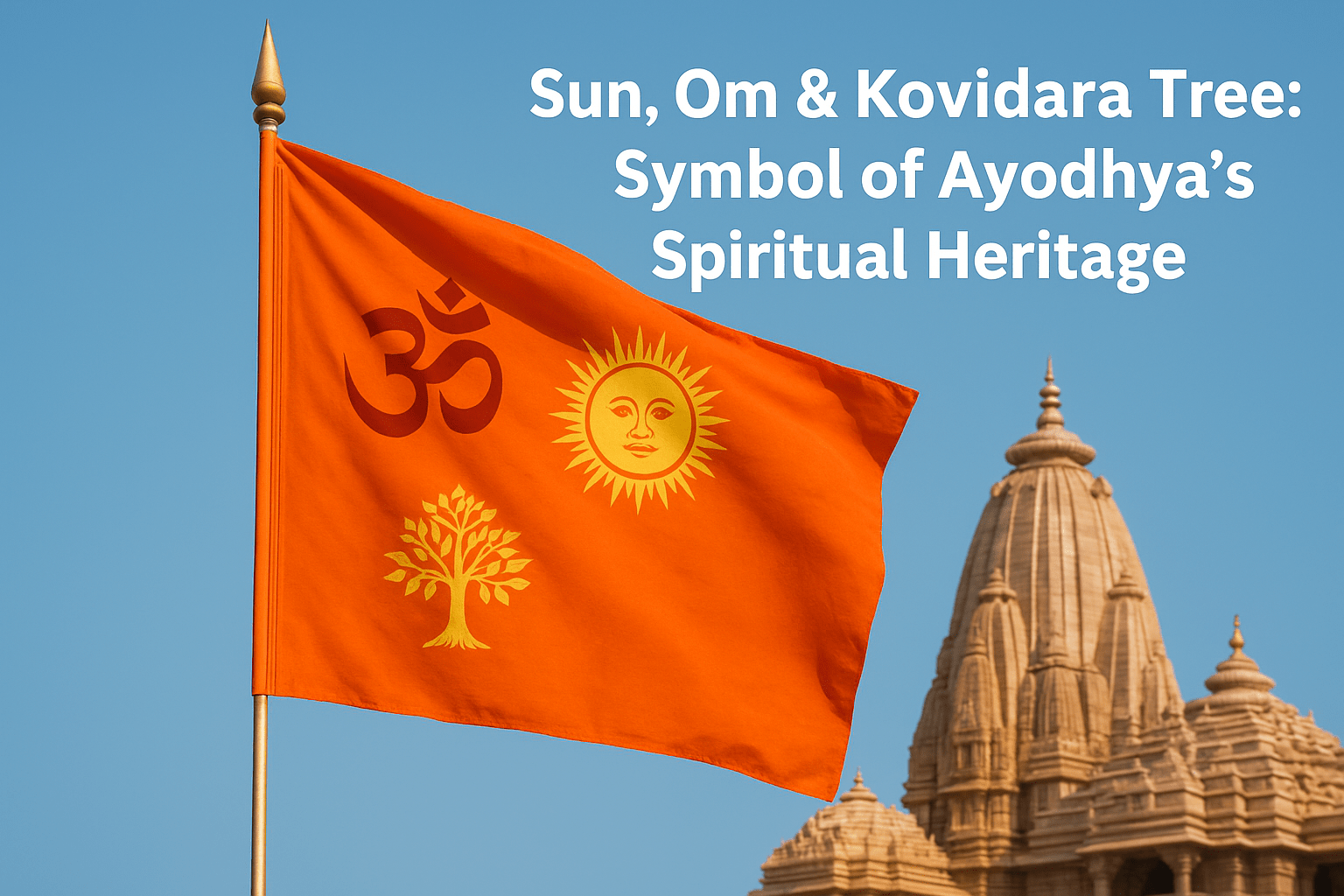
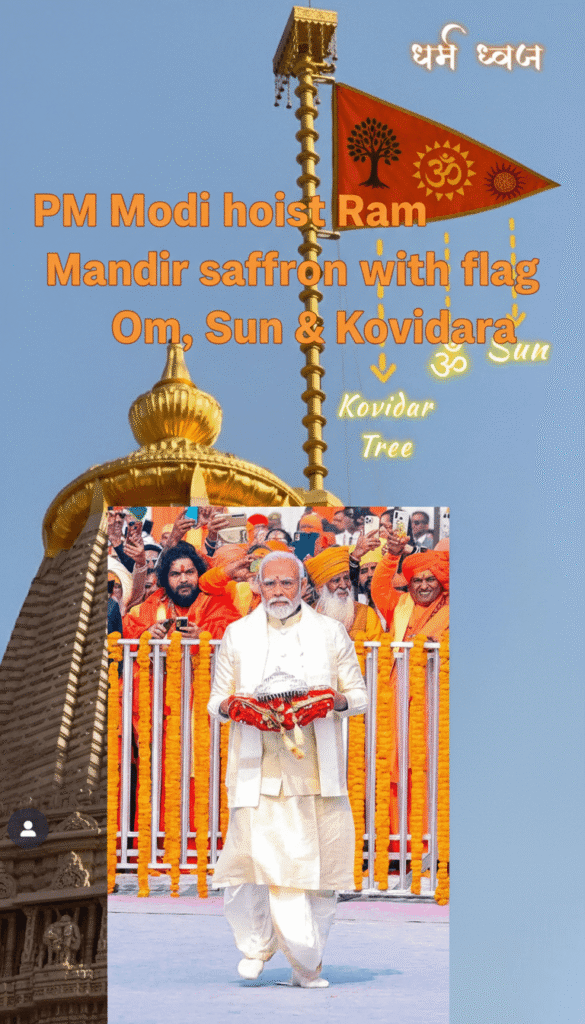
On November 25, 2025, coinciding with Vivah Panchami, PM Modi hoisted the saffron flag atop the historic Ram Mandir in Ayodhya. This event instantly became a trending topic, as millions of devotees searched for the symbols featured on the flag. The saffron flag carries three sacred symbols—Om, the Sun, and the Kovidara Tree—each with its unique spiritual and historical significance.
What Is the Kovidara Tree?
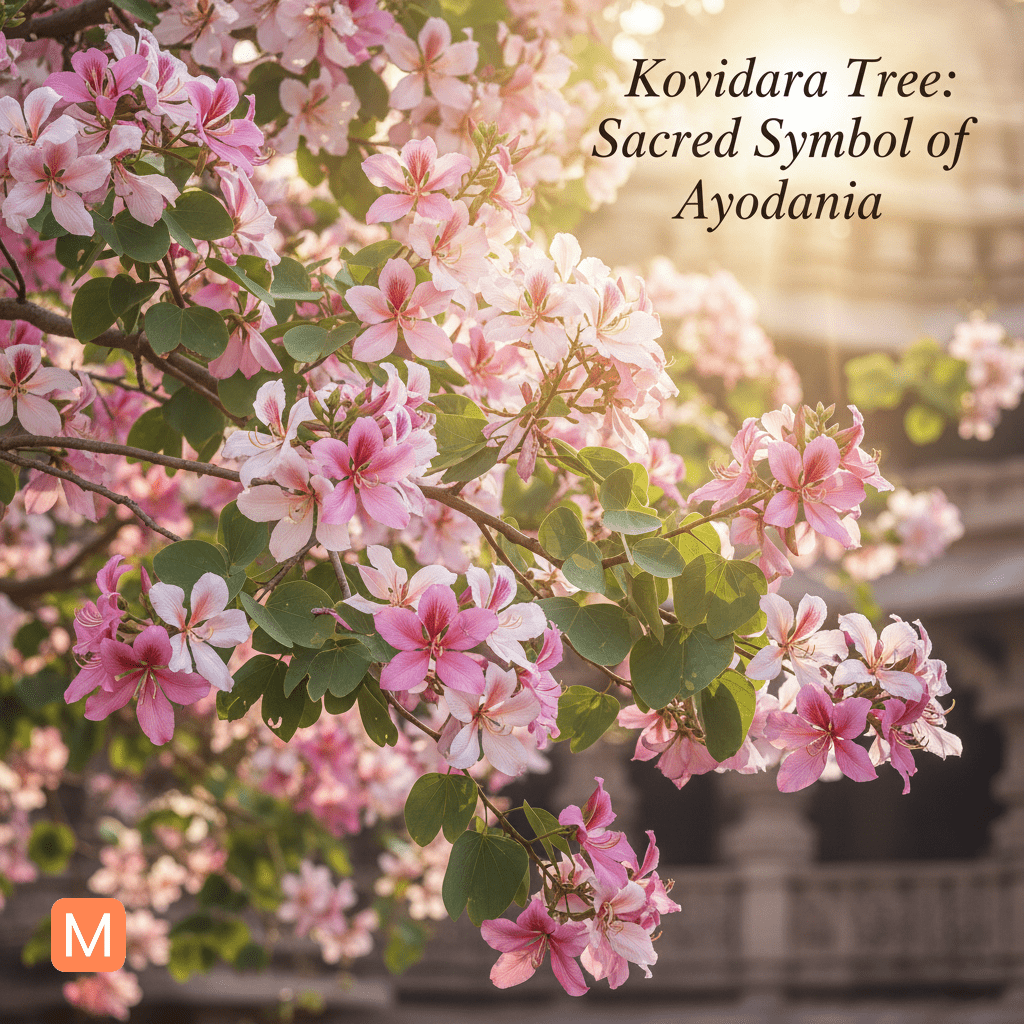
The Kovidara Tree (Bauhinia variegata), also called the Pink Trumpet Tree, is renowned for its beautiful pink and white orchid-like flowers. Blooming primarily in February–April, it is native to India and holds a special place in Hindu culture and Ayurveda.
Key Facts About Kovidara Tree:
-
Botanical Name: Bauhinia variegata
-
Cultural Significance: Used in rituals, worship, and traditional medicine
-
Spiritual Meaning: Represents growth, dharma, and divine protection
-
Historical Reference: Often called the “royal tree of Ayodhya” in ancient texts and paintings
The Kovidara Tree is considered auspicious, symbolizing prosperity and spiritual devotion, making it a natural choice for the Ram Mandir flag.
The Saffron Flag: Symbols and Their Meaning
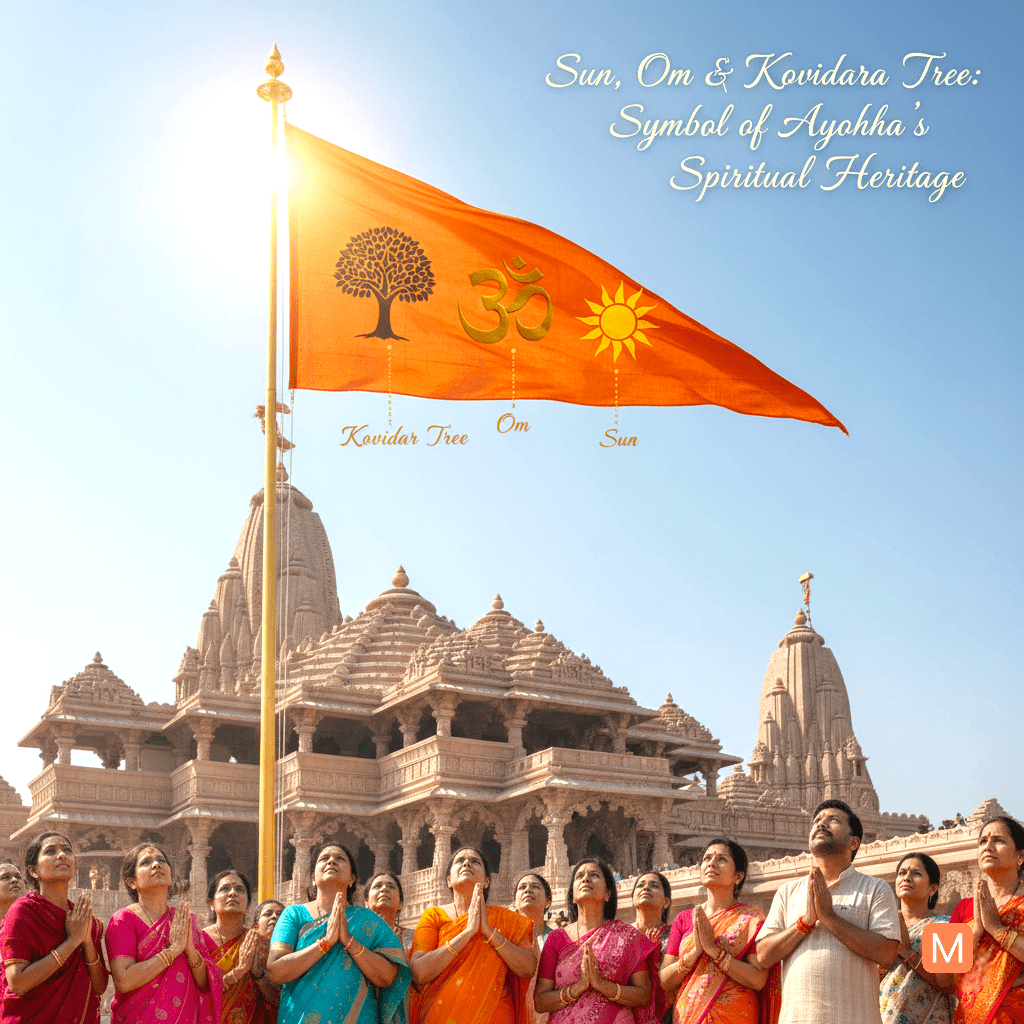
The Ram Mandir flag, also called the Dharma Dhwaj, carries three iconic symbols:
1. Om
-
Represents the primordial sound of the universe
-
Symbolizes divine consciousness, spiritual awakening, and dharma
-
A sacred sound in Hinduism, used in prayers and rituals
2. Sun
-
Symbolizes power, light, and the eternal soul
-
Represents energy, life, and spiritual guidance
-
Often associated with kingship and divine authority in ancient India
3. Kovidara Tree
-
Symbolizes Ayodhya’s spiritual heritage
-
Known as the royal tree of the ancient kingdom
-
Signifies growth, devotion, and divine protection
Together, these symbols reflect Ayodhya’s rich spiritual, cultural, and historical identity.
Historical & Cultural Significance of the Flag
-
The flag is believed to be a revival of Ayodhya’s ancient Dharma Dhwaj, documented in historic paintings and texts.
-
Scholar Lalit Mishra traced mentions of these symbols in Ramayana manuscripts and paintings, showing that the Om, Sun, and Kovidara Tree were traditionally associated with Ayodhya’s royal and spiritual identity.
-
Today, the flag’s hoisting represents cultural pride, devotion, and continuity of dharma for millions of devotees across India.
Why Today’s Flag Hoisting Is Historic
-
It coincided with Vivah Panchami, celebrating the divine wedding of Lord Rama and Goddess Sita.
-
PM Modi’s presence and the ceremonial hoisting highlighted the temple’s symbolic revival of ancient Hindu traditions.
-
The saffron flag, with its three sacred symbols, serves as a reminder of spiritual values and the heritage of Ayodhya.
Conclusion
The Kovidara Tree on the Ram Mandir flag is more than just a decorative symbol—it represents Ayodhya’s ancient spiritual identity, dharma, and devotion. Combined with Om and the Sun, the saffron flag hoisted today reflects faith, heritage, and divine inspiration.
For devotees and spiritual seekers, these symbols are a reminder of righteousness, devotion, and the eternal legacy of Lord Rama.