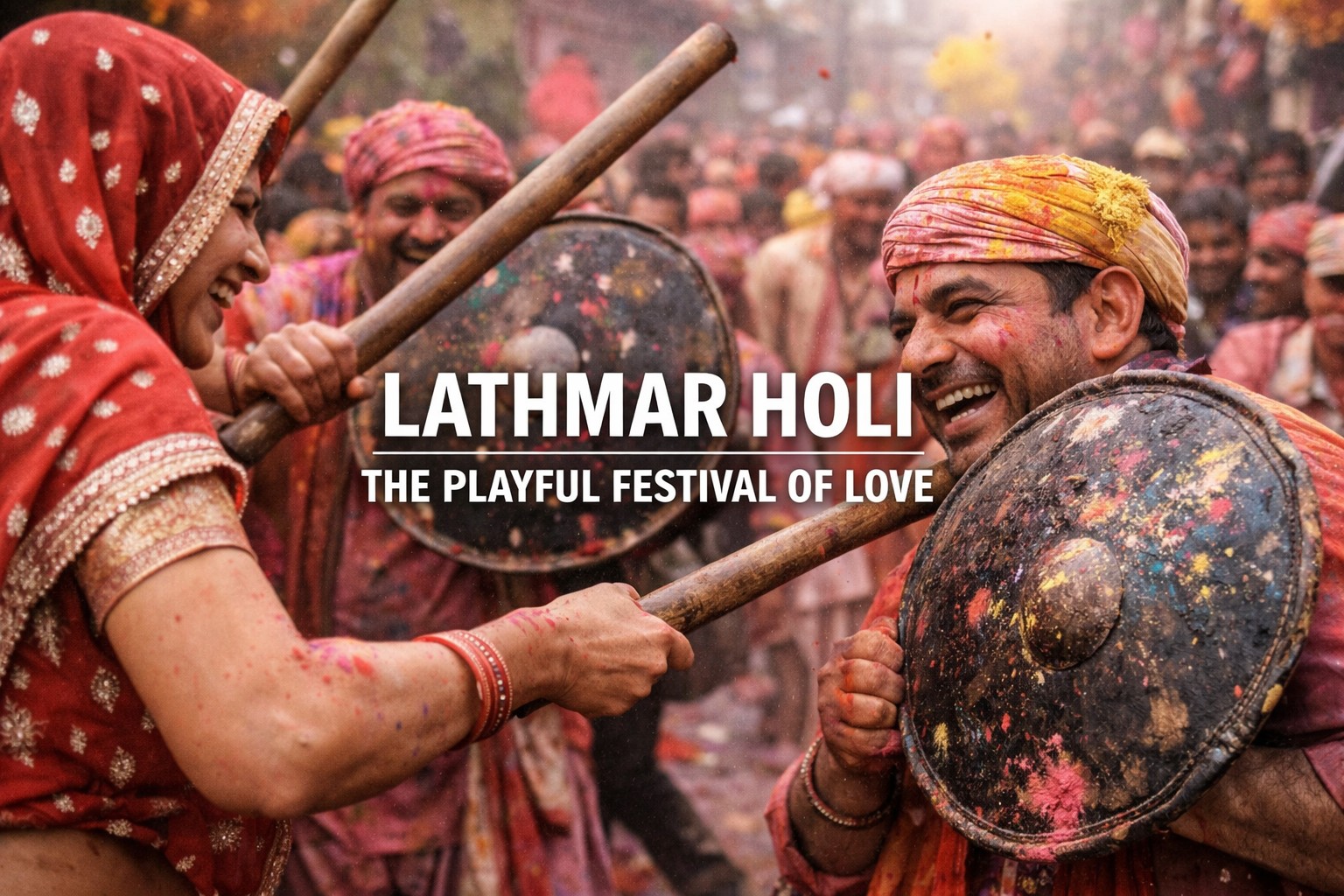
Lathmar Holi is one of India’s most vibrant and culturally rich Holi celebrations, known for its playful tradition where women chase men with sticks (lathis) in a symbolic and joyous ritual. Rooted deeply in devotion, mythology, and local heritage, this unique festival transforms the sacred land of Braj into a grand stage of color, laughter, and divine celebration.
Every year, thousands of devotees and travelers gather to witness this extraordinary tradition that blends faith, folklore, and festivity like nowhere else in the world.
The Mythological Story Behind Lathmar Holi
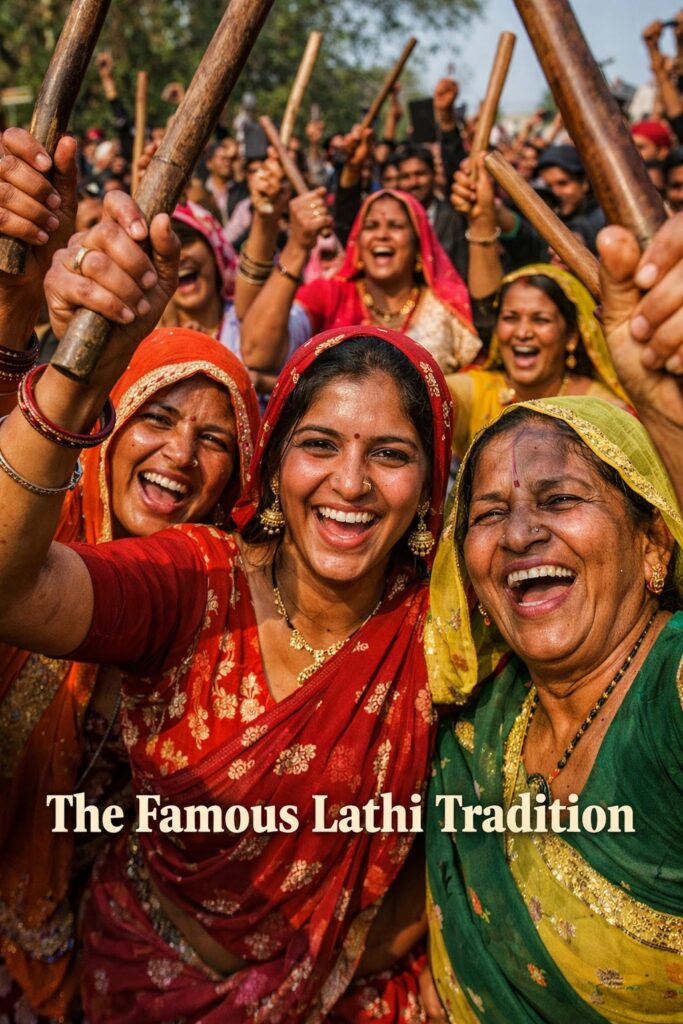
The origins of Lathmar Holi come from the divine love story of Krishna and Radha.
According to legend, Krishna, who belonged to Nandgaon, would visit Radha’s village to playfully tease her and her friends. In response, the women would chase him away with sticks — a playful act of affection that symbolized love, mischief, and divine play (leela).
Today, this playful tradition continues as a reenactment of that sacred legend, celebrated with devotion and joy.
How Lathmar Holi Is Celebrated
Lathmar Holi takes place a few days before the main Holi festival and follows a unique ritual format:
1. Arrival of the Men
Men from Nandgaon visit Barsana carrying shields and dressed in festive attire. They come prepared to be playfully “attacked” as part of the tradition.
2. The Playful Lathi Ritual
Women greet them with long wooden sticks (lathis). The men try to protect themselves using shields while being chased and tapped — all in good humor, laughter, and cheering crowds.
3. Singing of Traditional Songs
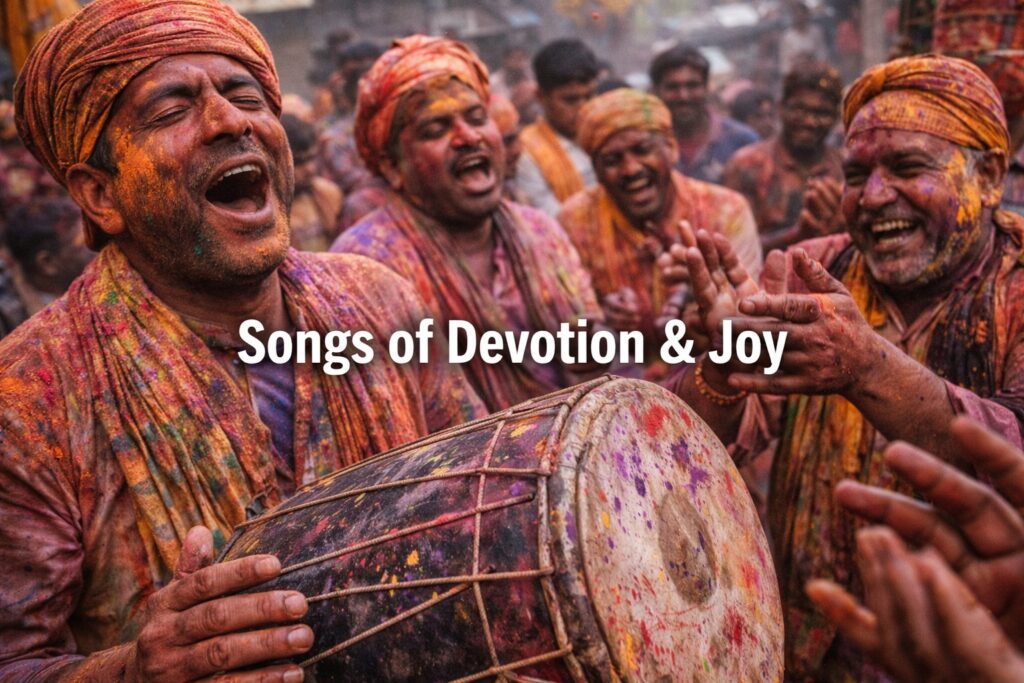
Folk songs filled with teasing, devotion, and playful humor echo through the streets. These songs celebrate the love and playful relationship between Radha and Krishna.
4. Community Celebration
The entire town becomes a stage — filled with colors, music, sweets, and spiritual joy. Locals welcome visitors warmly, making everyone feel part of the tradition.
Spiritual Importance of the Festival
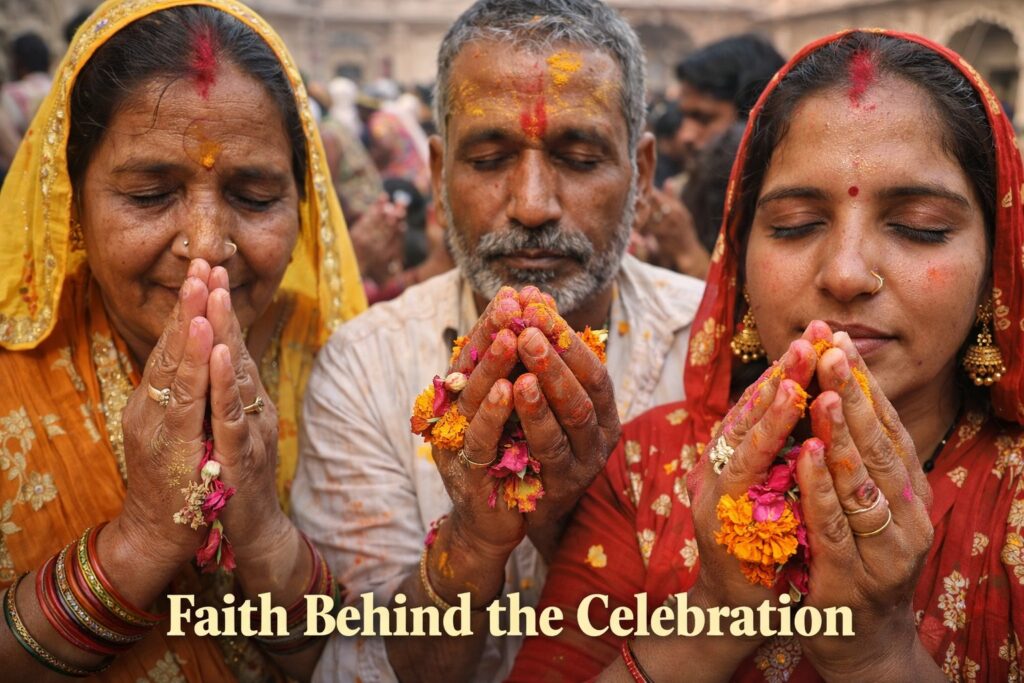
Lathmar Holi is not just playful entertainment — it carries deep devotional meaning.
-
It celebrates divine love and joy
-
It symbolizes feminine strength and playful equality
-
It honors centuries-old Braj traditions
-
It expresses devotion through celebration rather than ritual austerity
Many devotees also visit the sacred Radha Rani Temple during the festivities to offer prayers and witness the spiritual energy of the celebration.
What Makes Lathmar Holi Unique
Unlike typical Holi celebrations that focus mainly on colors, Lathmar Holi is known for:
✔ Ritualized playful combat tradition
✔ Strong mythological connection
✔ Community participation and storytelling
✔ Traditional music and Braj culture
✔ Deep devotional atmosphere
It is a living cultural heritage that blends history, faith, and celebration into one unforgettable experience.
Best Time to Experience Lathmar Holi
The festival is celebrated about a week before the main Holi day, usually in February or March depending on the lunar calendar. Celebrations begin in the afternoon and continue until evening with peak excitement during the lathi ritual.
Arriving early is recommended due to large crowds and vibrant street processions.
Why People from Around the World Attend
Lathmar Holi attracts global visitors because it offers:
-
A once-in-a-lifetime cultural experience
-
Authentic Indian tradition untouched by commercialization
-
Powerful spiritual energy of Braj
-
Incredible photography opportunities
-
A joyful and welcoming atmosphere
It is not just a festival — it is an immersion into divine culture and living mythology.
Final Thoughts
Lathmar Holi is a celebration of love, devotion, playfulness, and tradition. It beautifully preserves the sacred stories of Radha and Krishna while creating an energetic and unforgettable festival atmosphere.
For anyone seeking to experience Holi in its most authentic and spiritually vibrant form, Lathmar Holi stands as one of India’s most extraordinary celebrations.