
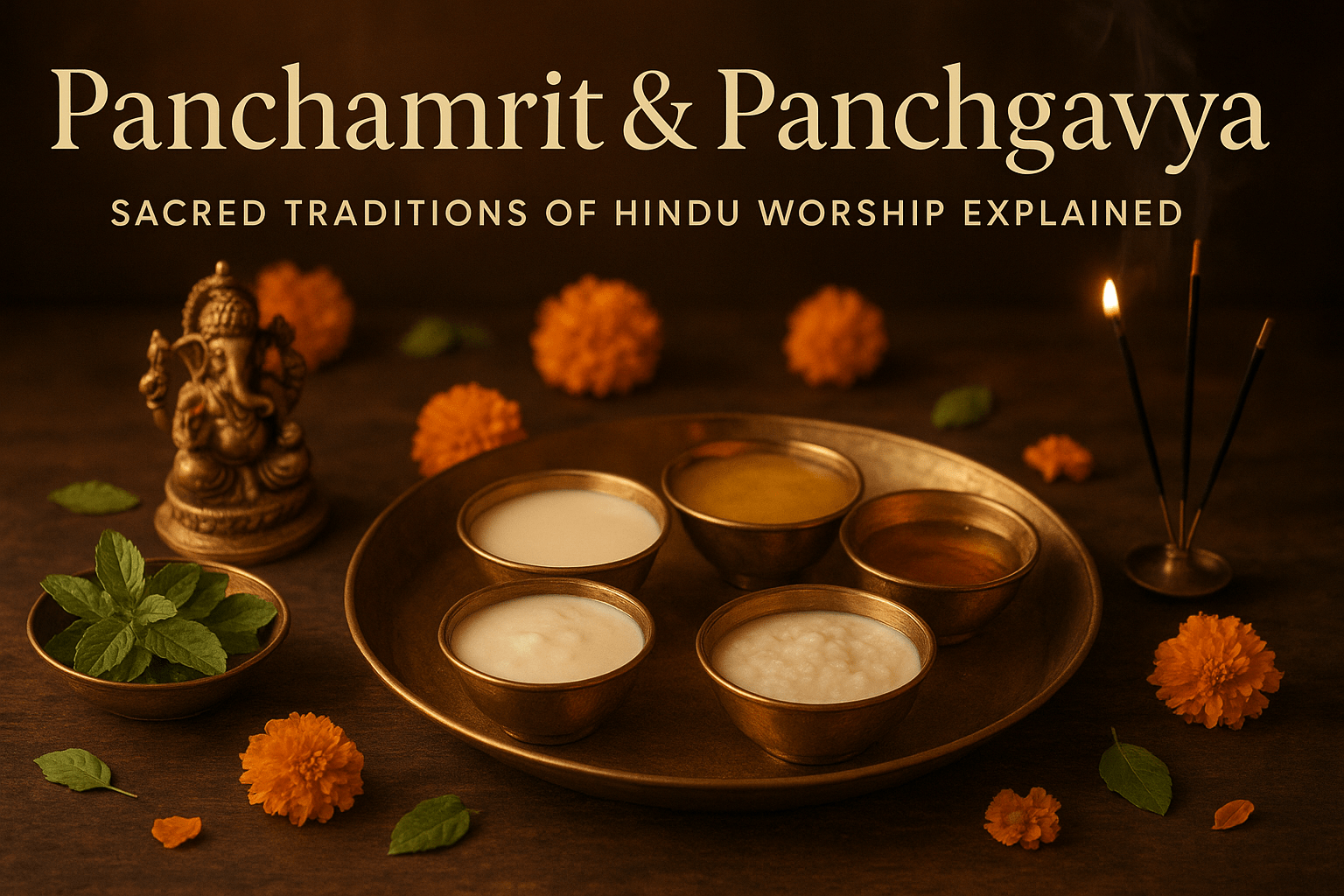
Hinduism is rich with rituals and traditions that connect devotees with the divine. Among these sacred practices, Panchamrit and Panchgavya hold a special place. Used in temples, home pujas, and daily spiritual practices, these sacred mixtures are believed to purify, heal, and bless the devotees.
In this guide, we explore what Panchamrit and Panchgavya are, their ingredients, spiritual significance, and benefits.
What is Panchamrit?
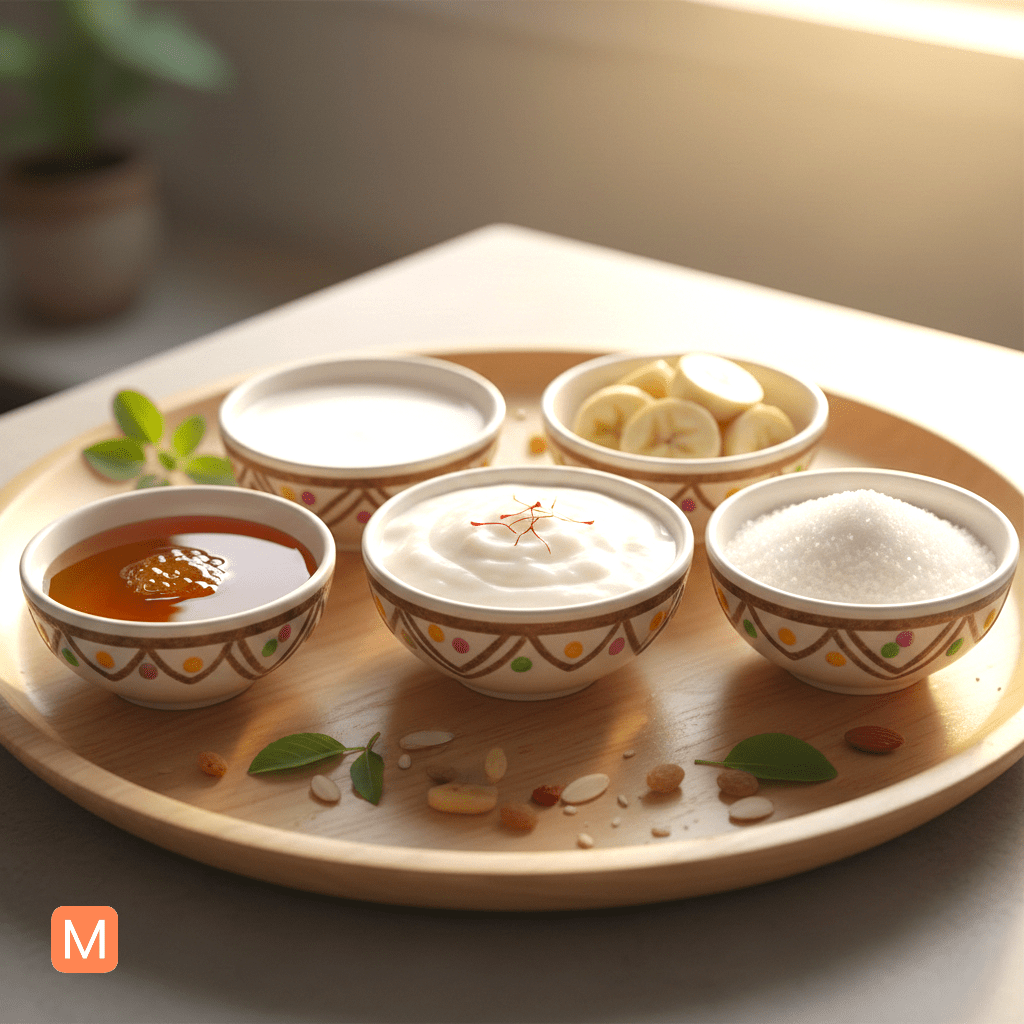
Panchamrit literally means “five nectars”. It is a holy mixture used during Hindu worship, especially in Abhishekam (ritual bathing of deities) and other rituals.
Ingredients of Panchamrit
Traditionally, Panchamrit is made using five pure ingredients:
-
Milk – Symbolizes purity and nourishment.
-
Yogurt (Dahi) – Represents strength and prosperity.
-
Ghee (Clarified Butter) – Signifies vitality and energy.
-
Honey – Denotes sweetness and harmony.
-
Sugar – Symbolizes bliss and auspiciousness.
Some variations may also include fruits or Tulsi leaves for added sanctity.
Spiritual Significance
-
Panchamrit is believed to purify the body and mind of devotees.
-
It is offered to deities as a symbol of devotion and love.
-
Consuming blessed Panchamrit after puja is said to bring positivity, health, and spiritual blessings.
What is Panchgavya?
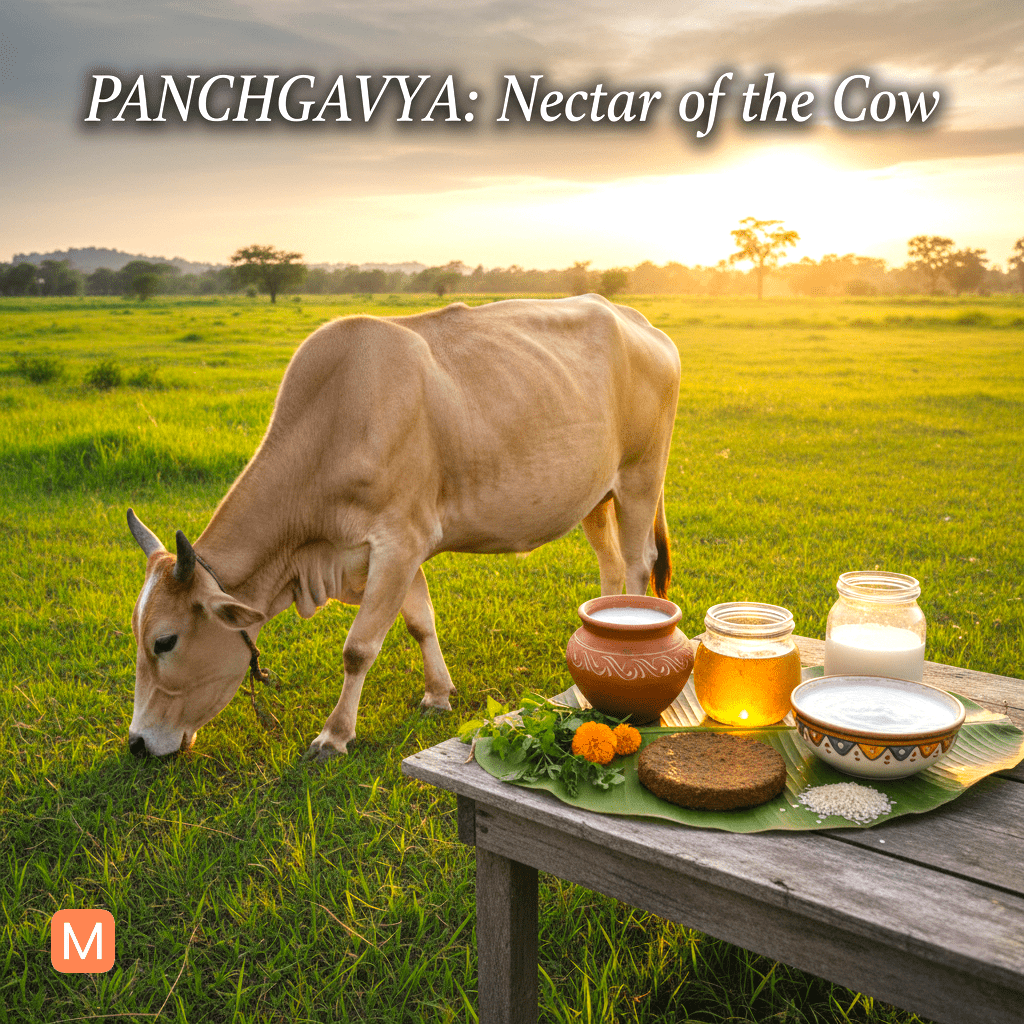
Panchgavya means the five products obtained from a cow. It is considered sacred in Hinduism and is widely used in Ayurveda, rituals, and organic farming.
Ingredients of Panchgavya
The five components of Panchgavya are:
-
Cow’s Milk
-
Cow Dung
-
Cow Urine
-
Ghee
-
Curd (Yogurt)
Uses and Benefits
-
Spiritual: Used in rituals to purify the surroundings and invite divine blessings.
-
Health: Promotes immunity and well-being when used in traditional medicine.
-
Agriculture: Cow products are used as natural fertilizers and pesticides.
Spiritual Significance
-
Panchgavya is believed to balance energies in the home.
-
It is a symbol of prosperity, purity, and protection in Hindu tradition.
-
Regular use in puja and rituals strengthens the connection between humans and divine nature.
Difference Between Panchamrit and Panchgavya
| Aspect | Panchamrit | Panchgavya |
|---|---|---|
| Meaning | Five nectars | Five products of cow |
| Use | Worship, Abhishekam, Prasad | Rituals, Ayurveda, Agriculture |
| Ingredients | Milk, Yogurt, Ghee, Honey, Sugar | Milk, Dung, Urine, Ghee, Yogurt |
| Benefits | Spiritual blessings, purity, health | Spiritual purification, health, eco-friendly farming |
Is Panchgavya Safe for Human Consumption?
In traditional Hindu rituals, Panchgavya is mainly used for purification, worship, and spiritual purposes, not for regular human consumption. While some Ayurvedic texts mention medicinal uses of certain cow-based products, these preparations are made under strict guidance and are very different from raw Panchgavya used in rituals.
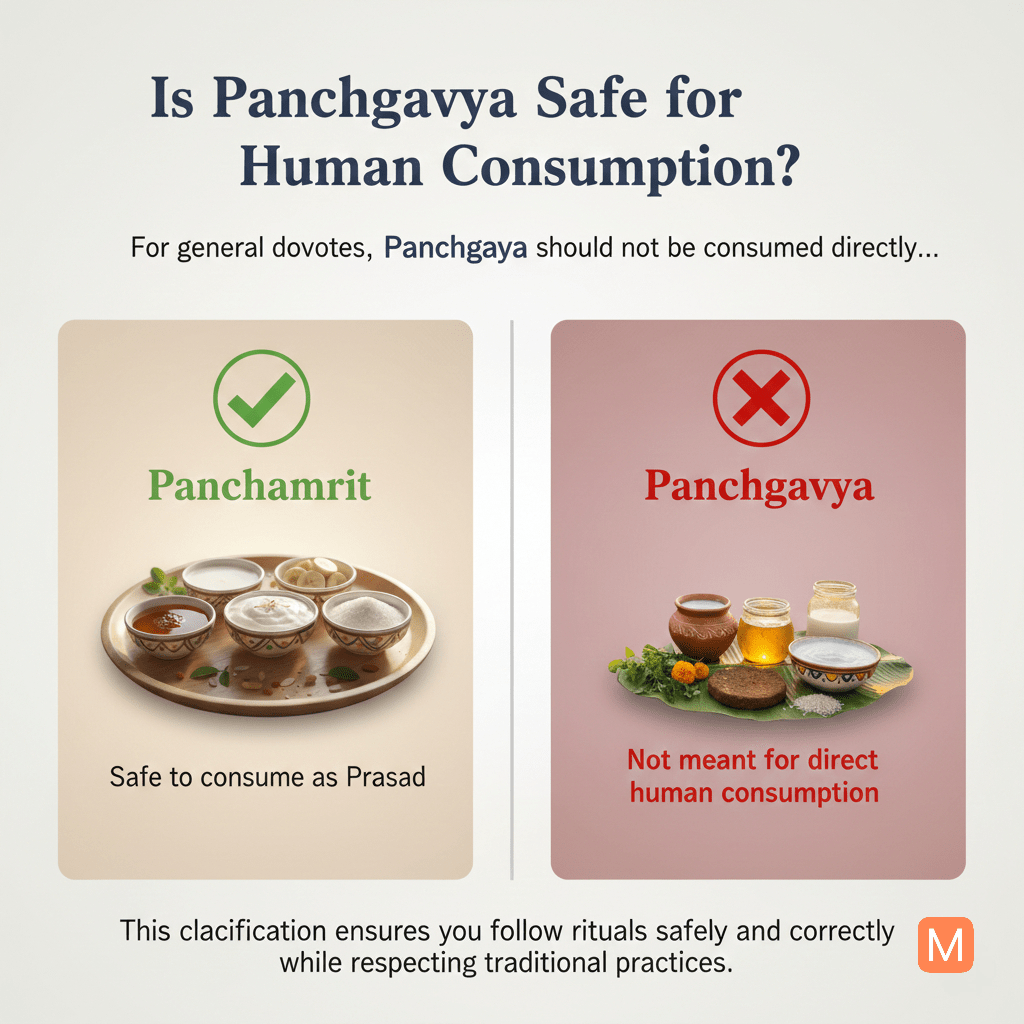
For general devotees, Panchgavya should not be consumed directly unless it is a properly processed Ayurvedic formulation recommended by a qualified practitioner.
The Panchamrit mentioned in puja as Prasadam is completely safe for consumption, but Panchgavya is not offered as Prasadam in most traditions.
In short:
✔ Panchamrit = Safe to consume as Prasad
✘ Panchgavya = Not meant for direct human consumption
This clarification ensures you follow rituals safely and correctly while respecting traditional practices.
How to Use Panchamrit and Panchgavya

-
Puja Offering: Pour over idols of deities during Abhishekam.
-
Consumption (Panchamrit only): Take small amounts of blessed Panchamrit as Prasad.
-
Sprinkling Panchgavya: Helps purify the surroundings and home environment.
-
Daily Rituals: Include in worship for enhanced positivity and spiritual growth.
Conclusion
Both Panchamrit and Panchgavya are not just sacred substances—they are symbols of devotion, purity, and holistic living. By understanding and using them correctly, devotees can experience spiritual upliftment, health benefits, and divine blessings.
Whether it is a temple ritual or a home puja, these sacred mixtures continue to play a vital role in Hindu spiritual practices.