
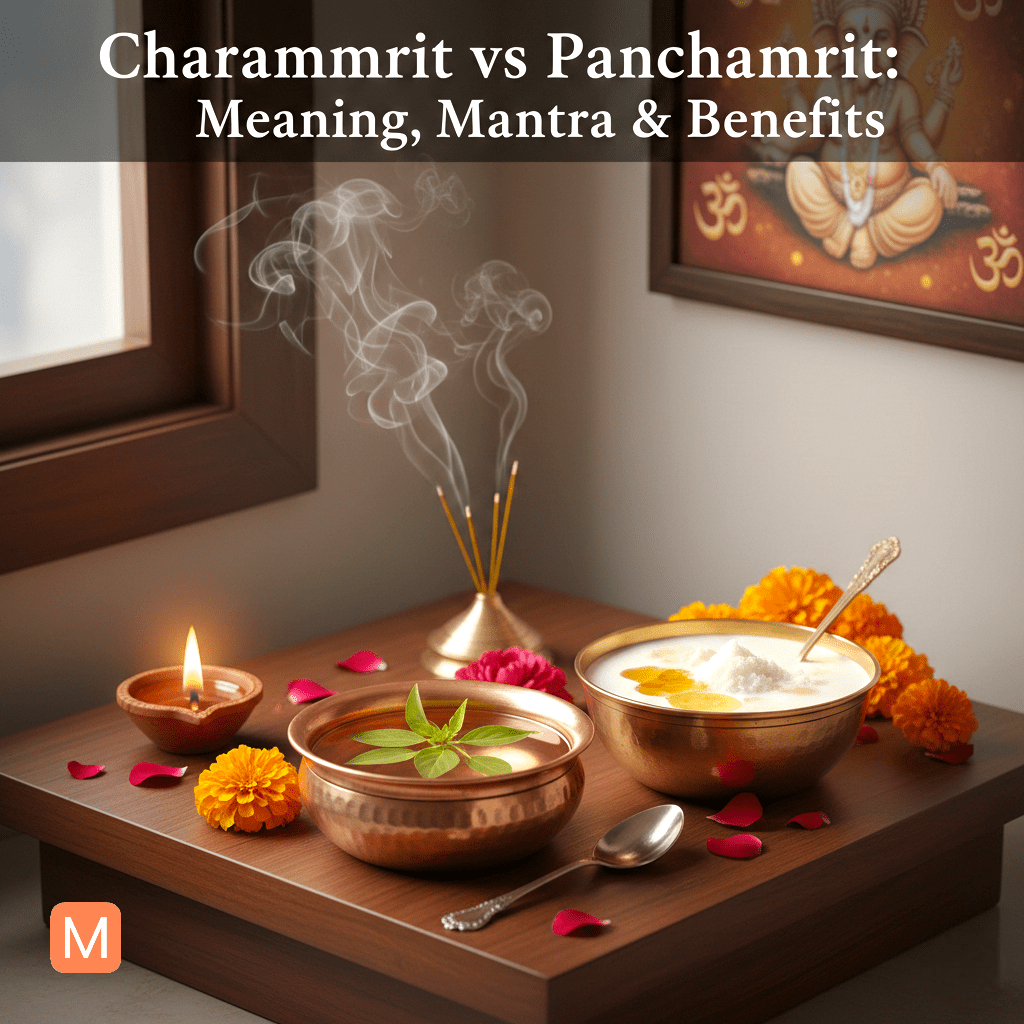
What Is Charanamrit?

Charanamrit (also spelled Charanamrut or Charanamrita) means “Nectar from the Lord’s Feet.”
In Hindu tradition, it is the sacred water used to wash the feet of a deity or saint and is then offered to devotees as a symbol of blessings, purity, and devotion.
It is believed that drinking Charanamrit cleanses the mind, removes negativity, and brings spiritual upliftment.
Ingredients of Charanamrit
Charanamrit is simple and made with pure, sattvic ingredients:
-
Water – usually from the kalash or used during abhishekam.
-
Tulsi leaves – symbol of purity and devotion.
-
A drop of Ganga Jal (optional) – considered highly sacred.
-
Chandan (optional) – sandal paste used during worship.
-
Sugar or mishri (optional) – for sweetness and good fortune.
👉 Note: Charanamrit does not always contain milk, curd, or honey.
How Is Charanamrit Made?
Here is the simple traditional method:
-
A small amount of clean water is taken in a copper or steel bowl.
-
Tulsi leaves are added to purify and energize the water.
-
This water is used to wash the deity’s feet or poured during abhishekam.
-
After worship, the Charanamrit is distributed to devotees.
In temples, the priest prepares it with mantras so that it carries divine vibrations.
Charanamrit Mantra
ॐ अकाल मृत्यु हरणं सर्व व्याधि विनाशनम्। विष्णो: पादोदकं पीत्वा पुनर्जन्म न विद्यते।।

While offering or drinking Charanamrit, devotees often chant:
“Om Namo Bhagavate Vasudevaya.”
or
“Om Govindaya Namah.”
Some temples recite:
“Om Shri Vishnave Charanodakam Samarpayami.”
(Meaning: I offer the sacred water of Lord Vishnu’s feet.)
These mantras connect the mind with devotion and purity.
Ritual Significance of Charanamrit
Charanamrit is deeply symbolic in Hindu worship:
-
Represents the grace of God.
-
Purifies the mind and heart.
-
Removes ego and fills the devotee with humility.
-
Encourages surrender at the feet of the Divine.
-
Considered an elixir of blessings.
In scriptures, it is said that even a drop of Charanamrit helps a person progress on the spiritual path.
What Is Panchamrit?
Panchamrit means “Five Divine Nectars.”
It is a sacred mixture of:
-
Milk
-
Curd (Yogurt)
-
Ghee
-
Honey
-
Sugar or Mishri
It is used during abhishekam of deities like Shiva, Krishna, and Vishnu.
After the ritual, Panchamrit is offered as prasad.
Difference Between Charanamrit and Panchamrit
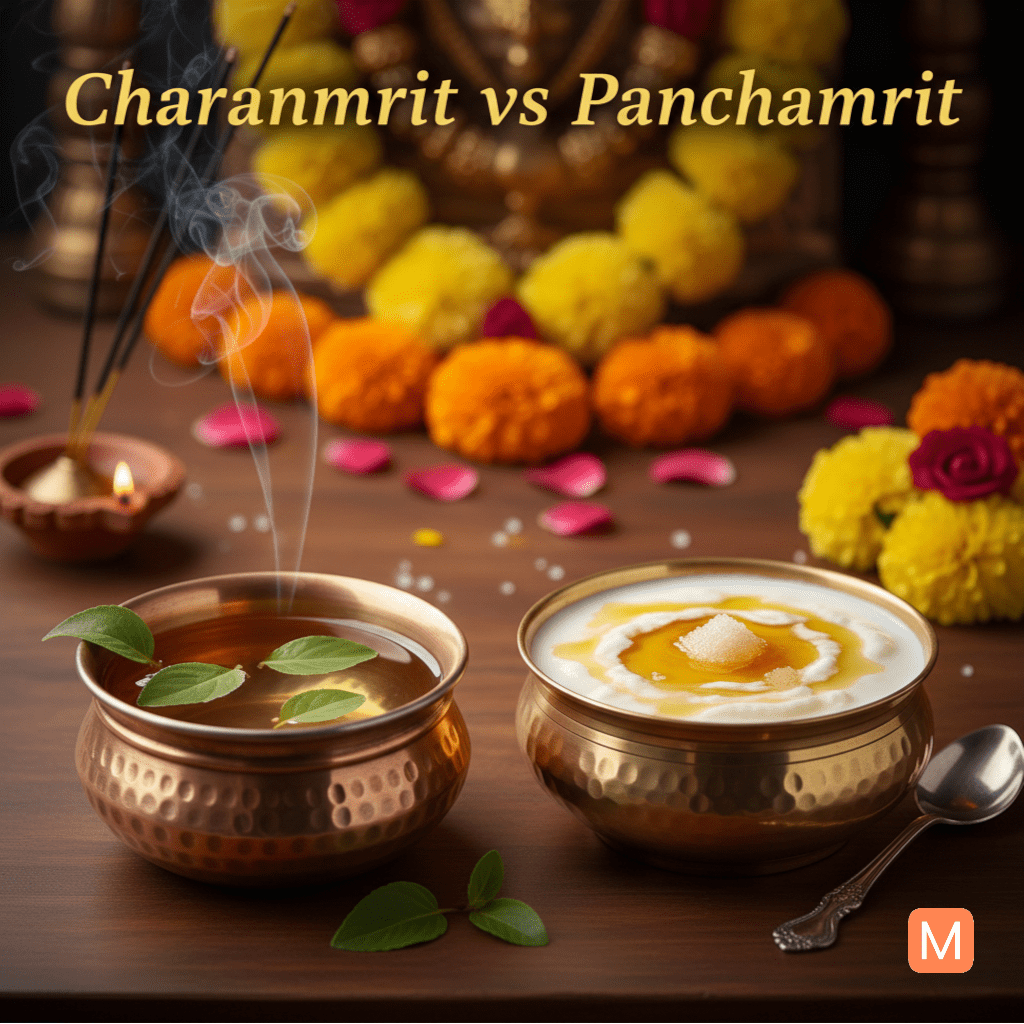
| Feature | Charanamrit | Panchamrit |
|---|---|---|
| Meaning | Water from the Lord’s feet | Five sacred ingredients |
| Main Ingredients | Water + Tulsi | Milk, curd, ghee, honey, sugar |
| Usage | Offered after washing deity’s feet | Used in abhishekam |
| Taste | Light, watery | Sweet, thick |
| Purpose | Purification & blessings | Nourishment & divine energy |
| Symbolism | Surrender & humility | Prosperity & auspiciousness |
Benefits of Charanamrit
1. Spiritual Purification
Removes negative energy and brings mental peace.
2. Increases Devotion
Helps a devotee feel connected with the deity.
3. Blessings of the Divine
Considered as receiving God’s grace directly.
4. Good for Mind & Body
Traditionally believed to balance spiritual and emotional health.
5. Removes Ego
Encourages surrender and humility.
Benefits of Panchamrit
-
Improves energy and concentration
-
Balances the body’s doshas
-
Boosts immunity
-
Brings good fortune and prosperity
-
Enhances spiritual strength when taken with devotion
Conclusion
Both Charanamrit and Panchamrit are important in Hindu worship, but they serve different purposes.
-
Charanamrit is mainly water-based and symbolizes purification, humility, and divine grace.
-
Panchamrit is a nourishing mixture symbolizing prosperity, sweetness, and auspiciousness.
Understanding both helps devotees perform purer, more meaningful puja.