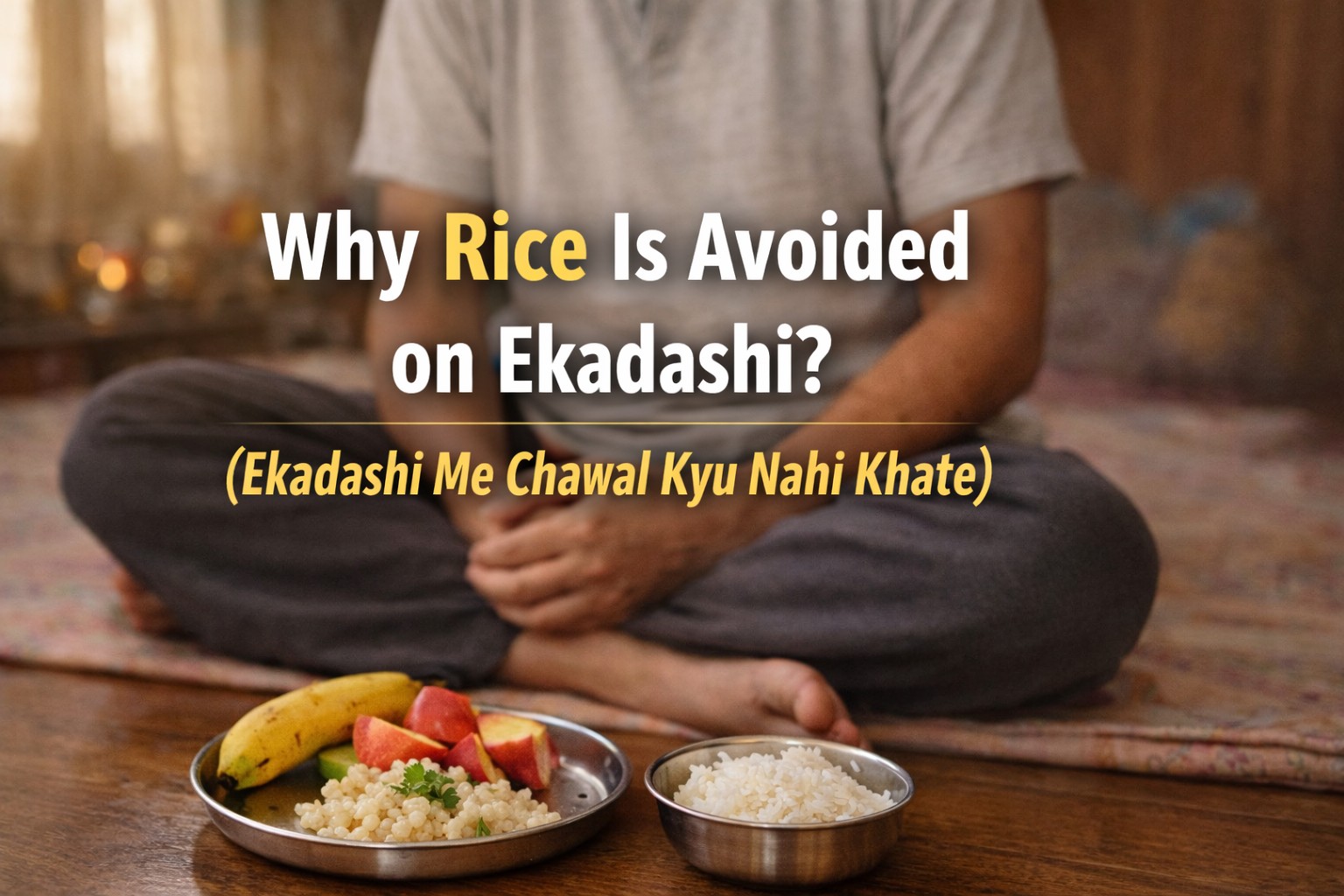
Ekadashi is one of the most sacred fasting days dedicated to Lord Vishnu, observed twice a month by millions of devotees.
One common question people often ask is:
👉 Why is rice not eaten on Ekadashi?
👉 (Ekadashi me chawal kyu nahi khate?)
Let’s understand the real reason behind this tradition—from spiritual beliefs to practical logic.
🛕 Spiritual Beliefs Behind Avoiding Rice
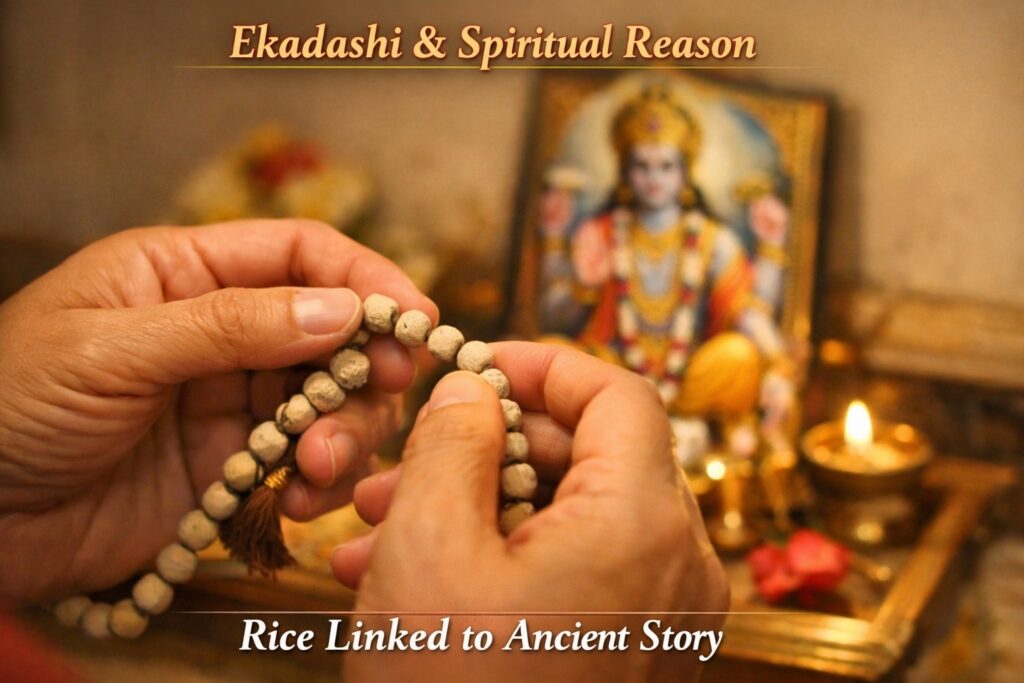
Ekadashi fasting is deeply connected with devotion, discipline, and inner purification.
According to Hindu traditions:
- Ekadashi is considered a day to reduce material attachments
- Devotees focus on bhakti (devotion), chanting, and simplicity
There is also a story related to a demon named Mura, who was defeated by Lord Vishnu. Ekadashi is associated with this victory and symbolizes the destruction of negativity.
👉 Important Note:
Some traditional beliefs suggest avoiding rice on this day, but the core practice is actually about avoiding grains (anna) in general.
🌾 Why Specifically Rice and Grains Are Avoided?
The key idea is not just rice—it’s all grains.
✔ Spiritual Perspective
- Grains are considered grounded and heavy foods
- Fasting aims to keep the body light and focused on spiritual practices
👉 Avoiding grains helps in maintaining a sattvic (pure and calm) state of mind
🧠 Practical & Scientific Reasons
Apart from beliefs, there are also practical explanations:
1. 🍽️ Easier Digestion
Compared to grains, vrat foods like fruits or sabudana are:
- Lighter on the stomach
- Easier to digest
👉 This gives your digestive system a break (mini detox)
2. ⚡ Better Energy & Mental Clarity
Heavy meals (like rice-based meals) can:
- Make you feel sleepy
- Reduce focus
👉 Ekadashi is about alertness, prayer, and mindfulness
3. 🧘 Fasting Discipline
Avoiding staple foods like rice helps:
- Build self-control
- Break routine eating habits
👉 This strengthens both mental and spiritual discipline
⚠️ What Happens If You Eat Rice on Ekadashi?
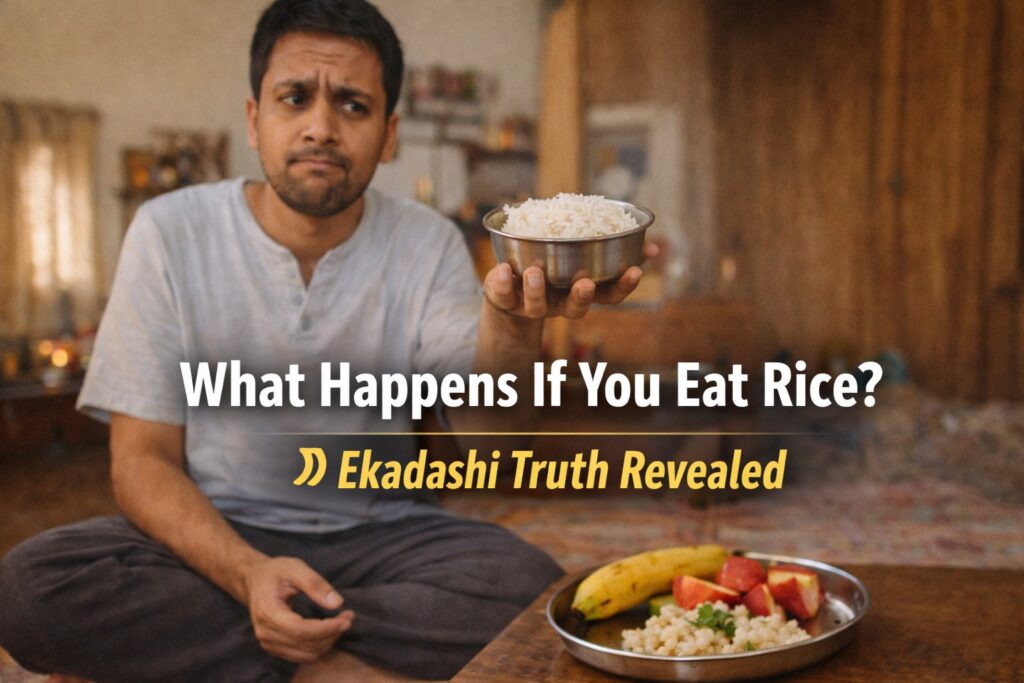
👉 (Ekadashi me chawal khane se kya hota hai?)
🙏 Spiritually
- It is believed that eating grains may reduce the spiritual benefits of fasting
- Considered as not fully following Ekadashi vrat guidelines
🧘 Physically
- You may feel heavier or less energetic compared to light fasting foods
👉 Nothing harmful will happen, but you may miss the full benefits of the fast
🥗 What to Eat Instead on Ekadashi?
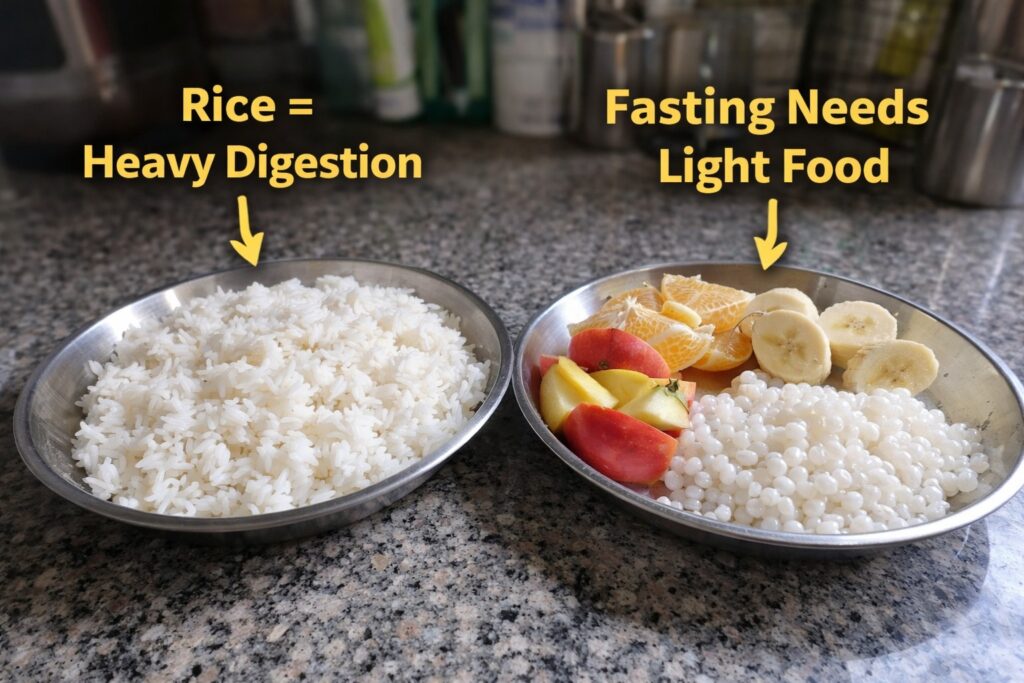
Instead of rice and grains, devotees prefer vrat-friendly foods:
- Fruits 🍎
- Milk & dairy 🥛
- Sabudana (tapioca)
- Kuttu (buckwheat) flour
- Singhara (water chestnut) flour
- Dry fruits 🌰
👉 These foods help keep your body light, energetic, and balanced
🌼 The Deeper Meaning of This Practice
Avoiding rice is not just a rule—it’s a symbol of self-discipline.
Ekadashi teaches us:
- Control over desires
- Mindful eating
- Spiritual focus
👉 By avoiding something as common as rice, we learn to detach from daily habits and connect inwardly
❓ FAQs (SEO Section)
Q1. Can we eat rice on Ekadashi?
Traditionally, rice and all grains are avoided during Ekadashi fasting.
Q2. Why is rice not eaten on Ekadashi?
Due to spiritual beliefs and the practice of avoiding grains for light digestion and mental clarity.
Q3. What if I accidentally eat rice on Ekadashi?
There is no need to worry. You can continue your fast and focus on devotion.
Q4. Is avoiding rice necessary for Ekadashi vrat?
Yes, it is a commonly followed guideline among devotees observing the fast.
🙏 Conclusion
So, the next time you wonder—
👉 Why rice is avoided on Ekadashi (Ekadashi me chawal kyu nahi khate)
Remember, it is a combination of:
- 🛕 Traditional beliefs
- 🧠 Practical understanding
- 🧘 Spiritual discipline
👉 Ekadashi is not just about food—it’s about purifying the body, calming the mind, and deepening devotion.
⚠️ Disclaimer
This article is based on traditional beliefs, commonly followed practices, and general understanding of Ekadashi fasting. Interpretations may vary across individuals and regions.