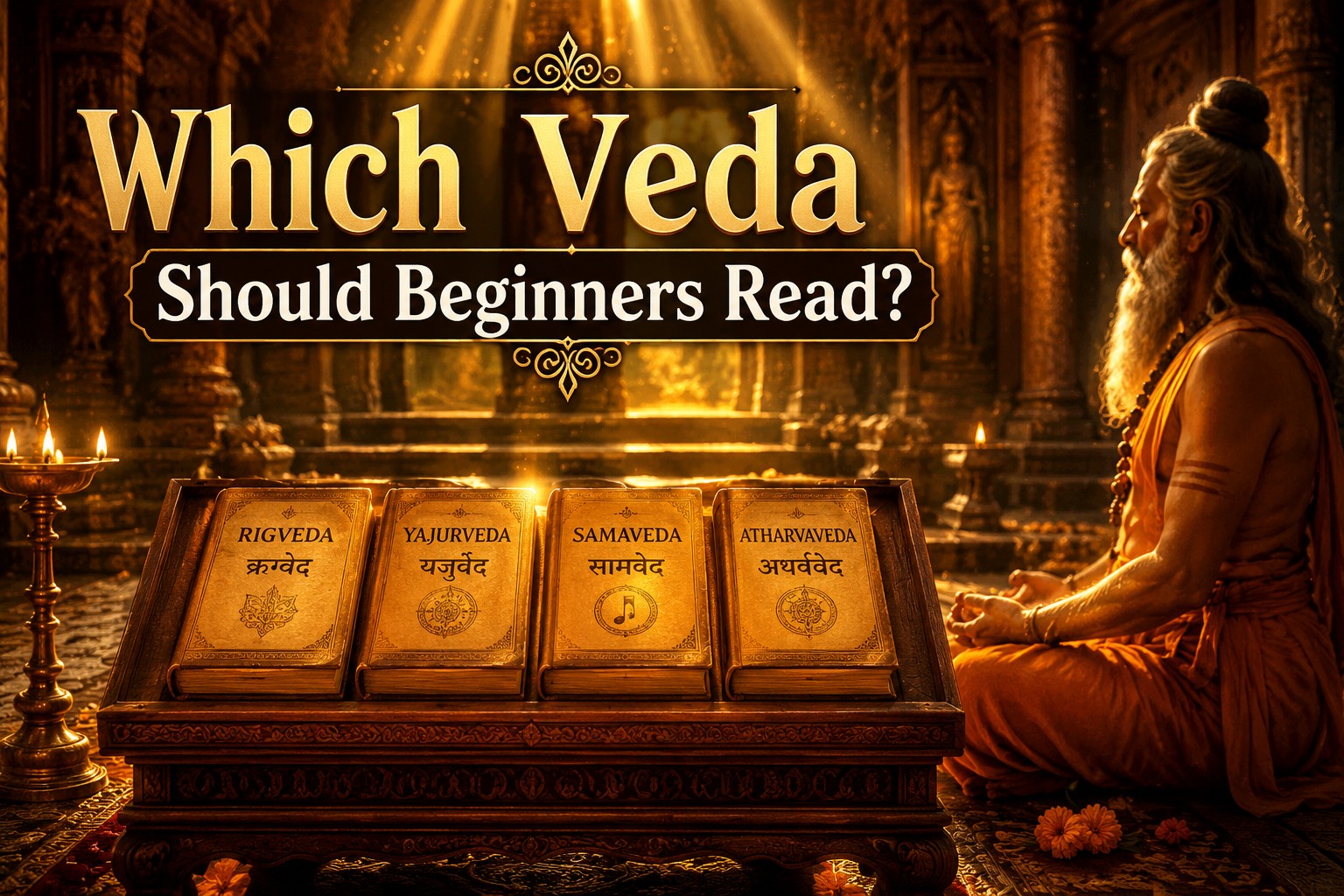
The Vedas are the oldest spiritual texts in the world, filled with deep wisdom about life, nature, and the universe. But for beginners, a common question arises — where should I start?
Can Anyone Read the Vedas?
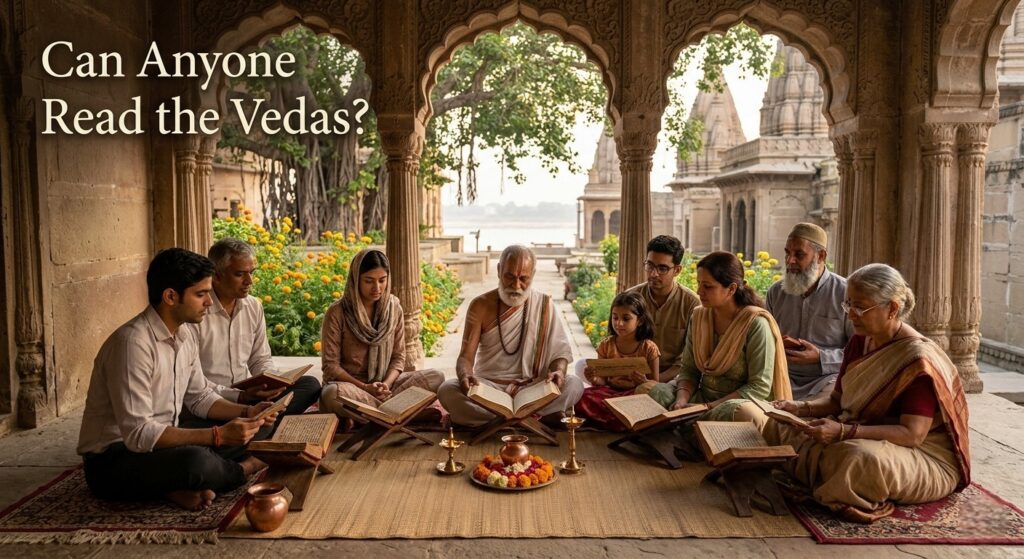
Yes, absolutely.
There is a common misconception that only certain people can read the Vedas. In reality, today anyone with interest, respect, and curiosity can explore Vedic knowledge.
However, beginners should:
- Start with simplified translations
- Avoid jumping into complex Sanskrit verses directly
- Learn meanings rather than memorizing
Which Veda is Best for Beginners?
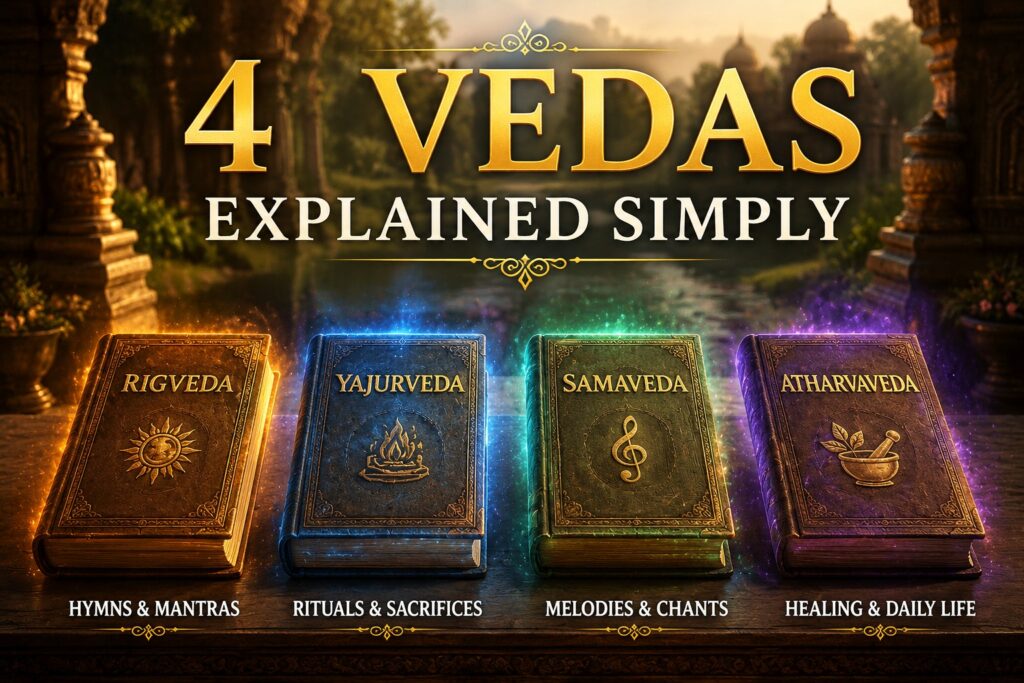
Here’s a simple breakdown:
1. Rigveda (Best Starting Point)
- Contains hymns and basic concepts
- Easier to understand compared to others
- Focus on gods, nature, and philosophy
Recommended for beginners
2. Yajurveda
- Focuses on rituals and ceremonies
- Slightly complex for beginners
3. Samaveda
- Based on musical chants
- Best for those interested in sound & mantra
4. Atharvaveda
- Covers daily life, healing, and practical knowledge
- Interesting but can feel advanced
Final Recommendation
If you’re just starting your journey:
👉 Begin with Rigveda (simplified version)
👉 Then explore Upanishads (for deeper meaning)
5 Shocking Facts About Vedas
- The Vedas are over 5000 years old
- They were passed down orally for generations
- Vedas contain knowledge about astronomy, medicine, and nature
- No single author — they were revealed to sages (Rishis)
- They are considered “Shruti” (divine knowledge heard)
Vedic Lifestyle for Beginners
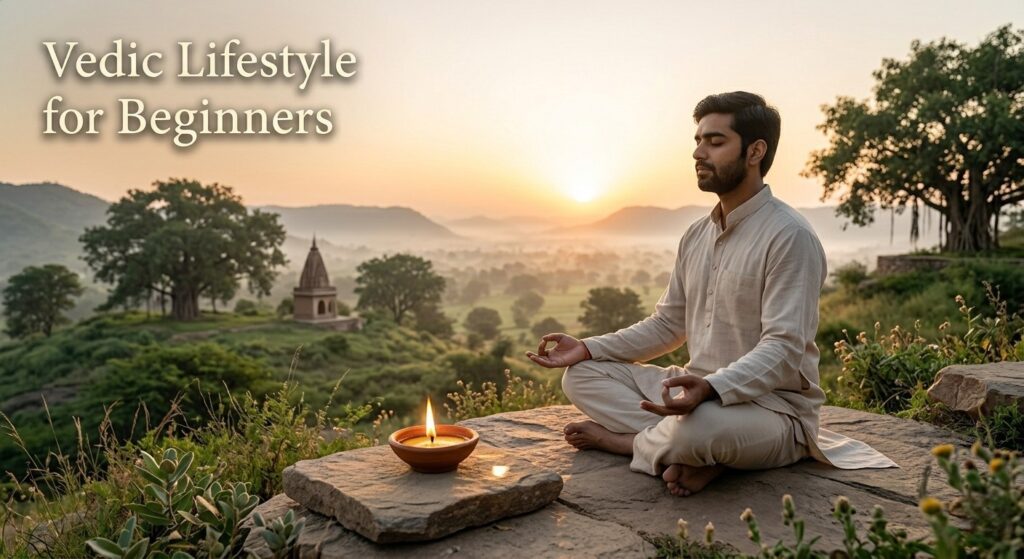
You don’t need to read everything to follow Vedic wisdom. Start small:
- Wake up early (Brahma Muhurta)
- Practice meditation or chanting
- 📖 Read 5–10 minutes daily
- Eat pure and simple food
- Practice gratitude and discipline
🔍 Final Thoughts
The Vedas are not just books—they are a way of understanding life.
Start simple. Stay consistent.
And most importantly, focus on understanding, not complexity.