
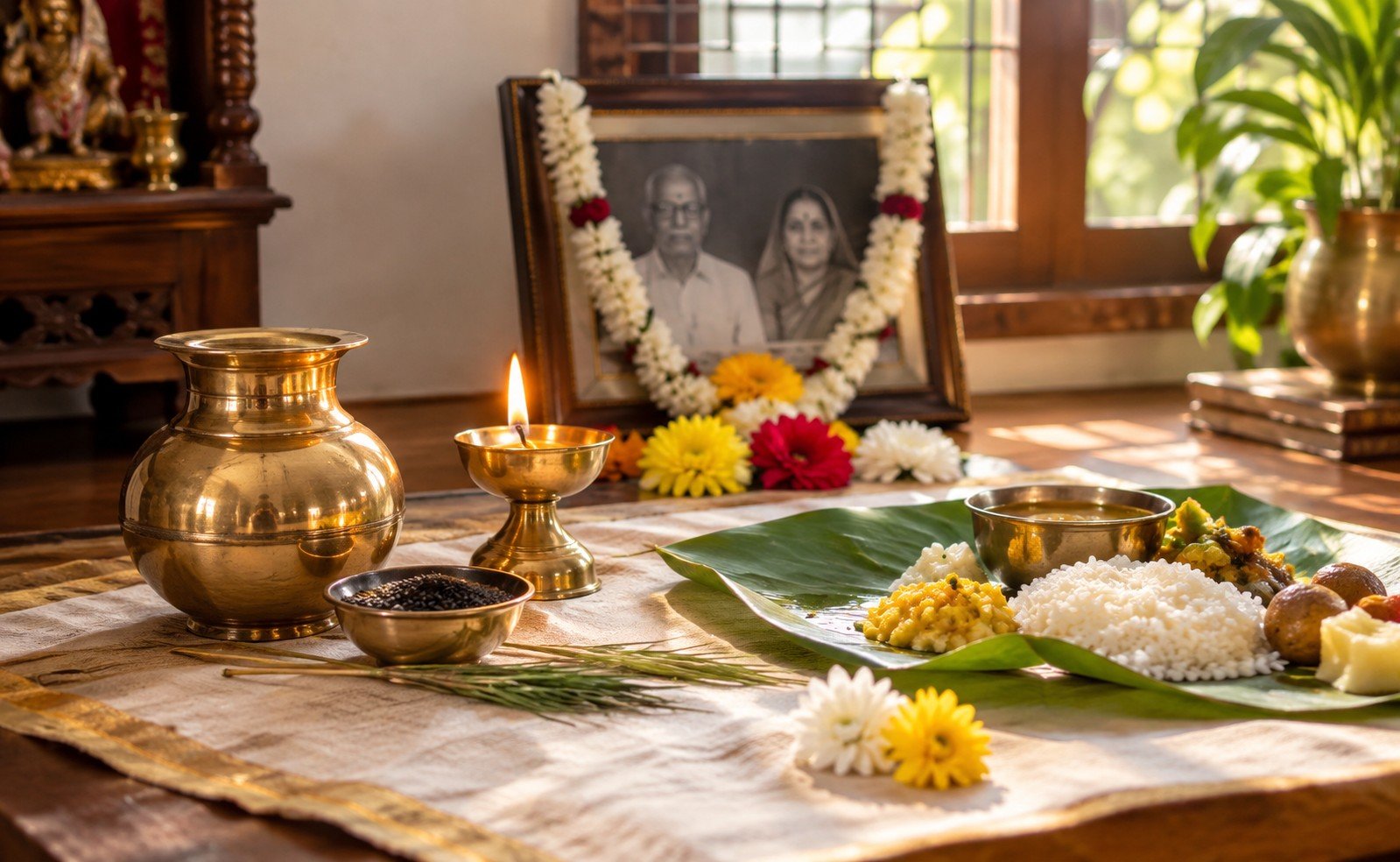
Pitru Paksha 2026 is a traditional period for remembering and honouring departed ancestors through Shradh, Tarpan, prayers, food offerings and charity. In India, the main Pitru Paksha period begins with Pratipada Shraddha on September 27, 2026, and concludes with Sarva Pitru Amavasya on October 10, 2026.
For many Hindu families, these days are observed with simplicity, gratitude and remembrance. The exact rituals can differ according to family tradition, region and Panchang.
So, Pitru Paksha mein kya karein? Here are 11 simple practices that can help you observe Shradh 2026 respectfully.
What Is Pitru Paksha?
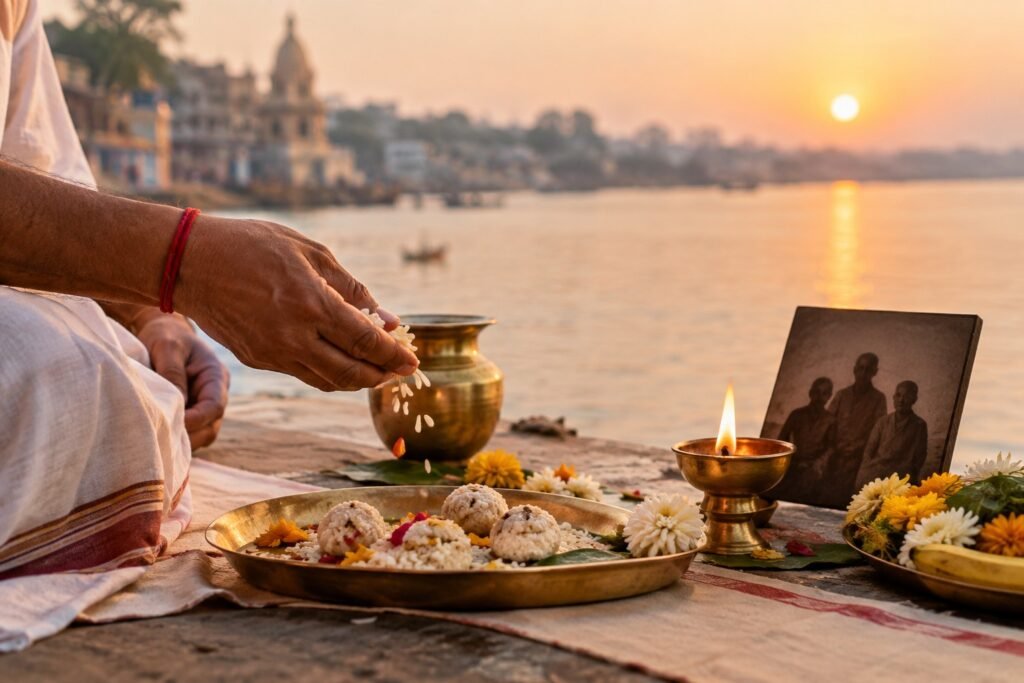
Pitru Paksha, also known as Shradh Paksha or Mahalaya Paksha, is a period traditionally dedicated to remembering departed ancestors.
During this time, families may perform rituals such as Shradh, Pitru Tarpan and Pind Daan, offer food, donate according to their tradition and spend time in prayer and remembrance.
The main Shradh date for an ancestor is traditionally connected with their lunar death Tithi rather than simply the Gregorian calendar date. If the exact death Tithi is unknown, Sarva Pitru Amavasya is traditionally considered an important day for collective remembrance.
Pitru Paksha 2026 Dates
According to the 2026 Shraddha calendar, the main sequence is:
- September 26: Purnima Shraddha
- September 27: Pratipada Shraddha
- September 28: Dwitiya Shraddha
- September 29: Tritiya Shraddha
- September 30: Chaturthi and Panchami Shraddha
- October 1: Shashthi Shraddha
- October 2: Saptami Shraddha
- October 3: Ashtami Shraddha
- October 4: Navami Shraddha
- October 5: Dashami Shraddha
- October 6: Ekadashi Shraddha
- October 7: Dwadashi Shraddha
- October 8: Trayodashi Shraddha
- October 9: Chaturdashi Shraddha
- October 10: Sarva Pitru Amavasya
Note: Ritual timings depend on location and Panchang calculations. Families should check a local Panchang or consult a knowledgeable priest for the exact Shradh Tithi and Muhurat.
11 Simple Rules for Pitru Paksha 2026
1. Remember Your Ancestors With Gratitude
The most important part of Pitru Paksha is remembrance.
Take some quiet time to remember your parents, grandparents and other departed family members. You can offer prayers and express gratitude for the family members who came before you.
Pitru Paksha does not have to be approached with fear. For many families, it is a period of gratitude, remembrance and respect for ancestors.
2. Perform Shradh According to the Correct Tithi
If you know the lunar Tithi on which an ancestor passed away, families traditionally perform Shradh on the corresponding Tithi during Pitru Paksha.
The lunar Tithi is different from the normal English calendar date. Therefore, simply using the date of death from a regular calendar may not give the correct Shradh date.
If you are unsure about the Tithi, consult a reliable Panchang or a knowledgeable priest.
3. Offer Pitru Tarpan
Pitru Tarpan is an important ancestral remembrance practice in many Hindu traditions.
It generally involves offering water, often with black sesame seeds, while remembering the ancestors. The exact procedure and mantras can differ between families and traditions.
If you are performing Tarpan at home for the first time, it is better to follow your family’s established method or seek guidance from a knowledgeable priest.
4. Offer Food According to Family Tradition
Food offerings are traditionally associated with Shradh.
Families may prepare simple, sattvic food and offer it as part of their ancestral observance. What is prepared varies considerably between regions and communities.
Rather than following random lists circulating online, it is better to follow the food customs traditionally observed in your own family.
5. Donate Food or Useful Items
Daan is another traditional practice associated with Pitru Paksha.
Depending on your family’s custom and your circumstances, you may donate:
- Food
- Grains
- Clothes
- Essential household items
- Educational supplies
- Money to a genuine charitable cause
The purpose should be seva and remembrance, rather than showing off the donation.
6. Feed Those in Need
One simple way to observe Pitru Paksha is to share food with someone who needs it.
You can provide a meal to a person in need, support a food-distribution initiative or contribute to a community kitchen.
Acts of kindness can make ancestral remembrance more meaningful by turning remembrance into seva.
7. Spend Some Time in Prayer and Naam Jaap
Pitru Paksha can also be a good time to maintain a peaceful spiritual routine.
You may spend a few minutes each day doing Naam Jaap, meditation or prayer.
Depending on your personal tradition, you may chant a familiar mantra such as:
“Om Namo Bhagavate Vasudevaya”
or simply repeat the name of your Ishta Devata with devotion.
For people who find it difficult to maintain a fixed counting routine, a Jaap Mala or Jaap Counter can help maintain consistency during daily Naam Jaap.
8. Keep the Home and Puja Space Clean
Cleanliness is traditionally given importance before performing Hindu puja and ancestral rituals.
During Pitru Paksha, keep your puja space clean and organized. Before performing any ritual, take a bath and wear clean clothes according to your family practice.
The emphasis should be on simplicity, cleanliness and sincerity rather than elaborate decoration.
9. Follow a Simple and Sattvic Lifestyle
Many families choose to keep their lifestyle simple during Shradh.
Depending on personal and family tradition, this may include:
- Eating simple vegetarian food
- Avoiding intoxicants
- Maintaining cleanliness
- Speaking respectfully
- Spending more time in prayer or spiritual activities
- Avoiding unnecessary extravagance
These practices are not identical across every Hindu community, so family tradition should be given priority.
10. Avoid Treating Pitru Paksha as a Period of Fear
There are many stories and claims online about Pitru Paksha that can create unnecessary fear.
Traditionally, the period is associated with remembering and honouring ancestors, not with being frightened of them.
Instead of worrying about every small action, focus on sincere prayer, remembrance, charity and following your family’s customs.
11. Observe Sarva Pitru Amavasya if the Death Tithi Is Unknown
One of the most useful things to know about Pitru Paksha is what to do when the ancestor’s exact death Tithi is unknown.
Sarva Pitru Amavasya, the concluding Amavasya of Pitru Paksha, is traditionally significant for remembering ancestors when their individual death Tithi is unknown or when the appropriate Shradh could not be performed earlier. In 2026, it falls on October 10 in India.
Families may perform Tarpan, prayers, food offerings, charity or other ancestral rituals according to their tradition.
What Should You Avoid During Pitru Paksha?
There are different customs regarding what should and should not be done during Shradh. However, many families traditionally prefer to:
- Avoid unnecessary celebrations and extravagance.
- Maintain a simple lifestyle.
- Avoid intoxicants if this is part of their family practice.
- Avoid disrespectful behaviour during ancestral rituals.
- Avoid performing rituals casually without understanding the basic procedure.
- Avoid blindly following social-media claims about Shradh.
Some Hindu families also postpone major auspicious celebrations such as weddings or housewarming ceremonies during Pitru Paksha, although practices vary by family and region.
The important thing is to follow your family tradition and local Panchang guidance.
Can You Do Naam Jaap During Pitru Paksha?

Yes. Naam Jaap and prayer can be included in a personal spiritual routine during Pitru Paksha.
You do not necessarily need to perform a complicated ritual to spend some time in remembrance and prayer.
You can sit quietly, remember your ancestors and chant your chosen mantra for a few minutes.
For example:
“Om Namo Bhagavate Vasudevaya”
You can use a traditional Jaap Mala to maintain a set number of repetitions or a Jaap Counter if you prefer counting with a digital or manual counter.
The focus should remain on devotion, remembrance and consistency.
What If I Don’t Know My Ancestor’s Shradh Date?
This is a common question.
Traditionally, Shradh is connected with the lunar Tithi of the ancestor’s death. If that Tithi is not known, Sarva Pitru Amavasya is an important day for remembering ancestors collectively.
If you know only the English calendar date, don’t automatically assume that the same date should be used for Shradh. A Panchang can help determine the relevant lunar Tithi.
For an important family ritual, consulting a knowledgeable priest is advisable.
Simple Pitru Paksha Routine for 2026
If you want to keep your observance simple, you can follow a routine like this:
Morning
- Take a bath and wear clean clothes.
- Keep your puja area clean.
- Remember your ancestors.
- Offer prayers according to your family tradition.
During the day
- Perform Shradh/Tarpan if it is your family’s designated Tithi.
- Offer food according to family custom.
- Do an act of charity or seva.
Evening
- Spend a few minutes in Naam Jaap or prayer.
- Remember your ancestors with gratitude.
- Maintain a peaceful and simple atmosphere at home.
This simple routine can be adapted according to your family customs.
Final Thoughts
Pitru Paksha is a time of remembrance, gratitude and seva.
For Pitru Paksha 2026, families can observe Shradh according to the appropriate Tithi, perform Tarpan or other traditional rituals, offer food, donate according to their capacity and spend time in prayer and Naam Jaap.
The most important point is not to turn Shradh into a source of fear. Follow your family tradition, use a reliable Panchang for the correct Tithi and perform whatever you can with sincerity.
September 27 to October 10, 2026, marks the main Pitru Paksha observance in India, ending with Sarva Pitru Amavasya on October 10.
Frequently Asked Questions
1. When does Pitru Paksha 2026 start?
In India, the main Pitru Paksha period begins with Pratipada Shraddha on September 27, 2026. Purnima Shraddha is observed separately on September 26.
2. When is Sarva Pitru Amavasya 2026?
Sarva Pitru Amavasya is on October 10, 2026, in India.
3. What should we do during Pitru Paksha?
Families traditionally remember their ancestors through Shradh, Tarpan, food offerings, prayer, charity and other rituals according to their family customs.
4. Can we do Naam Jaap during Pitru Paksha?
Yes. Naam Jaap, prayer and meditation can be part of your personal spiritual routine during Pitru Paksha.
5. What if I don’t know my ancestor’s death Tithi?
Sarva Pitru Amavasya is traditionally important for remembering ancestors whose death Tithi is unknown. You can also consult a knowledgeable priest or Panchang for guidance.
6. Can women perform Shradh?
Practices differ between families and traditions. In some families, women participate in or perform ancestral rites. Follow your family tradition and consult a knowledgeable priest where necessary.
7. Is it necessary to perform an elaborate Shradh ceremony?
Not every family follows the same procedure. Ritual requirements vary by tradition, region and family custom. If you are unsure, seek guidance rather than copying an elaborate ritual from an unverified online source.