
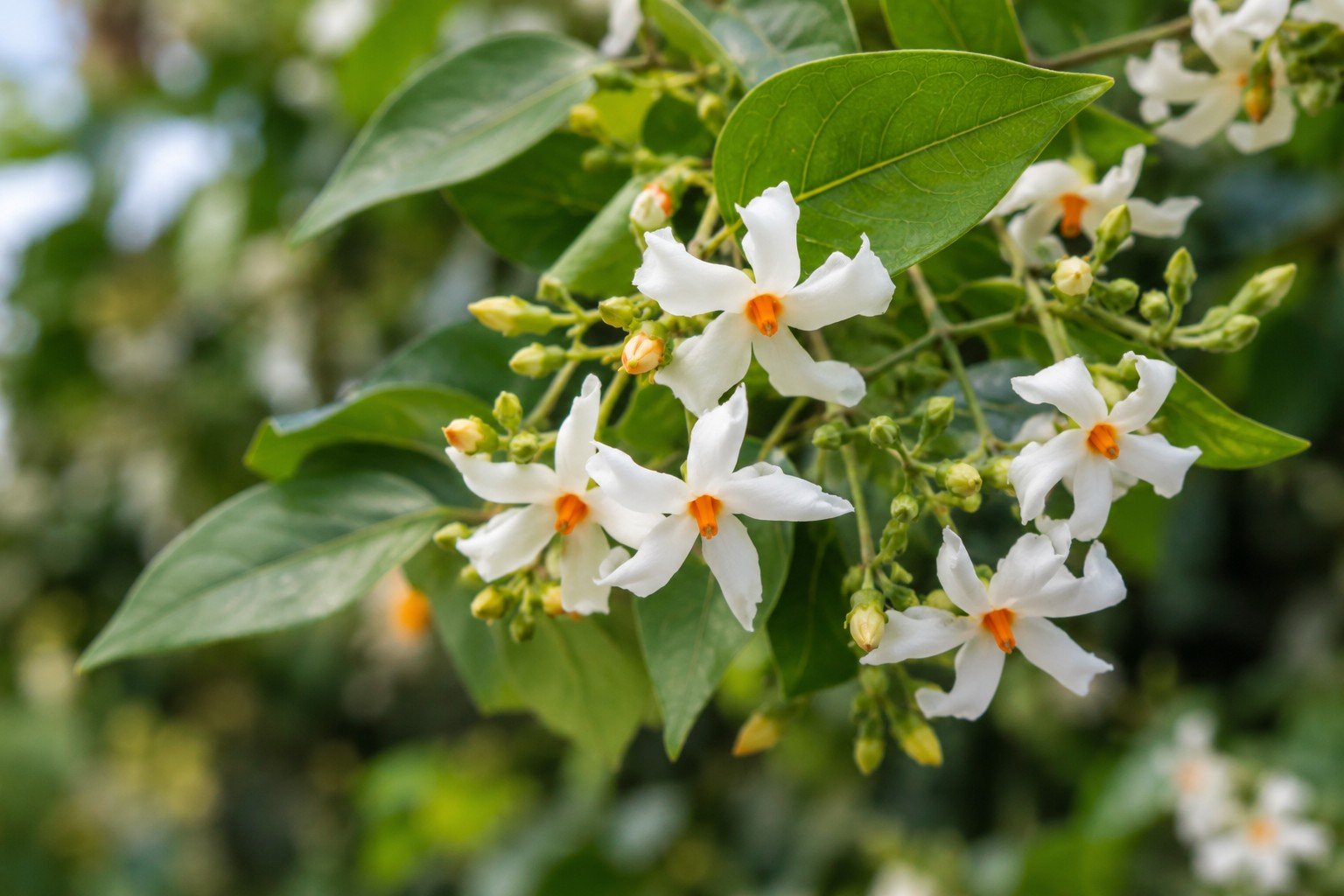
The Parijat flower, also known as Harshringar, Harsingar, or Night-Flowering Jasmine, is one of the most beautiful and spiritually significant flowers found in India. Its small white petals with an orange centre give it a distinctive appearance, while its sweet fragrance makes it popular in homes and gardens.
In Hindu tradition, the Parijat flower has a special connection with mythology, devotion and worship. But what makes this flower so sacred? Which gods can it be offered to, and what are its traditional benefits? Let us explore.
What Is Parijat Flower?
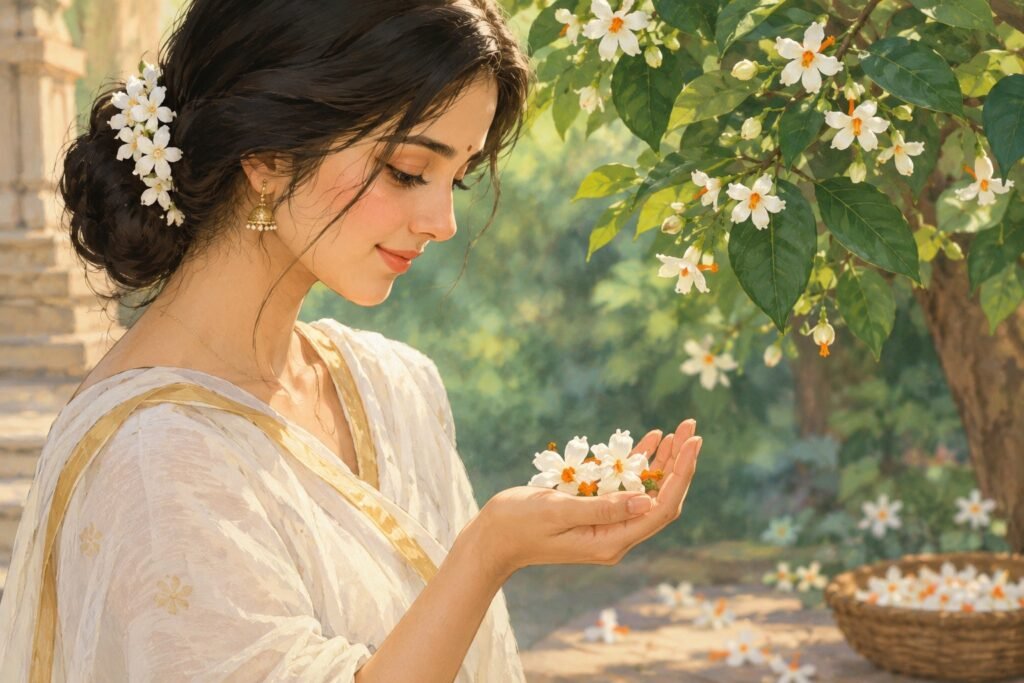
Parijat is a flowering plant scientifically known as Nyctanthes arbor-tristis. Unlike many flowers, Parijat blooms during the night and usually falls from the tree in the early morning.
The flower has white petals surrounding a bright orange centre. Because of its night-blooming nature, it is also commonly called Night-Flowering Jasmine.
In India, the flower is widely known as Harshringar or Harsingar.
Religious Significance of Parijat Flower
The Parijat flower holds an important place in Hindu religious traditions. It is often associated with purity, devotion and divine blessings.
The flower is particularly connected with Lord Krishna, Lord Vishnu and Goddess Lakshmi in popular Hindu traditions.
Its natural habit of blooming at night and falling gently to the ground in the morning has also given it a special spiritual symbolism. Many devotees see the fallen Parijat flower as a reminder of humility and surrender before God.
In many households, freshly fallen flowers are collected in the morning and used for puja.
Parijat Flower and Hindu Mythology
One of the most famous stories associated with Parijat comes from the Samudra Manthan, or the churning of the cosmic ocean.
According to Hindu mythology, when the Devas and Asuras churned the ocean, several divine treasures emerged from it. Parijat is traditionally described among these celestial treasures.
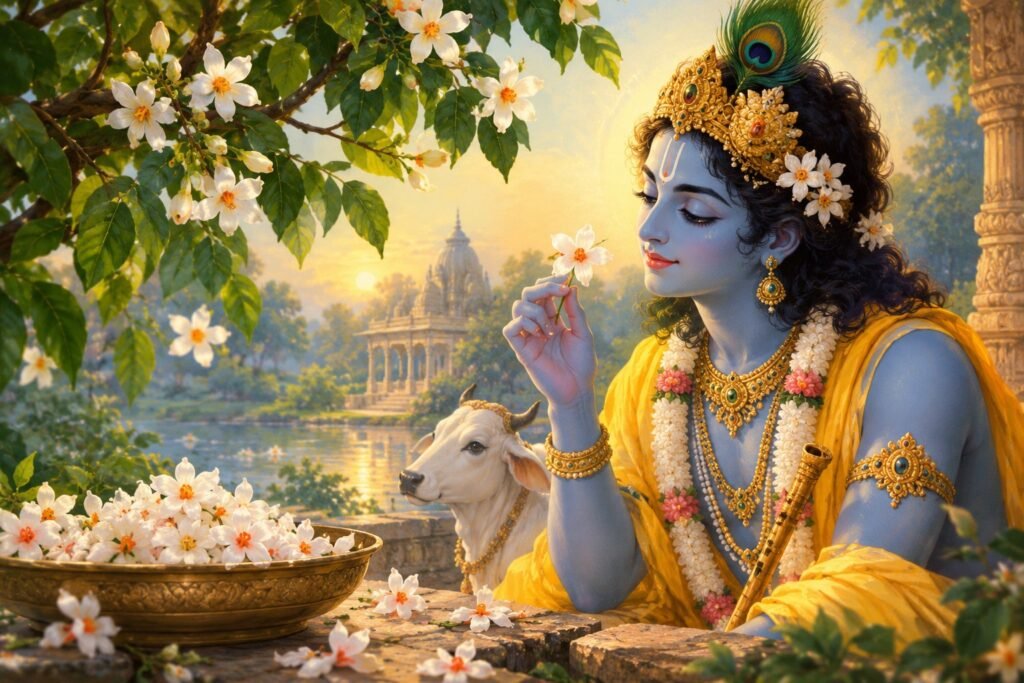
Another popular tradition connects the Parijat tree with Lord Krishna. According to the story, Krishna brought the divine Parijat tree to Earth from heaven. The story is particularly associated with Krishna, Satyabhama and Rukmini.
Different versions of the story are found in Hindu traditions, but they all contribute to the special status of Parijat as a divine flower.
Which Gods Is Parijat Flower Offered To?
Parijat flowers are commonly used during Hindu worship. They can be offered to several deities depending on local traditions and family customs.
Lord Vishnu
Parijat is considered an auspicious flower for Lord Vishnu and is used in Vishnu worship in many traditions.
Lord Krishna
Because of its connection with Krishna in popular mythology, devotees may offer Parijat flowers during Krishna puja and Janmashtami-related worship.
Goddess Lakshmi
The flower is also associated with auspiciousness and prosperity, and some devotees offer Parijat flowers to Goddess Lakshmi during worship.
It is always best to follow the specific puja tradition of your family, temple or spiritual teacher when choosing flowers for a deity.
How Is Parijat Flower Used in Puja?
Parijat flowers are generally collected in the morning after they naturally fall from the tree. They can be placed near the deity or offered during puja according to one’s tradition.
Before offering them:
- Collect clean, fresh flowers in the morning.
- Remove leaves or unwanted debris.
- Keep the flowers in a clean plate.
- Offer them respectfully during puja.
- Avoid using flowers that are dirty, damaged or have been stepped on.
Some traditions specifically prefer naturally fallen Parijat flowers rather than flowers plucked directly from the tree.
Traditional Benefits of Parijat Flower
Parijat has also been valued in Ayurvedic and traditional Indian practices. Different parts of the plant, including its leaves and flowers, have historically been used in traditional preparations.
Traditionally, Parijat has been associated with:
- Supporting general wellness
- Traditional herbal preparations
- Its naturally fragrant flowers being used around the home
- Traditional practices involving the leaves and other parts of the plant
However, these traditional uses should not be confused with proven medical treatments. Do not consume Parijat preparations for a health condition without guidance from a qualified healthcare professional.
Spiritual Meaning of Parijat Flower
Beyond mythology and puja, Parijat can carry a deeper spiritual meaning.
The flower blooms during darkness and falls to the ground when morning arrives. For many devotees, this represents humility, devotion and surrender.
Its short-lived flowers can also remind us that beauty and worldly life are temporary, while devotion and good actions remain meaningful.
Is Parijat Flower Good for Home?
A Parijat plant is commonly grown in Indian homes because of its fragrance and cultural importance. Many people also consider the plant auspicious and enjoy collecting its flowers for morning worship.
If you have enough sunlight and suitable soil, growing a Parijat plant can be a beautiful addition to a home garden.
Final Thoughts
The Parijat flower is much more than a fragrant garden flower. Its connection with Hindu mythology, Lord Krishna, Lord Vishnu and traditional worship has made it an important flower in Indian spiritual culture.
Whether you collect its naturally fallen flowers for morning puja or simply grow the plant for its fragrance, Parijat carries a beautiful message of devotion, humility and purity.
As with many religious practices, customs surrounding Parijat can vary between regions and families. Therefore, local traditions should always be respected.
Frequently Asked Questions
1. What is Parijat flower called in English?
Parijat is commonly known as Night-Flowering Jasmine. Its scientific name is Nyctanthes arbor-tristis.
2. Which God is Parijat flower offered to?
Parijat flowers are traditionally associated with Lord Vishnu and Lord Krishna and are also offered to Goddess Lakshmi in some traditions.
3. Can Parijat flowers be used for puja?
Yes. Many devotees collect naturally fallen Parijat flowers in the morning and use them for puja.
4. Why does Parijat flower fall on the ground?
Parijat flowers generally bloom at night and naturally fall during the early morning. This is a normal characteristic of the plant.
5. What is another name for Parijat flower?
Parijat is also known as Harshringar, Harsingar and Night-Flowering Jasmine.