
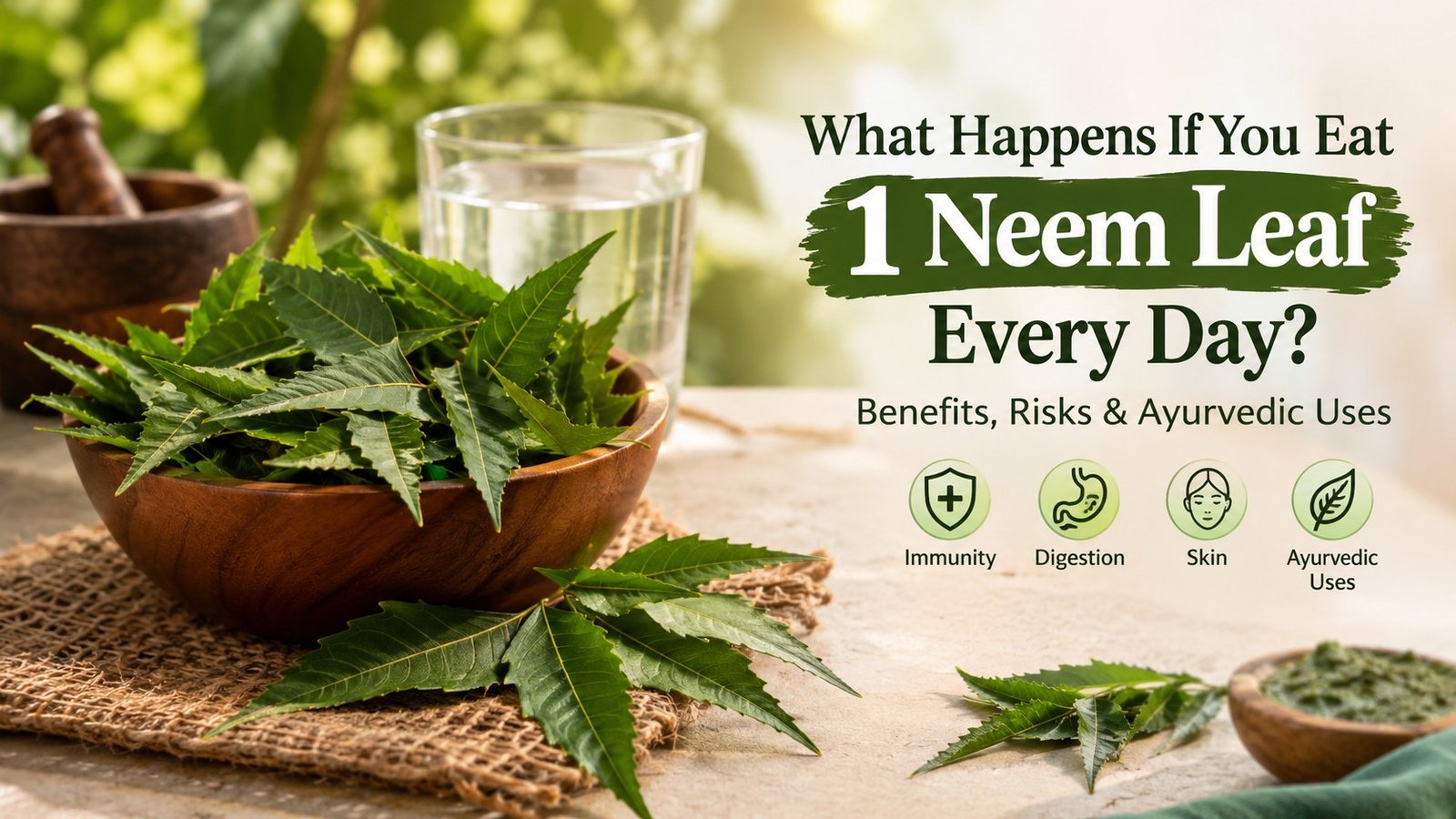
Neem has been part of traditional Indian life for centuries. From neem twigs used for oral hygiene to neem leaves used in traditional remedies, the tree has a special place in Ayurveda and Indian households.
Because of this traditional reputation, many people follow the practice of eating a few fresh neem leaves in the morning. But what actually happens if you eat one neem leaf every day?
Does it really help the body? Is it good to eat neem on an empty stomach? Are there any side effects?
The answer is more nuanced than many social media claims suggest.
Neem contains several naturally occurring compounds that have been studied for their biological activities. However, there is limited human evidence specifically showing that eating one fresh neem leaf every day provides a particular health benefit.
Let’s understand what Ayurveda traditionally says, what modern research tells us, and what precautions you should know before making neem leaves part of your daily routine.
Important note: Neem should not be considered a replacement for prescribed medicines or medical treatment. The safety of regular oral neem consumption can vary depending on the preparation, amount and individual health conditions.
What Is Neem?
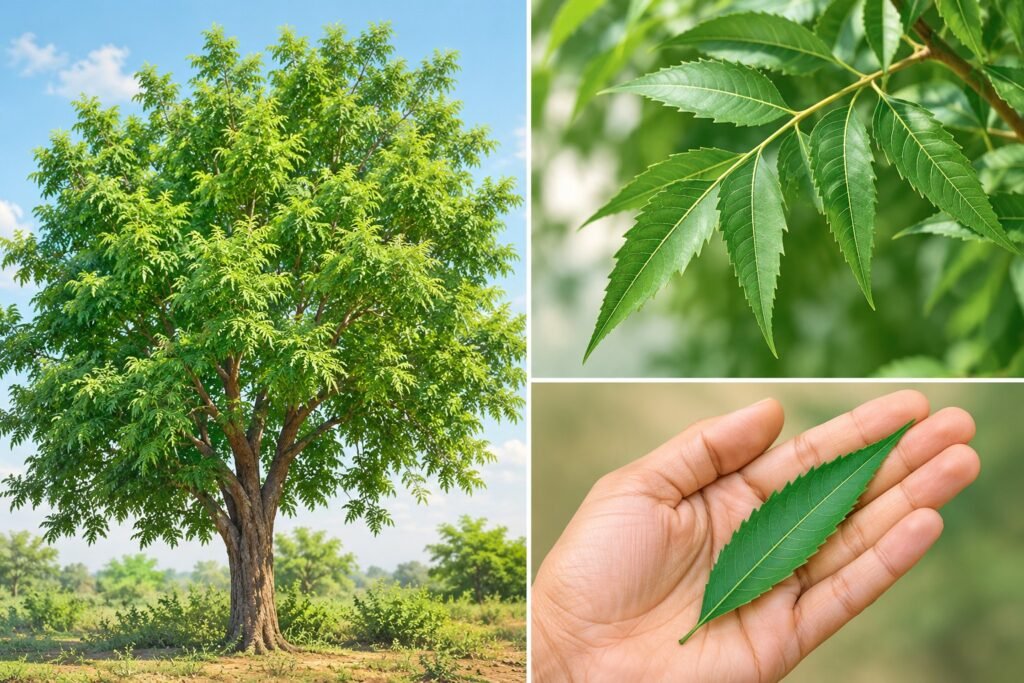
Neem, scientifically known as Azadirachta indica, is an evergreen tree native to the Indian subcontinent.
Almost every part of the tree has traditionally been used, including:
- Leaves
- Bark
- Seeds
- Neem oil
- Flowers
- Fruits
Neem leaves are particularly well known in traditional Indian practices.
They contain various plant compounds, including limonoids, flavonoids and other phytochemicals. Researchers have investigated neem for antimicrobial, anti-inflammatory and other biological activities, but laboratory or animal findings should not automatically be interpreted as proof that eating a single leaf daily produces the same effect in humans.
What Happens If You Eat 1 Neem Leaf Every Day?
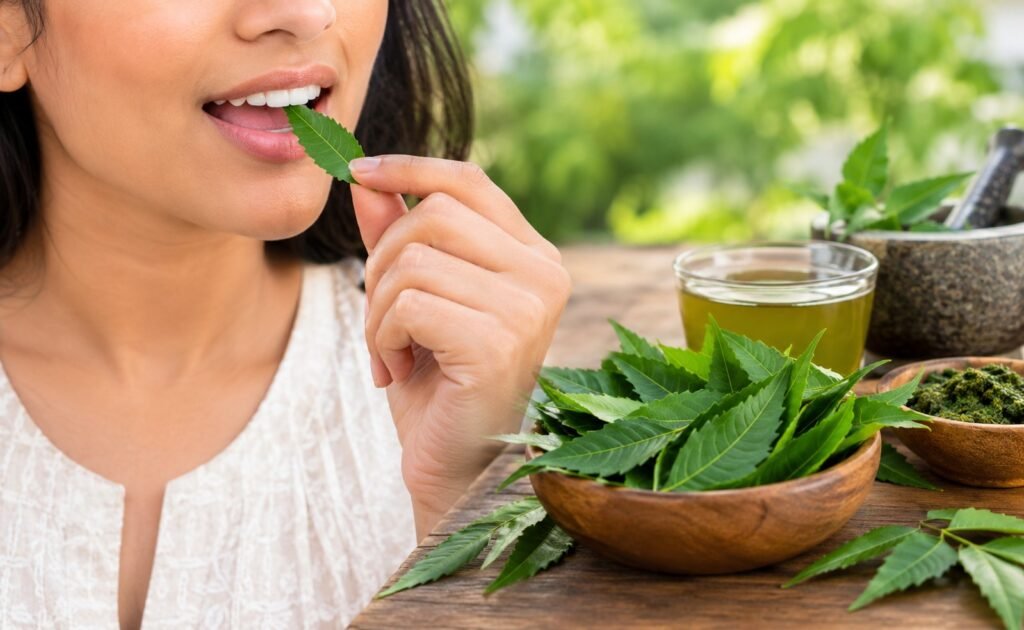
There is no scientifically established “one neem leaf a day” effect.
In other words, there is currently no strong human evidence showing that eating exactly one fresh neem leaf every day will definitely detox the body, improve immunity, lower blood sugar or prevent disease.
However, neem has a long history of traditional use, and its leaves contain biologically active compounds.
If someone chooses to consume a small amount of fresh neem leaf, the experience may simply be that of consuming a very bitter plant leaf. Some people may tolerate it without noticeable effects, while others may experience digestive discomfort.
The important point is that natural does not automatically mean risk-free. India’s Ministry of Ayush’s pharmacovigilance programme specifically emphasizes that traditional and herbal products can also produce adverse effects and should be used with attention to safety.
7 Potential Benefits of Neem Leaves
Many benefits associated with neem come from traditional Ayurvedic use, laboratory studies or animal research. They should therefore be described as potential or traditional benefits, rather than guaranteed results.
1. Neem Has Traditionally Been Used for Skin Health
Neem is traditionally associated with maintaining healthy skin.
Its leaves contain plant compounds that have demonstrated antimicrobial and anti-inflammatory activity in laboratory research.
This is one reason neem has historically appeared in traditional preparations for various skin-related concerns.
However, eating one neem leaf should not be presented as a treatment for acne, eczema, infections or other skin diseases.
2. Neem Contains Natural Plant Compounds
Neem leaves contain several phytochemicals that researchers have studied for their biological activity.
These compounds are one reason neem has attracted scientific interest.
But there is an important difference between studying a compound in a laboratory and proving that eating one fresh leaf produces a measurable health benefit in humans.
More clinical research is needed before specific health claims can be made confidently.
3. Traditional Use for Oral Hygiene
Neem has a particularly long history in Indian oral hygiene.
Neem twigs have traditionally been used as natural chewing sticks, and various neem compounds have been investigated for antimicrobial activity.
This traditional use is different from eating neem leaves. So while neem has an interesting history in oral care, eating one leaf every morning should not be considered a substitute for brushing, flossing or dental care.
4. Neem Has Been Studied for Its Antimicrobial Properties
Neem extracts and compounds have demonstrated antimicrobial activity in laboratory studies.
This is one of the most commonly discussed properties of neem.
However, laboratory activity does not mean that consuming a neem leaf will kill harmful bacteria inside your body. The human digestive system is much more complicated, and the amount of an active compound reaching a particular tissue can vary considerably.
So it is better to say that neem has antimicrobial potential, rather than claiming that eating a leaf “cleans harmful bacteria from the body.”
5. Neem May Have Anti-Inflammatory Potential
Some compounds found in neem have been investigated for their potential anti-inflammatory effects.
This has contributed to neem’s traditional reputation in Ayurveda.
However, evidence from laboratory and animal research is not enough to establish that eating one neem leaf every day treats inflammation or inflammatory diseases in humans.
6. Neem Has Been Investigated for Blood Sugar Effects
One of the areas that has attracted scientific interest is neem’s possible effect on blood glucose.
Some studies involving neem preparations have reported glucose-lowering effects, but different preparations, doses and experimental conditions make it difficult to translate these findings into a recommendation to eat fresh neem leaves every day.
This is particularly important for people taking diabetes medication.
If neem contributes to lowering blood sugar, combining it with glucose-lowering medicines could potentially require medical supervision rather than self-treatment.
7. Neem Has a Long History in Ayurveda
Neem, known traditionally as Nimba, has an important place in Ayurveda.
Traditional Ayurvedic practices have used different parts of the neem tree for various purposes. However, Ayurvedic use involves specific preparations, quantities and individual considerations.
That does not necessarily mean that eating a raw neem leaf every morning is appropriate for everyone.
Ayurveda and modern medicine also differ in how treatments are evaluated, so traditional use should be presented as traditional knowledge rather than automatically as modern clinical evidence.
Is It Good to Eat Neem Leaves on an Empty Stomach?
You may have heard the advice to chew neem leaves first thing in the morning.
This is a traditional practice, but there is no strong scientific evidence establishing that eating neem on an empty stomach is better than consuming it at another time.
In addition, neem is extremely bitter and may cause stomach discomfort in some people.
If you are considering regular oral use of neem, particularly as a health remedy rather than as an occasional food, it is better to discuss it with a qualified healthcare professional.
What Are the Risks of Eating Neem Leaves Daily?
This is the part that is often missing from social media posts about neem.
Neem is a biologically active plant, not simply a harmless food.
Research has identified toxic effects from some neem preparations, and safety can differ significantly depending on whether the preparation is a leaf, extract, oil or another concentrated product.
Possible concerns include:
Digestive discomfort
Because neem is intensely bitter and contains active plant compounds, some people may experience nausea, stomach discomfort or other digestive symptoms.
Blood sugar may be affected
People taking diabetes medicines should be particularly cautious because some neem preparations have been investigated for glucose-lowering effects.
Concentrated neem products are different from a fresh leaf
Neem oil and concentrated extracts should not be treated as equivalent to eating a single fresh leaf.
The dose and concentration of active compounds can be very different.
Long-term daily use is not well established
There isn’t enough high-quality human evidence to confidently say that eating one fresh neem leaf every day for months or years is safe and beneficial for everyone.
This is an important distinction when discussing a daily health habit.
Who Should Avoid Eating Neem Leaves?
Extra caution is appropriate for certain groups.
Pregnant women
Neem should not be self-administered during pregnancy.
Some research has investigated reproductive effects of concentrated neem preparations, including experimental studies involving neem extracts. Although these studies do not prove that eating a single fresh leaf causes pregnancy problems, they are enough to justify avoiding medicinal or concentrated oral neem during pregnancy unless specifically advised by a qualified healthcare professional.
More broadly, experts caution that herbal products cannot automatically be assumed to be safe during pregnancy.
Children
Children should not be given neem as a daily medicinal remedy without appropriate professional guidance.
People taking diabetes medicines
Because neem preparations may influence blood glucose, people taking diabetes medication should speak with their doctor before using neem regularly.
People taking multiple medicines
Herbal products can potentially interact with medicines. Anyone taking regular prescription medication should check with a healthcare professional before starting daily neem consumption.
People with existing health conditions
If you have a chronic medical condition, it is better to discuss regular neem use with your doctor rather than assuming that a natural remedy is automatically safe.
Fresh Neem Leaf vs Neem Extract: Why the Difference Matters
One of the biggest problems in online discussions about neem is that different neem products are treated as if they are identical.
They aren’t.
A fresh leaf, dried leaf powder, aqueous preparation, concentrated extract and neem oil can contain different concentrations of active compounds.
Scientific research has also found differences in toxicity between various neem preparations. A review of neem-derived products reported that toxicity can vary considerably depending on the preparation and route of exposure.
So a study involving neem extract should not automatically be used to claim that eating one fresh leaf produces the same effect.
Does Eating One Neem Leaf Detox the Body?
There is no strong scientific evidence that eating one neem leaf “detoxes” the human body.
The word detox is often used loosely in wellness content.
Your liver, kidneys, lungs and digestive system already play major roles in processing and eliminating substances from the body.
Neem may contain interesting phytochemicals, but that doesn’t mean one leaf acts as a special detox treatment.
So it is better to appreciate neem for its traditional significance without making exaggerated detox claims.
Does Neem Leaf Improve Immunity?
Neem is sometimes promoted online as an “immunity booster.”
Neem contains compounds that have been studied for their effects on immune-related pathways, but this does not establish that eating one leaf every day will strengthen a person’s immune system in a clinically meaningful way.
A balanced diet, adequate sleep, exercise and appropriate vaccination remain much more established parts of maintaining health.
Can You Eat Neem Leaves Every Day?
For a healthy adult, occasionally consuming a small amount of neem leaf may not necessarily cause a problem, but there is not enough evidence to recommend one neem leaf every day as a universal health routine.
The appropriate approach depends on:
- Your age
- Overall health
- Medicines you take
- The form of neem
- Amount consumed
- Duration of use
If you are considering neem specifically for a medical condition, don’t use it as a substitute for proven treatment.
What Does Ayurveda Say About Neem?
In Ayurveda, neem is traditionally known as Nimba and is valued for its bitter taste and various traditional applications.
Traditional Ayurvedic knowledge has associated neem with areas such as skin care, oral hygiene and general cleansing practices.
However, Ayurveda is not simply about taking a raw herb every morning. Traditional systems may consider the person’s constitution, condition, preparation, dose and other dietary or therapeutic factors.
Therefore, someone interested in using neem medicinally should ideally consult a qualified Ayurvedic practitioner rather than copying a social-media remedy.
The Ministry of Ayush also emphasizes pharmacovigilance and monitoring of adverse reactions associated with traditional medicines.
How to Use Neem Safely
If you are interested in neem because of its traditional value, keep a few basic points in mind:
- Do not assume more is better.
- Don’t consume concentrated neem extracts without professional guidance.
- Never drink neem oil as a home remedy.
- Pregnant women should avoid medicinal oral neem unless specifically advised by a qualified professional.
- People taking diabetes medicines should consult their doctor before regular use.
- Stop using neem if you develop unusual symptoms.
- Don’t replace prescribed medicines with neem.
- Use clean, correctly identified neem leaves rather than leaves from an unknown plant.
- Wash fresh leaves properly before consumption.
- If you want to use neem regularly for a health condition, seek professional advice.
1 Neem Leaf a Day: The Bottom Line
So, what happens if you eat one neem leaf every day?
The honest answer is that science does not currently provide enough evidence to say that one neem leaf per day produces a specific guaranteed health benefit.
Neem has a fascinating history in Ayurveda and Indian traditional practices, and scientific research has identified several biologically active compounds in the plant. At the same time, different neem preparations can have different safety profiles, and concentrated neem products have been associated with toxic effects in research.
Therefore, neem is best viewed as a traditional medicinal plant with potential benefits and possible risks, rather than as a daily “detox” or miracle remedy.
If you are healthy and simply interested in traditional practices, learning about neem’s history can be valuable. But if you’re planning to consume neem every day for diabetes, skin problems, immunity, digestion or another medical condition, speak with a qualified healthcare professional first.
Frequently Asked Questions
Is eating one neem leaf every day good for you?
Neem has traditional Ayurvedic uses and contains biologically active plant compounds, but there is not enough human evidence to confirm that eating exactly one fresh leaf every day provides a specific health benefit.
Can I eat neem leaves on an empty stomach?
Eating neem on an empty stomach is a traditional practice, but there is no strong evidence showing that this timing provides special health benefits. Neem may also cause digestive discomfort in some people.
What are the benefits of eating neem leaves?
Neem leaves have traditionally been used for skin health, oral hygiene and other purposes. Modern research has investigated neem for antimicrobial, anti-inflammatory and glucose-related effects, but evidence from laboratory and animal studies should not be treated as proof that eating one leaf produces those benefits in humans.
Can neem leaves lower blood sugar?
Some neem preparations have shown glucose-lowering potential in research. However, this does not establish that eating one fresh leaf daily is an effective diabetes treatment. People taking diabetes medication should consult their doctor before using neem regularly.
Is neem safe during pregnancy?
Medicinal or concentrated oral neem should not be self-used during pregnancy. Experimental research has investigated reproductive effects of neem preparations, and herbal remedies in general should not be assumed to be safe during pregnancy simply because they are natural.
Can children eat neem leaves?
Neem should not be given to children as a daily medicinal remedy without advice from a qualified healthcare professional.
Does neem detox the body?
There is no strong scientific evidence that eating one neem leaf detoxifies the body. The body’s liver, kidneys and other systems already perform important detoxification and elimination functions.
Is neem leaf better than neem oil?
They are different preparations and should not be treated as interchangeable. Neem oil and concentrated extracts can contain different concentrations of active compounds and may have different safety profiles.
How long can I eat neem leaves?
There is no well-established evidence-based duration for eating one fresh neem leaf every day. If you plan to use neem regularly for a health purpose, consult a qualified healthcare professional rather than following a fixed duration from social media.
Final Takeaway
One neem leaf may look like a simple morning habit, but neem is a medicinally active plant, not an ordinary salad leaf.
Its traditional Ayurvedic importance is well established, while modern research is still working to determine which claimed benefits are clinically meaningful in humans.
The safest approach is to respect both sides: appreciate neem’s traditional wisdom, but don’t ignore modern safety evidence.
Sources & medical context
The safety discussion above is based on published research on oral neem preparations and official Indian pharmacovigilance information. Neem research varies substantially by preparation, dose and study type, so claims about a fresh leaf should not be extrapolated from concentrated extracts or animal experiments.