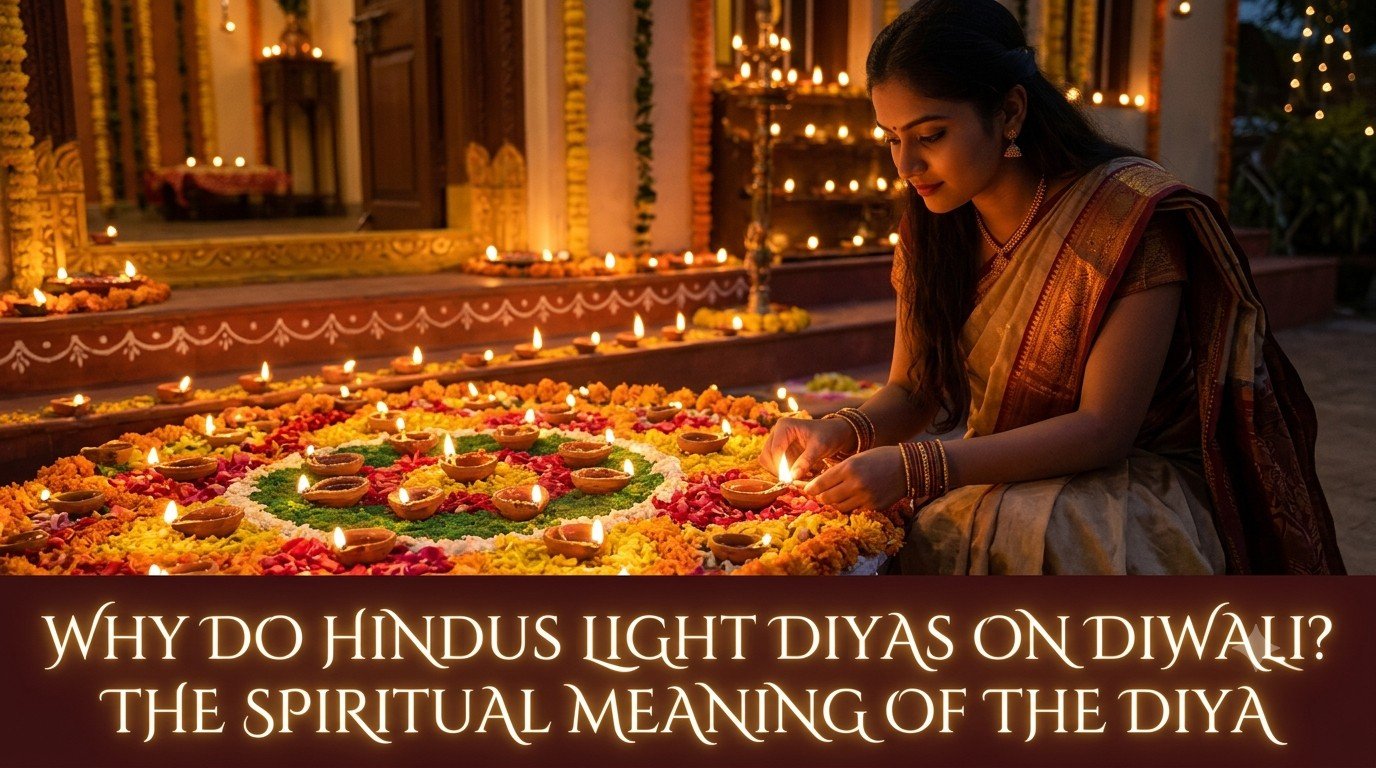
Diwali is one of the most important festivals in Hinduism. On this special occasion, homes, temples, shops, and streets are decorated with lights, and people light small oil lamps called diyas. The warm glow of these lamps creates a beautiful atmosphere and represents much more than decoration.
But have you ever wondered why Hindus light diyas on Diwali? What is the spiritual meaning behind this ancient tradition?
In Hindu culture, a diya represents the victory of light over darkness, knowledge over ignorance, and good over evil. Lighting a diya is also considered a way to express devotion, invite positivity, and remember the divine presence in our lives.
Let’s understand the spiritual meaning of the diya, its connection with Lord Rama and Goddess Lakshmi, and why this simple ritual remains important even today.
1. The Spiritual Meaning of Lighting a Diya
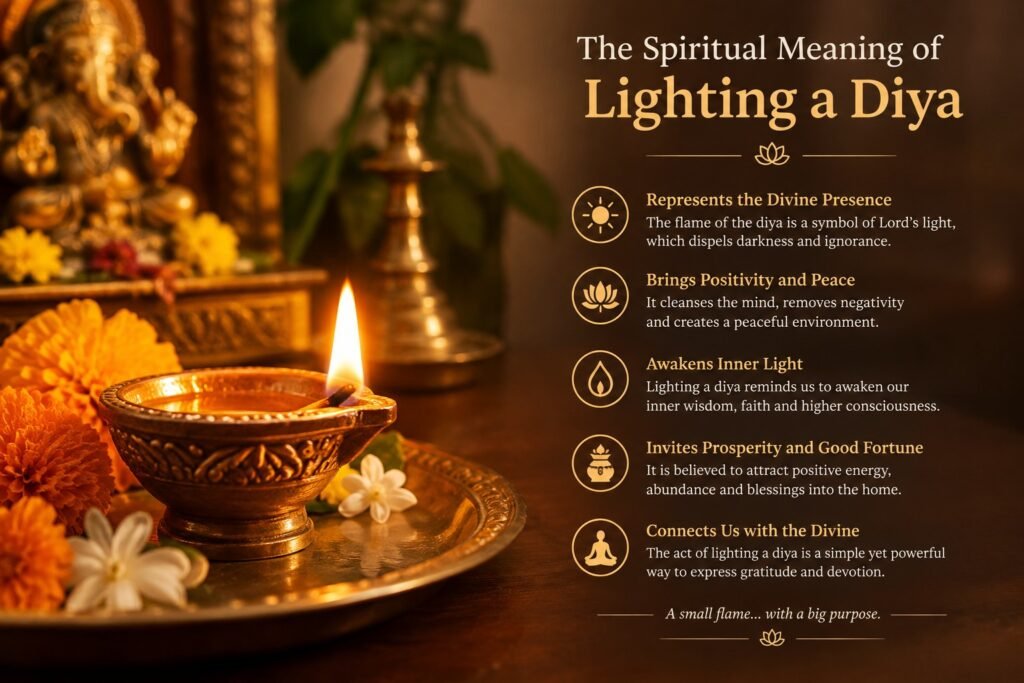
A diya may be a small earthen lamp, but its spiritual meaning is profound. It reminds us that even a small light can remove darkness from a room, just as wisdom and goodness can help remove negativity from our lives.
In Hindu traditions, the light of a diya is often associated with purity, hope, knowledge, and divine blessings.
When devotees light a diya during Diwali, they express the wish to bring peace, happiness, wisdom, and prosperity into their homes.
The act also reminds us to remove negative thoughts, control our ego, and follow the path of truth and righteousness.
2. Why Do Hindus Light Diyas on Diwali?
There are several religious and spiritual reasons behind lighting diyas during Diwali.
Victory of Good Over Evil
Diwali is widely associated with the return of Lord Rama to Ayodhya after defeating Ravana and completing fourteen years of exile. According to the Ramayana tradition, the people of Ayodhya welcomed Lord Rama, Goddess Sita, and Lakshmana with great joy.
The lighting of lamps is popularly connected with this celebration of their return. The lamps symbolize the happiness of the people and the victory of righteousness over evil.
This is why diyas are an important part of Diwali celebrations in many Hindu households.
Removal of Darkness and Ignorance
In Hindu spirituality, darkness can represent ignorance, confusion, and negative thoughts, while light represents knowledge, truth, and understanding.
Lighting a diya is a reminder that we should seek wisdom and make better choices in life.
It encourages us to move away from anger, jealousy, greed, and hatred and develop qualities such as kindness, patience, and compassion.
Welcoming Goddess Lakshmi
Diwali is also celebrated as a festival associated with Goddess Lakshmi, who is worshipped as the goddess of wealth, prosperity, and abundance.
Many Hindu families light diyas near their home entrances, in their prayer rooms, and around their houses during Lakshmi Puja.
Devotees believe that lighting lamps with devotion and keeping the home clean and welcoming are ways to express respect for Goddess Lakshmi and seek her blessings.
The tradition also reminds us that true prosperity includes peace, good values, gratitude, and contentment.
3. What Does a Diya Symbolize in Hinduism?
The traditional diya has several elements, and each can be understood as a spiritual reminder.
- The flame: It symbolizes light, knowledge, hope, and divine energy.
- The oil or ghee: It represents the offering that sustains the flame.
- The cotton wick: It is an essential part of the lamp and can serve as a reminder of devotion and the connection between our actions and spiritual growth.
- The earthen lamp: It represents simplicity, humility, and our connection with nature.
These are spiritual interpretations of the diya rather than a single universally prescribed explanation. Different families and traditions may understand its symbolism in different ways.
The central message remains the same: live with goodness, keep your intentions pure, and allow wisdom to guide your actions.
4. Why Are Earthen Diyas Used on Diwali?
Traditional earthen diyas are widely used during Diwali because they are simple, natural, and deeply connected with Indian culture.
Made from clay, these lamps have been used for generations in homes and temples. Many families prefer them because they reflect the traditional spirit of the festival.
Lighting an earthen diya can also remind us of humility. A small clay lamp does not need to be expensive or elaborate to spread light.
For many devotees, using a traditional diya makes the Diwali puja feel more connected to their family customs and cultural heritage.
If you use oil or ghee lamps, place them on a stable, heat-resistant surface and keep them away from curtains, paper, and other flammable materials.
5. The Connection Between Diwali Diyas and Lord Rama
One of the most widely known stories associated with Diwali comes from the Ramayana.
Lord Rama, Goddess Sita, and Lakshmana returned to Ayodhya after fourteen years of exile. Lord Rama had also defeated Ravana, who had abducted Goddess Sita.
Their return was a moment of immense happiness for the people of Ayodhya. The popular tradition of lighting lamps during Diwali is associated with welcoming Lord Rama home and celebrating the triumph of dharma.
Today, many Hindus continue this tradition by lighting diyas in their homes and praying for peace, happiness, and the strength to follow the path of righteousness.
The story teaches us that difficult times do not last forever and that truth and goodness deserve to be celebrated.
6. Why Are Diyas Lit During Lakshmi Puja?
Lakshmi Puja is one of the central religious observances of Diwali in many Hindu communities.
During the puja, devotees worship Goddess Lakshmi and often Lord Ganesha, seeking blessings for prosperity, wisdom, and the removal of obstacles.
Diyas are placed near the puja area, entrances, and other suitable locations in the home. Their light creates a peaceful atmosphere for prayer and devotion.
For devotees, lighting a diya is not simply a ritual. It is an expression of faith, gratitude, and hope for a better future.
Diwali also offers an opportunity to reflect on how we use wealth. Sharing with those in need, treating others fairly, and earning money honestly are meaningful ways to put spiritual values into practice.
7. How Many Diyas Should You Light on Diwali?
There is no single number of diyas that every Hindu family must light on Diwali. Customs vary according to regional traditions, family practices, and personal beliefs.
Some families light one diya in their prayer room, while others light several around their homes. Some follow specific numbers as part of their family or regional customs.
The most important thing is to light the diya with devotion and care rather than worrying about a particular number.
If you are following a specific family tradition or puja method, you can continue observing it according to your custom.
8. What Is the Best Time to Light Diyas on Diwali?
Many Hindu families light diyas in the evening, particularly around the time of Lakshmi Puja on Diwali.
The exact puja time depends on the date, location, and local Panchang. If you want to perform Lakshmi Puja according to traditional timings, check a reliable local Panchang for your city and the relevant year’s Diwali date.
Some families also light a diya in their prayer room in the morning as part of their daily worship.
Whether you light a lamp during puja or as part of your evening prayers, the intention behind the ritual is an important part of the tradition.
9. How to Light a Diya During Diwali Puja
You can follow these simple steps as part of your family’s customary Diwali worship.
- Clean the place where you will perform the puja.
- Place the diya on a stable, heat-resistant surface.
- Add the oil or ghee traditionally used by your family.
- Insert a cotton wick and light it carefully.
- Offer your prayers to your chosen deity or during Lakshmi Puja.
- Spend a moment expressing gratitude for your family, health, opportunities, and the good things in your life.
You may also chant a prayer or mantra that is part of your usual worship.
Remember that specific rituals can differ from one Hindu tradition to another. Follow the practices you have learned from your family or religious tradition.
10. The Deeper Message of Diwali: Light Within Yourself
The true spiritual meaning of Diwali goes beyond decorating a home with lamps.
The diya reminds us that we can bring light into the world through our thoughts, words, and actions.
When we help someone in need, speak the truth, forgive others, and act with compassion, we put the deeper message of Diwali into practice.
A beautifully decorated home is wonderful, but a home filled with kindness, respect, and understanding reflects the spirit of the festival even more deeply.
This Diwali, when you light a diya, take a moment to reflect on the kind of light you want to bring into your own life.
Let the flame remind you to choose wisdom over ignorance, kindness over hatred, and faith over fear.
Conclusion
Hindus light diyas on Diwali to celebrate the victory of light over darkness and good over evil. The tradition is associated with Lord Rama’s return to Ayodhya, the worship of Goddess Lakshmi, and the spiritual importance of knowledge, purity, and devotion.
A diya is small, but the message it carries is powerful. It reminds us that even a little goodness can make a meaningful difference.
As you celebrate Diwali, light your diyas with devotion and let their glow inspire you to bring peace, positivity, and kindness into your home and everyday life.
May the light of Diwali bring happiness, wisdom, peace, and prosperity to you and your family.
Frequently Asked Questions (FAQs)
1. Why do Hindus light diyas on Diwali?
Hindus light diyas on Diwali to symbolize the victory of good over evil, light over darkness, and knowledge over ignorance. The tradition is also associated with Lord Rama’s return to Ayodhya and the worship of Goddess Lakshmi.
2. What is the spiritual meaning of a diya?
A diya symbolizes knowledge, purity, hope, devotion, and divine light. Its flame reminds people to overcome ignorance and negativity and follow the path of truth and goodness.
3. Why are diyas lit during Lakshmi Puja?
Diyas are lit during Lakshmi Puja as an expression of devotion to Goddess Lakshmi and a prayer for prosperity, peace, and well-being.
4. Why are earthen diyas used during Diwali?
Earthen diyas are traditional clay lamps used in Hindu worship. They reflect simplicity, cultural heritage, and the long-standing custom of celebrating Diwali with light.
5. Can I light only one diya on Diwali?
Yes. There is no single number that all Hindu families must follow. You can light a diya according to your family’s customs and personal practice, with devotion and care.
6. What does the Diwali diya teach us?
The diya teaches us to choose knowledge over ignorance, kindness over hatred, and righteousness over wrongdoing. It is a reminder to bring positivity and goodness into our lives.