Chhath Puja is one of the most sacred Hindu festivals dedicated to Surya Dev (the Sun God) and Chhathi Maiya. It is celebrated with great devotion, particularly in Bihar, Jharkhand, eastern Uttar Pradesh and parts of Nepal. Among its many traditions, Kosi Bharna is a special ritual that holds deep religious and emotional significance.
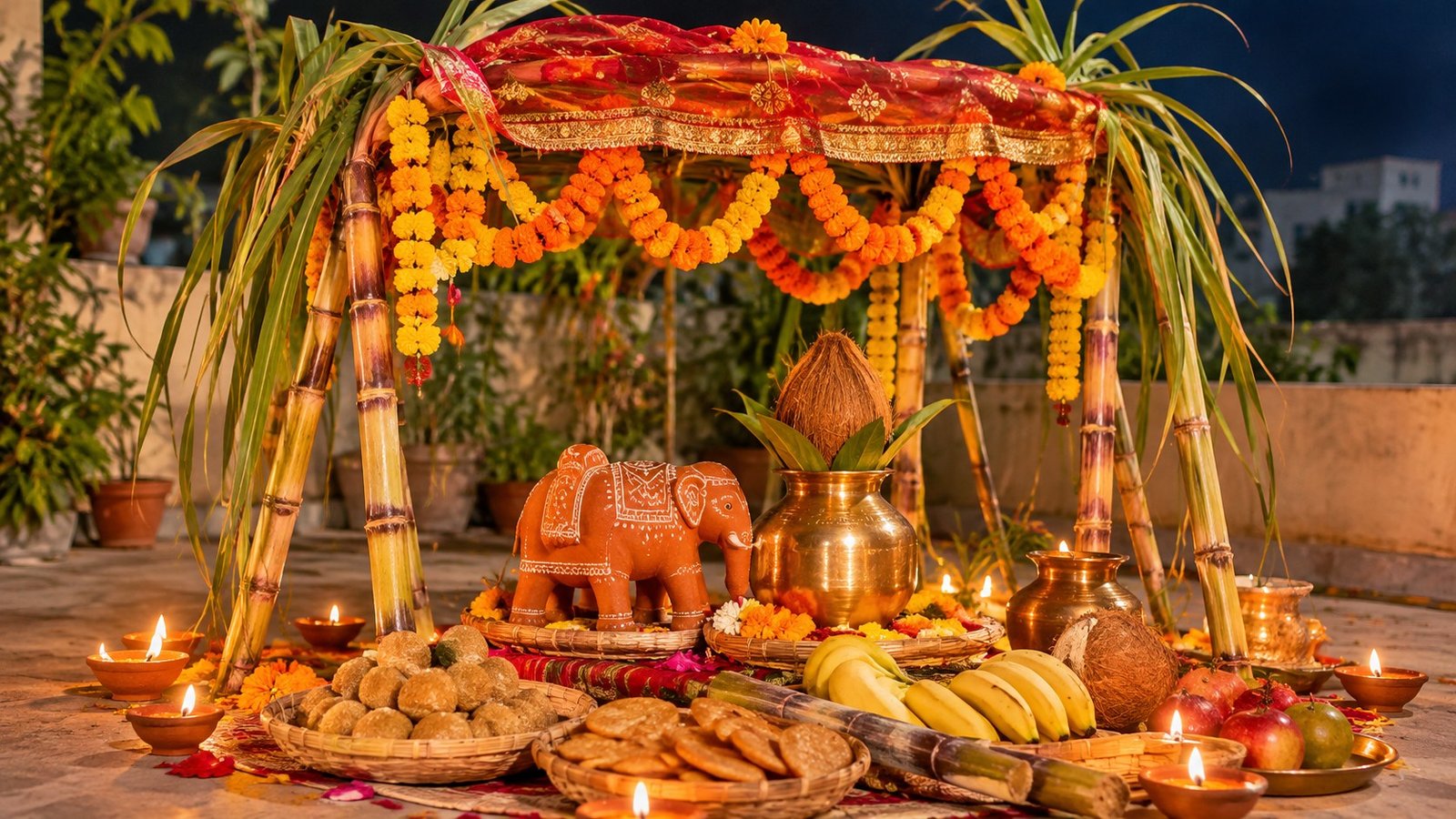
During this ritual, devotees decorate a small canopy using sugarcane sticks, earthen lamps, fruits and traditional offerings. Many families observe Kosi Bharna to express gratitude to Chhathi Maiya for fulfilling their wishes and to pray for happiness, prosperity and the well-being of their children.
But what exactly is Kosi Bharna, and why is it performed during Chhath Puja? Let’s understand its meaning, traditional rituals and religious significance.
What Is Kosi Bharna in Chhath Puja?
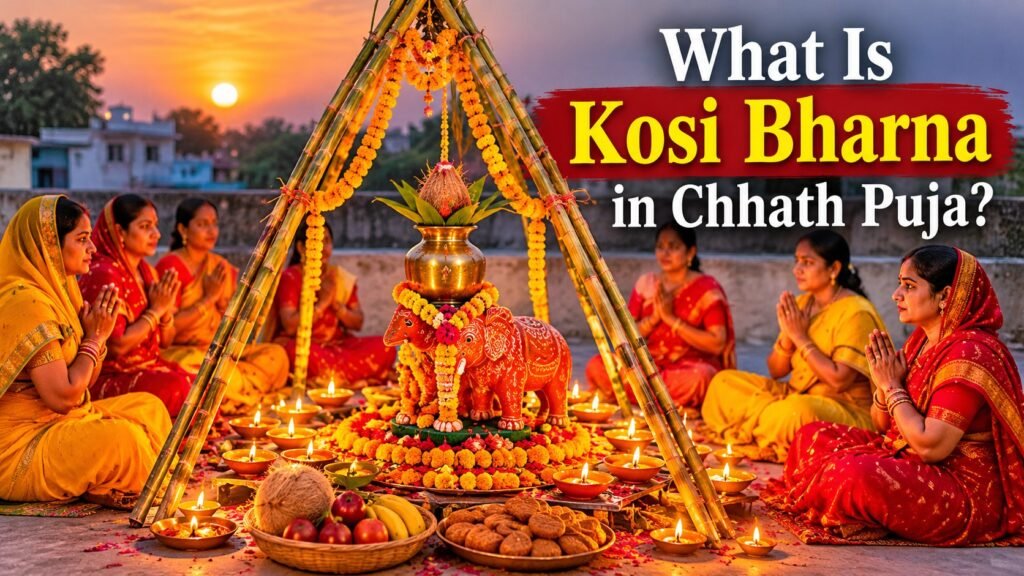
Kosi Bharna, also known as Kosi Puja or Kosiya, is a traditional ritual performed during Chhath Puja. It is especially popular among families in Bihar and neighbouring regions.
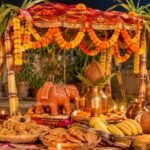
In this ritual, devotees create a decorative canopy using sugarcane sticks. A traditional arrangement of earthen lamps, fruits, Chhath Prasad and sometimes a clay elephant is placed underneath it.
According to popular religious beliefs, families perform Kosi Bharna after their wishes or vows (mannat) are fulfilled. These wishes may include the blessing of a child, good health, family happiness or prosperity.
It is considered an expression of gratitude towards Chhathi Maiya and Surya Dev.
Why Is Kosi Bharna Performed During Chhath Puja?
Kosi Bharna is associated with devotion, gratitude and the fulfilment of religious vows.
Many devotees make a promise to Chhathi Maiya during difficult times or while praying for something important in their lives. When their wishes are fulfilled, they perform Kosi Bharna as a way of expressing their thankfulness.
Some common reasons for performing this ritual include:
- For children: Families pray for the happiness, good health and long life of their children.
- For fulfilment of wishes: Devotees perform Kosi Bharna after a special mannat is fulfilled.
- For family prosperity: People seek blessings for peace, happiness and prosperity in their homes.
- As an expression of gratitude: The ritual is performed to thank Chhathi Maiya for her blessings.
These beliefs are part of regional traditions and devotional practices followed by many Chhath devotees.
Kosi Bharna Rituals: How Is It Performed?
Kosi Bharna is generally performed on the evening of the third day of Chhath Puja, after Sandhya Arghya (the evening offering to the setting Sun). However, the exact customs and arrangements may differ between families and regions.
Here is how the traditional ritual is commonly performed.
1. Preparing the Kosi Mandap
First, devotees select a clean place in the courtyard, rooftop or near the Chhath Ghat.
Sugarcane sticks are tied together to create a small canopy or mandap. Depending on family traditions, five, seven or other customary numbers of sugarcane sticks may be used.
2. Arranging the Clay Elephant and Kalash
A small clay elephant and a kalash are traditionally placed beneath the sugarcane canopy in many regional practices.
The clay elephant is considered an auspicious part of the arrangement and is associated with good fortune, strength and prosperity.
3. Decorating the Kosi with Diyas and Prasad
Earthen lamps (diyas) are placed around or beneath the canopy and lit as part of the worship.
Traditional Chhath offerings may include:
- Thekua
- Bananas
- Coconut
- Sugarcane
- Rice laddus
- Seasonal fruits
- Other traditional Chhath Prasad
The arrangement is prepared with cleanliness and devotion.
4. Worshipping Chhathi Maiya
After decorating the Kosi, devotees offer prayers to Chhathi Maiya and Surya Dev.
Family members gather around the arrangement and pray for the well-being of their loved ones. Traditional Chhath folk songs are also sung during this time.
5. Kosi Sevan and Morning Arghya
In many families, devotees stay awake during the night near the Kosi arrangement. Singing traditional devotional songs and maintaining the ritual is popularly known as Kosi Sevan.
The following morning, some families take the Kosi arrangement or its offerings to the Chhath Ghat before offering Usha Arghya (the morning offering to the rising Sun).
The ritual is completed according to the family’s regional customs.
Religious Significance of Sugarcane and Clay Elephant in Kosi Bharna
The objects used in Kosi Bharna are not merely decorative. They hold traditional and devotional importance.
Sugarcane: Sugarcane is an important part of Chhath Puja offerings. It is associated with nature, harvest, nourishment and prosperity. The sugarcane canopy also gives the Kosi arrangement its distinctive appearance.
Clay Elephant: The elephant is traditionally associated with strength, auspiciousness and good fortune. Its presence is an important feature of many Kosi arrangements.
Earthen Diyas: The glowing diyas represent light, devotion and positivity. They add a sacred atmosphere to the ritual.
Chhath Prasad: Offerings such as Thekua, fruits and rice laddus represent devotion, gratitude and respect for nature’s gifts.
Is Kosi Bharna Compulsory During Chhath Puja?
No, Kosi Bharna is not compulsory for every Chhath devotee.
It is a special regional tradition generally observed by families who have made a particular vow or wish to express gratitude after the fulfilment of a mannat.
Devotees can observe the main Chhath Puja rituals without performing Kosi Bharna. The most important aspect of Chhath is faith, devotion, cleanliness, discipline and sincere worship of Surya Dev and Chhathi Maiya.
Conclusion
Kosi Bharna is a beautiful and meaningful tradition associated with Chhath Puja. The sight of sugarcane canopies, glowing earthen lamps, traditional offerings and families singing devotional songs reflects the deep cultural and spiritual importance of this festival.
For many devotees, Kosi Bharna is more than a ritual. It is an expression of gratitude, faith and a family’s prayers for happiness and prosperity.
Through this tradition, devotees remember the blessings of Chhathi Maiya and continue to preserve the rich cultural heritage of Chhath Puja.
Frequently Asked Questions (FAQs)
1. What is Kosi Bharna in Chhath Puja?
Kosi Bharna is a traditional Chhath Puja ritual in which devotees prepare a canopy using sugarcane sticks and decorate it with earthen lamps, fruits, Prasad and other sacred items.
2. When is Kosi Bharna performed during Chhath Puja?
Kosi Bharna is generally performed on the evening of the third day of Chhath Puja, after Sandhya Arghya. Some families continue the ritual until the morning Arghya.
3. Why do people perform Kosi Bharna?
People traditionally perform Kosi Bharna to express gratitude to Chhathi Maiya after the fulfilment of a wish or mannat and to pray for family happiness and prosperity.
4. What items are required for Kosi Bharna?
Common items include sugarcane sticks, a clay elephant, a kalash, earthen diyas, Thekua, bananas, coconut, rice laddus and other seasonal fruits.
5. Is Kosi Bharna compulsory for everyone?
No. Kosi Bharna is a regional devotional tradition and is not compulsory for everyone observing Chhath Puja.
6. What is Kosi Sevan during Chhath Puja?
Kosi Sevan refers to the traditional practice of staying near the Kosi arrangement, singing Chhath folk songs and maintaining the devotional observance during the night.