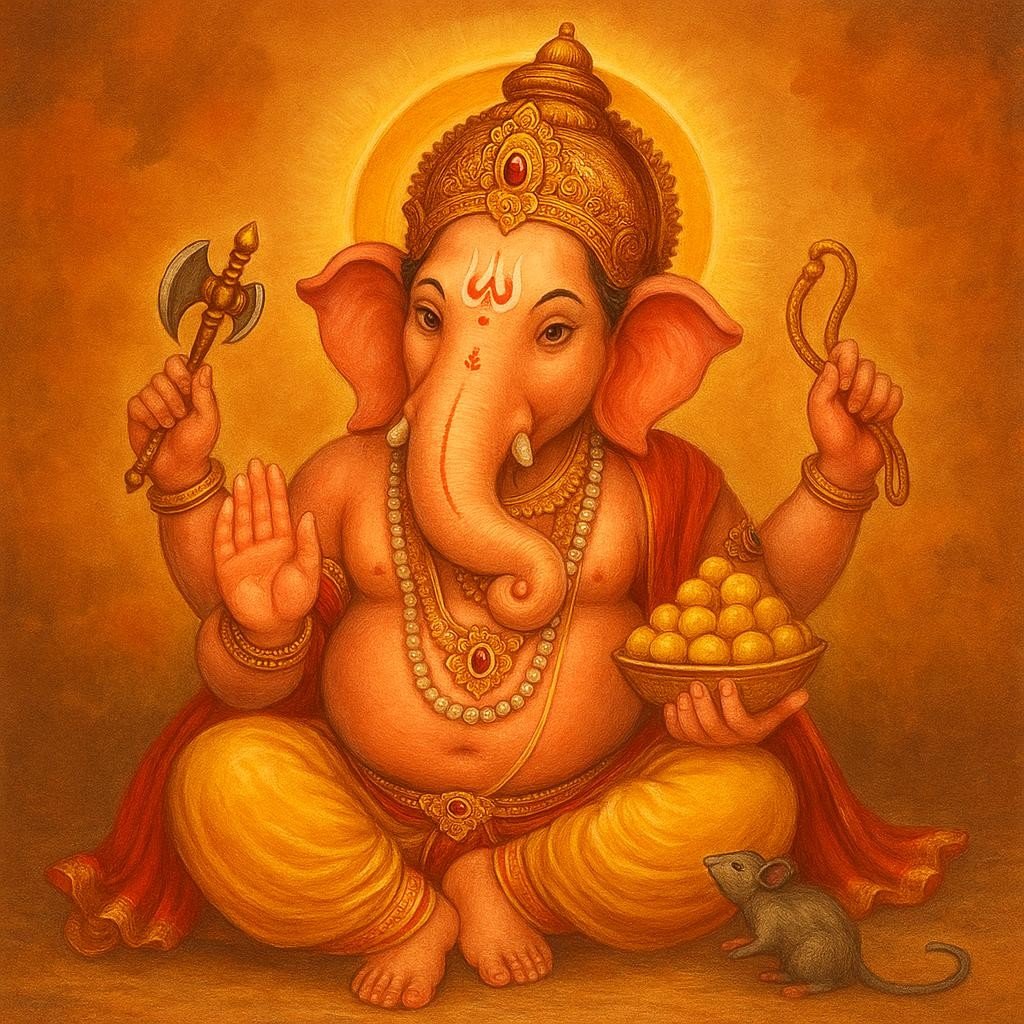
Ganesh Ji, also lovingly known as Ganpati Bappa, is one of the most worshipped deities in Hinduism. He is revered as the remover of obstacles, the god of wisdom, and the lord of new beginnings. Among the many offerings made to Lord Ganesha, modak holds a special place.
During Ganesh Chaturthi, devotees prepare delicious modaks and offer them to Bappa with love and devotion. But have you ever wondered why Lord Ganesha is believed to love modak so much? What is the mythological story behind his favorite sweet, and what spiritual meaning does modak carry?
In this blog, we will explore the popular stories associated with Lord Ganesha and modak, the spiritual significance of this sweet, and why it continues to be an important part of Ganesh Puja.
Why Does Ganesh Ji Love Modak?
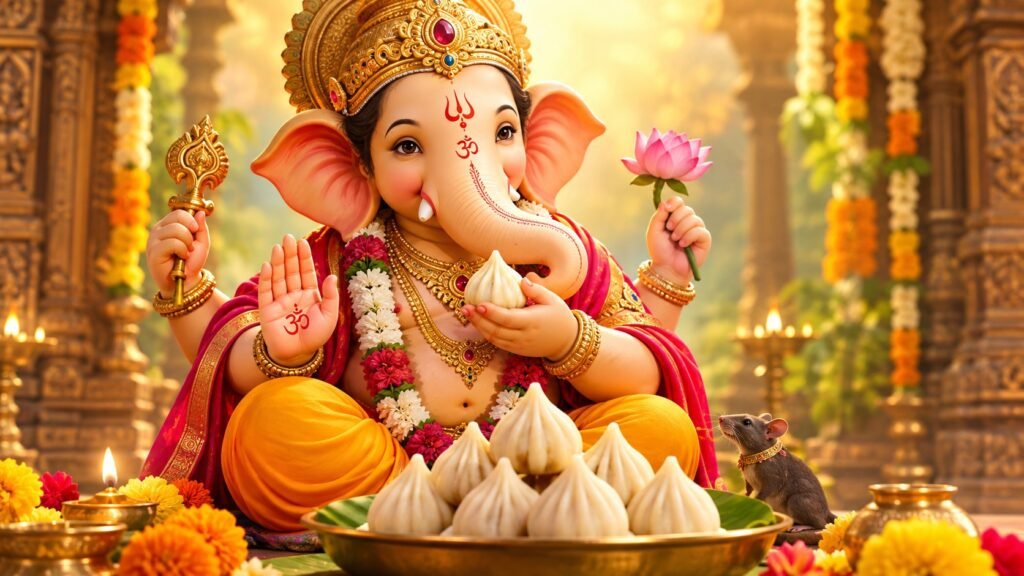
Lord Ganesha is traditionally associated with modak, and he is also known by the name Modakpriya, which means “one who loves modak.” Devotees believe that offering modak to Ganesh Ji is a way of expressing love, respect, and devotion.
There is more than one mythological story explaining this connection. These stories vary across religious and storytelling traditions, but they share a common theme: modak is associated with happiness, satisfaction, wisdom, and divine blessings.
One of the most popular stories is connected to Goddess Anusuya and a meal involving Lord Shiva and young Ganesha.
The Mythological Story of Lord Ganesha and Modak
The Story of Anusuya’s Special Sweet
According to a popular devotional legend, Lord Shiva, Goddess Parvati, and young Lord Ganesha visited the hermitage of Sage Atri and his wife, Anusuya.
During the visit, Lord Shiva was hungry and wanted to eat. However, Anusuya explained that she would serve him only after young Ganesha had finished his meal.
Ganesha began eating the food that was served to him. Despite eating several dishes, he continued to feel hungry. Anusuya then offered him a special sweet modak.
After eating the modak, Lord Ganesha was finally satisfied. In some versions of the story, Ganesha let out a loud burp, and Lord Shiva also burped 21 times. This detail is used in the tradition to explain why devotees offer 21 modaks to Lord Ganesha.
The story is shared in different forms, and its details can vary. It is best understood as a popular devotional legend rather than a single universally consistent account found in all Hindu scriptures.
What Can We Learn From This Story?
The story is not simply about Lord Ganesha enjoying a sweet. It also highlights the themes of hospitality, devotion, satisfaction, and the special place of food in Hindu worship.
The modak becomes a symbol of the offering made with love and the joy that comes from devotion.
Another Story: The Divine Modak and the Test of Wisdom
Another well-known legend connects Lord Ganesha’s love for modak with a divine sweet and a test of wisdom.
According to a popular version of the story, a special modak was presented to Lord Shiva and Goddess Parvati. It was believed to possess extraordinary knowledge, and the question arose about which of their sons, Lord Ganesha or Lord Kartikeya, should receive it.
To decide, a challenge was given to the brothers.
Kartikeya set out to travel around the world. Lord Ganesha, instead, went around his parents, Lord Shiva and Goddess Parvati, and explained that his parents represented the entire world to him.
Impressed by his wisdom and devotion, Goddess Parvati awarded the divine modak to Ganesha.
The Spiritual Lesson Behind the Divine Modak
This story emphasizes the importance of wisdom, devotion, and understanding beyond physical achievement.
Lord Ganesha’s actions are interpreted as a reminder that knowledge is not only gained through travel or external experiences but also through respect for parents, learning, and spiritual understanding.
The exact details and scriptural attribution of this legend vary among retellings. It is commonly shared in devotional literature as an illustration of Ganesha’s wisdom.
What Is the Spiritual Significance of Modak?
Modak is not just a delicious sweet offered during festivals. In devotional interpretations, it also represents deeper spiritual ideas.
1. Modak Represents Happiness and Joy
The Sanskrit word moda is associated with joy, delight, or happiness. Modak is therefore often interpreted as a sweet connected with spiritual joy.
Devotees offer modak to Lord Ganesha as an expression of happiness and gratitude. The sweet reminds us that devotion can bring peace, contentment, and inner joy.
2. Modak Symbolizes Wisdom
Lord Ganesha is worshipped as the deity of wisdom and intellect. The modak is often associated with the sweetness of knowledge and the rewards of spiritual learning.
Just as a modak has a sweet filling inside, spiritual wisdom is understood as something precious that can be discovered through learning, reflection, and devotion.
The interpretation of modak as a symbol of wisdom is a devotional explanation, and its symbolism can differ across traditions.
3. The Sweet Filling Represents Inner Bliss
A traditional modak is often filled with ingredients such as coconut and jaggery. Its outer covering hides the sweet filling inside.
In spiritual interpretations, this is sometimes compared to the human journey: external appearances may be simple, while the true value lies within.
The idea encourages devotees to look beyond material appearances and appreciate inner goodness, wisdom, and spiritual fulfillment.
4. Modak Represents the Fruits of Devotion
Offering food to a deity is an important part of many Hindu worship traditions. Modak can be understood as a symbol of the devotee’s love and the fruits of sincere spiritual practice.
The offering is made not merely for personal gain but as an expression of gratitude, reverence, and faith.
Why Are 21 Modaks Offered to Ganesh Ji?
Offering 21 modaks to Lord Ganesha is a popular tradition, especially during Ganesh Chaturthi and other devotional occasions.
The number 21 is explained through different religious and cultural interpretations. One popular story connects it with the 21 burps of Lord Shiva after Ganesha ate the special modak offered by Anusuya.
In some traditions, the number 21 is also given symbolic spiritual significance.
However, the practice is not identical in every region or household. Some devotees offer a different number of modaks depending on their family traditions, local customs, and personal devotional practices.
The important aspect of the offering is the sincerity and devotion with which it is made.
What Is Ukadiche Modak?
One of the most popular varieties associated with Lord Ganesha is Ukadiche Modak, a traditional steamed modak.
It is commonly prepared using:
- Rice flour for the outer covering
- Grated coconut
- Jaggery
- Cardamom or other flavoring ingredients, depending on the recipe
The filling is placed inside the dough, which is shaped into a distinctive pointed form and steamed.
Ukadiche modak is especially popular in Maharashtra during Ganesh Chaturthi. Other types of modak, including fried varieties, are also prepared in different regions.
Why Is Ukadiche Modak Popular During Ganesh Chaturthi?
Ukadiche modak is closely connected with the culinary traditions of Maharashtra and the celebrations of Ganesh Chaturthi.
Families often prepare these sweets at home as part of the festival’s offerings. Making modak can also become a shared family activity, bringing people together through cooking, prayer, and celebration.
The popularity of steamed modak reflects both its traditional preparation and its cultural association with Ganpati Bappa.
When Do Devotees Offer Modak to Lord Ganesha?
Modak is commonly offered to Lord Ganesha during:
Ganesh Chaturthi
Ganesh Chaturthi is one of the most important festivals dedicated to Lord Ganesha. Devotees welcome Ganesha idols into their homes and public spaces, perform prayers, and offer various foods, including modak.
Daily Ganesh Puja
Some devotees offer modak during their regular worship of Lord Ganesha, especially on auspicious days or when seeking blessings for a new beginning.
Sankashti Chaturthi
Sankashti Chaturthi is observed by many devotees who worship Lord Ganesha. Offerings may vary according to local customs and family traditions, and modak may be included as part of the devotional meal.
The specific offerings and practices differ across regions, temples, and households.
What Does Modak Teach Us About Devotion?
The tradition of offering modak to Lord Ganesha carries several meaningful lessons.
Devotion is more important than extravagance. A simple homemade modak offered with sincerity can hold deep personal and religious meaning for a devotee.
Wisdom is a precious blessing. Ganesha’s association with modak reminds devotees of the value of knowledge, learning, and spiritual understanding.
Sharing brings happiness. Preparing sweets and distributing prasad encourages generosity, togetherness, and celebration.
Tradition connects generations. The practice of making modak allows families to pass down recipes, stories, and religious customs.
Frequently Asked Questions (FAQs)
1. Why does Ganesh Ji love modak?
Lord Ganesha is traditionally associated with modak through popular Hindu mythological stories. The sweet is also interpreted as a symbol of happiness, wisdom, and spiritual fulfillment.
2. What is Lord Ganesha’s favorite sweet?
Modak is widely regarded in Hindu devotional tradition as Lord Ganesha’s favorite sweet. He is also called Modakpriya, meaning one who loves modak.
3. Why are 21 modaks offered to Lord Ganesha?
A popular legend connects the offering of 21 modaks with a story involving Anusuya, Lord Ganesha, and Lord Shiva. The practice also has different cultural and devotional interpretations.
4. Can we offer homemade modak to Ganesh Ji?
Yes. Devotees commonly prepare homemade modak as an offering to Lord Ganesha. The ingredients and preparation method can vary according to family and regional traditions.
5. Is modak only offered during Ganesh Chaturthi?
No. Although modak is especially associated with Ganesh Chaturthi, devotees may offer it during other forms of Ganesh Puja and auspicious occasions.
Conclusion: The Sweet Bond Between Ganesh Ji and Modak
The connection between Lord Ganesha and modak is a beautiful part of Hindu devotional tradition. Through popular mythological stories, modak is associated with wisdom, joy, satisfaction, and devotion.
Whether it is a traditional Ukadiche Modak prepared during Ganesh Chaturthi or a simple sweet offered during daily puja, the offering represents the love and faith of devotees.
The next time you offer modak to Ganpati Bappa, remember that the tradition is not just about a sweet treat. It is also about gratitude, wisdom, family, and the joy of devotion.