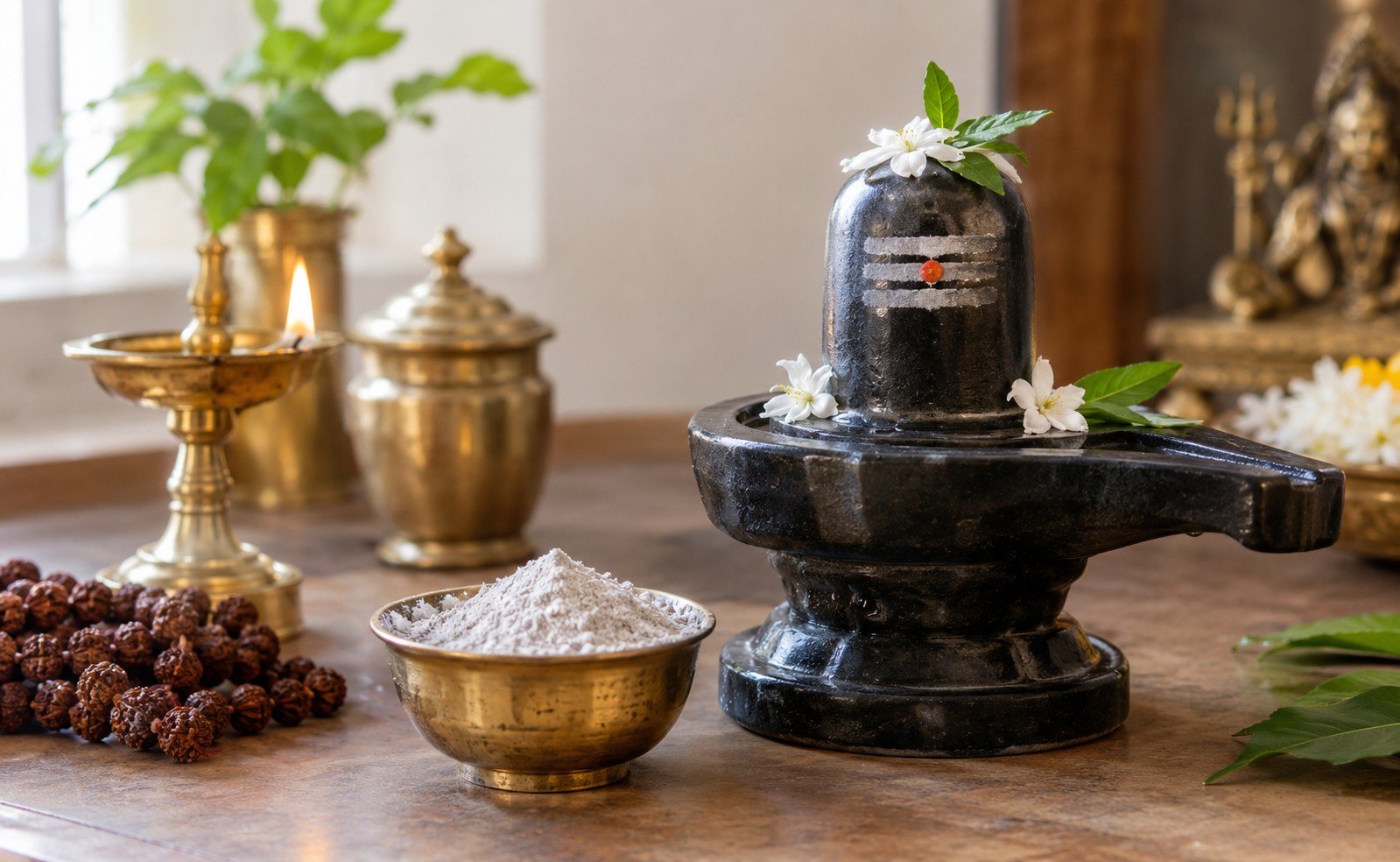
Vibhuti, also known as Bhasma, is an important sacred substance in Hindu traditions, particularly in Shaivism. It is commonly associated with Lord Shiva and is traditionally applied to the forehead and other parts of the body during पूजा and spiritual practices.
Because vibhuti is considered sacred, some devotees wonder whether it can also be consumed. Questions such as “Can we eat vibhuti daily?”, “Is vibhuti edible?”, and “What happens if we eat vibhuti?” are common among people who want to understand the traditional practice.
There is an important difference, however, between the religious significance of vibhuti and whether a particular ash product is suitable for ingestion.
Let’s understand this in simple terms.
What Is Vibhuti?
Vibhuti is sacred ash traditionally associated with Hindu worship and especially with Lord Shiva.
The exact preparation can differ depending on the tradition and the source. Different products sold or used as vibhuti may not have the same ingredients, preparation methods, or purity.
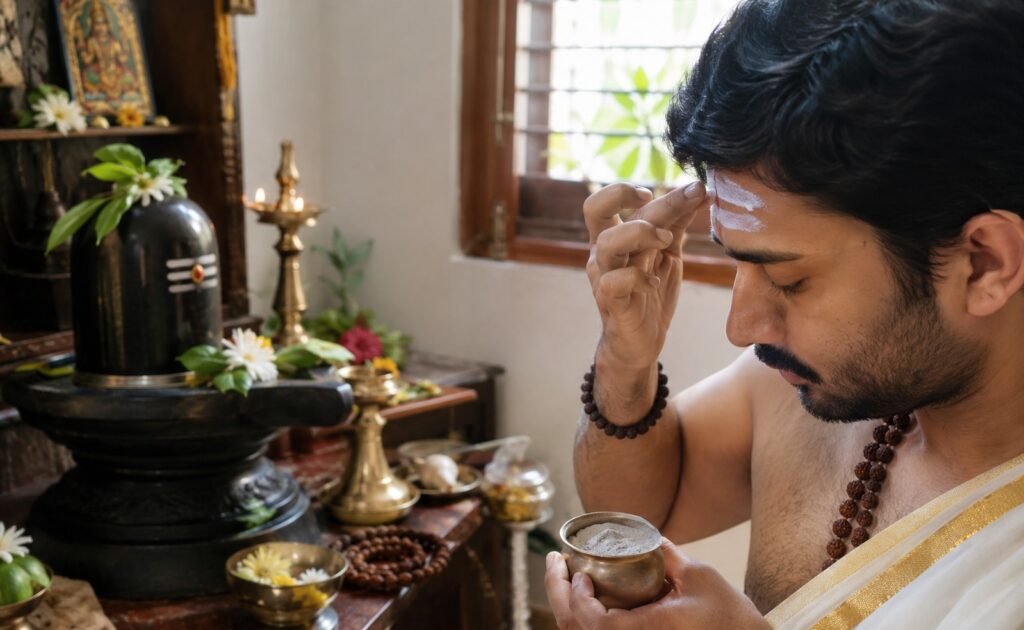
Traditionally, vibhuti is mainly used by applying it to the forehead or body as part of religious practice.
The three horizontal lines of sacred ash, commonly known as Tripundra, have a deep symbolic meaning in Shaivite traditions.
Vibhuti is therefore more than ordinary ash in its religious context.
Can We Eat Vibhuti Daily?
It is better not to intentionally eat vibhuti every day.
Although some Hindu traditions may involve taking a very small ritual amount of certain consecrated substances, this should not be interpreted as meaning that every type of vibhuti available today is suitable for regular consumption.
The composition and preparation of vibhuti can vary considerably.
If a product is specifically prepared and clearly labelled for consumption according to a particular religious tradition, the instructions of the trusted religious source or manufacturer should be followed.
Otherwise, vibhuti should generally be treated as a sacred-use product rather than a food item.
What Happens If You Eat Vibhuti?
A small accidental amount may not necessarily cause a problem, but the effect can depend on what the vibhuti contains and how much was consumed.
Vibhuti is not manufactured under one universal recipe. Some products may contain ash or other substances that are not intended to be eaten.
Possible concerns from consuming unsuitable ash can include:
- Stomach irritation
- Nausea or vomiting
- Digestive discomfort
- Exposure to unwanted contaminants
- Problems associated with repeated consumption
If someone has consumed a significant amount or develops symptoms such as persistent vomiting, severe abdominal pain, confusion, difficulty breathing, or unusual drowsiness, medical advice should be sought promptly.
What If I Eat Vibhuti Every Day?
Regularly eating vibhuti is different from accidentally tasting a tiny amount.
If you are consuming it every day, it is worth finding out exactly what the product contains rather than assuming that its sacred status makes it suitable as food.
Repeated consumption of an unknown ash product can potentially expose the body to unwanted substances.
Therefore, daily consumption should not be started simply because vibhuti is considered spiritually beneficial.
For spiritual practice, applying vibhuti according to your tradition is a more appropriate way to use it.
Why Should We Not Eat Vibhuti Regularly?
The main concern is not its religious significance but what is physically present in the particular product.
Sacred does not necessarily mean edible.
Vibhuti intended for पूजा or external application may not be produced, tested, or labelled as a food product.
This is why it is important to distinguish between:
Religious practice:
Using vibhuti as traditionally prescribed by a particular sampradaya or spiritual teacher.
Regular ingestion:
Eating ash as though it were a food or supplement.
These are not necessarily the same thing.
Why Do I Feel Like Eating Vibhuti?
Some people report having a strong or repeated urge to eat vibhuti or other non-food substances.
It can be tempting to interpret this entirely as a spiritual sign. However, a persistent craving for substances that are not food should not automatically be considered a spiritual craving.
There can be different reasons behind unusual cravings.
If you repeatedly feel an urge to eat vibhuti, ash, मिट्टी, chalk, or other non-food substances, consider discussing it with a healthcare professional. Persistent cravings for non-food substances can sometimes be associated with pica, a condition involving the repeated desire to eat substances that have little or no nutritional value.
This does not mean that every occasional thought about eating vibhuti indicates a medical condition. The important point is whether the urge is strong, repeated, or difficult to control.
Is Craving Vibhuti a Spiritual Sign?
There is no single Hindu interpretation that says a craving for vibhuti automatically represents a spiritual sign.
Vibhuti itself has strong spiritual symbolism, particularly in Shaivite traditions. But a person’s repeated physical urge to consume it should not automatically be interpreted as a religious instruction.
If you experience such cravings, you can continue your spiritual practice while also paying attention to your physical well-being.
Can We Consume Vibhuti After Puja?
This depends on the specific religious tradition and the substance being used.
Some rituals involve consuming a small amount of sacred or consecrated substances as prasada. However, this does not mean that every packet of vibhuti is intended for consumption.
If your temple, guru, or family tradition specifically instructs devotees to consume a particular consecrated substance, follow that tradition.
For commercially purchased vibhuti without clear instructions for ingestion, it is safer to use it for its intended religious purpose, such as applying it during पूजा.
How Should Vibhuti Traditionally Be Used?
Vibhuti is commonly used by devotees in several traditional ways.
1. Applying It on the Forehead
Vibhuti is traditionally applied to the forehead, often in three horizontal lines known as Tripundra.
2. Using It During Puja
Devotees may keep vibhuti near their Shiva पूजा area and use it as part of their daily worship.
3. Receiving It as Prasada
Vibhuti may be distributed at temples after पूजा. The appropriate way to use it can depend on the particular temple’s tradition.
4. Carrying It for Religious Practice
Some devotees keep a small container of vibhuti in their पूजा space or carry it as part of their spiritual practice.
Vibhuti and Its Spiritual Significance
The word Vibhuti is associated with sacred ash and has deep symbolism in Hindu traditions.
For devotees of Lord Shiva, vibhuti can represent ideas such as:
- The temporary nature of the physical world
- Detachment from material possessions
- Purification
- Spiritual discipline
- Remembrance of Lord Shiva
The symbolism is one reason vibhuti remains an important part of Shiva worship.
Is Vibhuti the Same as Ordinary Ash?
No.
From a religious perspective, vibhuti is considered sacred and is prepared or consecrated according to particular traditions.
Ordinary household ash, charcoal ash, burnt material, or unknown ash should not be assumed to be vibhuti or safe for consumption.
Even when two products look similar, their source and composition may be completely different.
What Should You Do If You Accidentally Eat Vibhuti?
If you accidentally consume a tiny amount, avoid panicking.
Do not deliberately consume more.
Check the product packaging if available and determine what ingredients were used. If a large quantity was consumed, the product contains unknown substances, or you develop concerning symptoms, contact a medical professional or local poison-information service for advice.
Children require particular caution because they may accidentally ingest larger quantities.
Can Children Eat Vibhuti?
Children should not be encouraged to eat vibhuti unless a specific religious product is explicitly intended for consumption and the relevant instructions say so.
Because children are smaller and may be more vulnerable to inappropriate substances, it is better to keep vibhuti and other पूजा materials out of their reach.
Vibhuti: Faith and Responsible Use
Vibhuti has an important place in Hindu spiritual practice, particularly in the worship of Lord Shiva. Its sacred meaning does not require it to be treated as a food.
If you use vibhuti as part of your पूजा, you can continue doing so according to your family’s or spiritual tradition’s practices.
But if you are wondering “Can we eat vibhuti daily?”, the practical answer is:
Do not make a habit of eating vibhuti unless you have clear, tradition-specific guidance that the particular substance is intended for consumption.
And if you have a strong or repeated craving to eat vibhuti, don’t assume that the craving is necessarily spiritual. Consider discussing persistent non-food cravings with a healthcare professional.
Frequently Asked Questions About Eating Vibhuti
Can we eat vibhuti daily?
It is generally better not to intentionally eat vibhuti every day. Vibhuti products can differ in their ingredients and preparation, and many are intended for religious or external use rather than as food.
Is vibhuti safe to eat?
It depends on the specific product and how it was prepared. Sacred status alone does not establish that a particular vibhuti product is suitable for regular consumption.
What happens if we eat vibhuti?
The effect depends on the amount and composition of the vibhuti. A small accidental amount may not cause noticeable problems, but regularly consuming unknown ash can carry risks.
Why do I feel like eating vibhuti?
A repeated urge to consume vibhuti or other non-food substances can have different causes. Persistent cravings for non-food substances can sometimes be associated with pica and are worth discussing with a healthcare professional.
Why should we not eat vibhuti?
Vibhuti intended for पूजा may not be manufactured or tested as food. Its composition can also vary, so regular consumption of an unknown product is not recommended.
Can we consume vibhuti after Shiva Puja?
Some traditions may involve consuming small amounts of consecrated substances, while others use vibhuti externally. Follow the specific practice of your temple, guru, or family tradition.
Is vibhuti edible?
Not all vibhuti should be considered edible. Whether a particular product can be consumed depends on its ingredients, preparation, and intended use.
What if I eat vibhuti every day?
If you have been eating vibhuti every day, stop treating it as a regular food or supplement and check what the product contains. If you have persistent cravings or any symptoms, consider speaking with a healthcare professional.