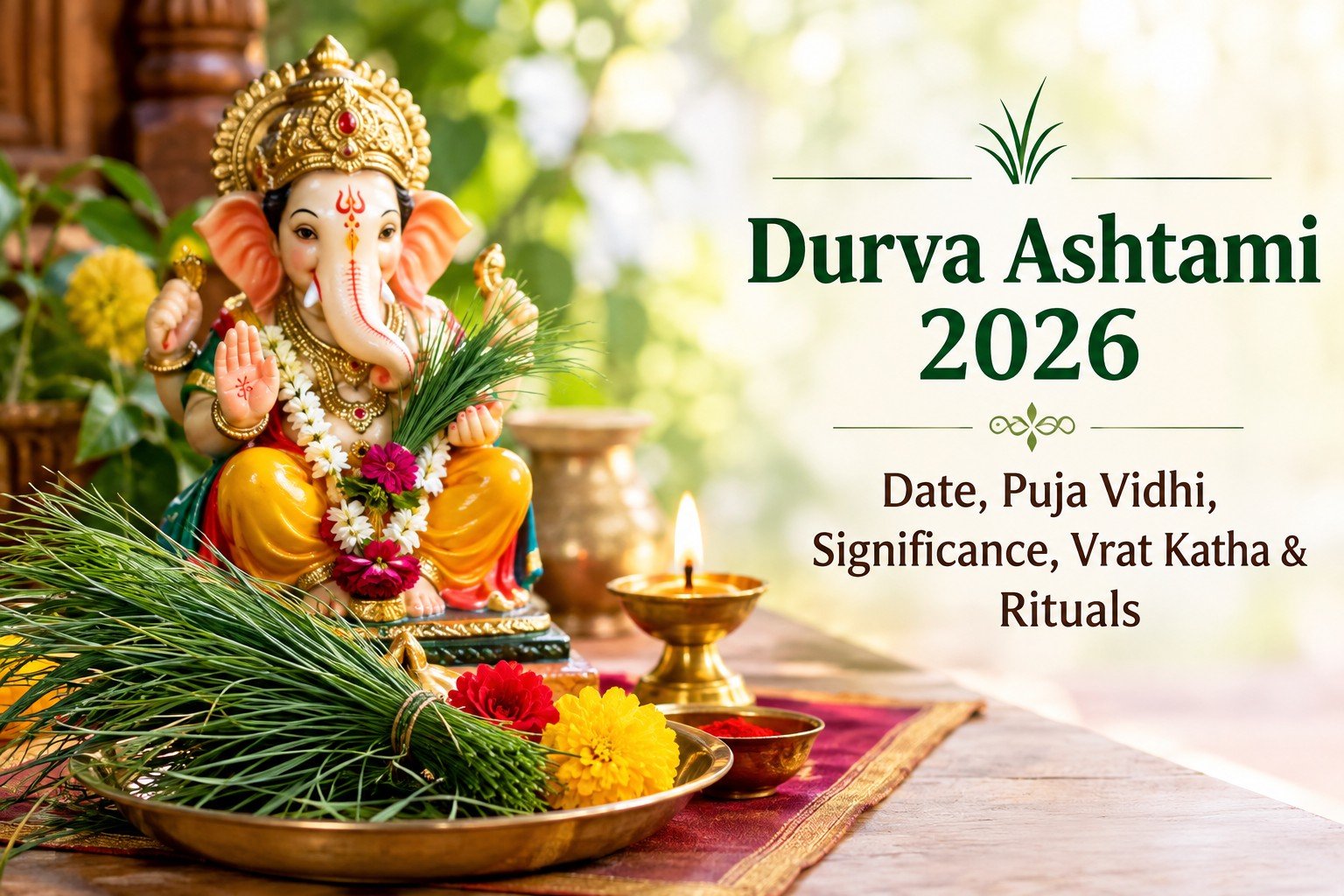
Durva Ashtami is a Hindu religious observance dedicated to the sacred Durva grass, which has a special place in Hindu worship, particularly in the worship of Lord Ganesha. The day is observed during Shukla Paksha Ashtami of the Bhadrapada month and is associated with prayers for family well-being, prosperity and the long life of children.
Durva, also known as Doob grass, is considered especially auspicious in Hindu traditions. Its ability to remain green and continue growing has also made it a symbol of vitality and continuity.
In 2026, the observance falls during an Ashtami tithi that begins on September 18 and continues until September 19. Prokerala’s Ujjain Panchang lists Durva Ashtami on Friday, September 18, 2026. Because the Ashtami tithi continues into September 19, some regional Panchangs may observe the vrat on September 19 according to their sunrise-based calculation.
Durva Ashtami 2026 Date
According to the Panchang used by Prokerala for Ujjain:
Durva Ashtami 2026: Friday, September 18, 2026
Shukla Ashtami Tithi:
Begins: September 18, 2026, at approximately 1:01 PM
Ends: September 19, 2026, at approximately 3:27 PM
The exact timings can vary slightly depending on the location, so devotees should check their local Panchang before performing time-sensitive rituals.
Why do some calendars show September 19?
This is because the Ashtami tithi spans two calendar dates in 2026. Some traditions follow the date on which the Ashtami tithi prevails at sunrise for determining the observance. As a result, some Panchang sources list September 19 instead.
For this reason, devotees should follow the tradition and Panchang followed by their family or region.
What Is Durva Ashtami?
Durva Ashtami is an observance connected with the worship of Durva grass. Durva is commonly identified with Cynodon dactylon, a grass that grows widely across India.
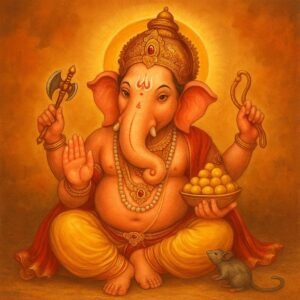
In Hindu rituals, Durva is particularly associated with Lord Ganesha. It is regularly offered during Ganesh Puja and is considered a sacred and auspicious offering.
The observance is especially followed by women in several regions, including parts of eastern and northern India. Traditional beliefs associate the vrat with the well-being of family members and the longevity of children.
Significance of Durva Ashtami
Durva has a unique position in Hindu worship because of its association with purity, vitality and longevity.
Unlike flowers that bloom for a limited period, Durva grass continues to grow and spread. Because of this characteristic, it has traditionally been connected with ideas of continuity and long life.
On Durva Ashtami, devotees worship Durva with श्रद्धा and offer prayers for:
- Family happiness and well-being
- Long life and good fortune
- The well-being of children
- Peace and prosperity at home
- Removal of obstacles
- Spiritual growth and devotion
These are traditional religious beliefs, rather than scientifically established effects.
Why Is Durva Offered to Lord Ganesha?
Durva is one of the most familiar offerings associated with Lord Ganesha.
According to a popular Hindu legend, Ganesha became overheated after defeating the demon Analasura. Various traditional accounts describe Durva grass being used to cool and soothe him. This story is commonly given as one explanation for the special place Durva holds in Ganesh worship.
Another traditional account connects the origin and sacredness of Durva with Lord Vishnu and the Samudra Manthan. Different texts and regional traditions narrate the story differently, so these should be understood as traditional religious narratives rather than historical accounts.
Durva Ashtami 2026 Puja Vidhi
Devotees can perform a simple Durva Ashtami puja at home with devotion and cleanliness.
1. Clean the Puja Area
Begin the day by cleaning the house and especially the puja space. Take a bath and wear clean clothes.
2. Prepare the Durva
Collect fresh, clean and green Durva grass. Traditionally, clean and unbroken blades are preferred for religious offerings.
Wash the Durva gently with clean water and keep it ready for the puja.
3. Set Up the Deity
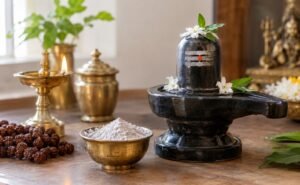
Place an image or idol of Lord Ganesha in the puja area. Depending on regional tradition, devotees may also worship Gauri, Shiva-Parvati or other family deities.
4. Take a Sankalp
Sit peacefully before the deity and take a simple sankalp according to your family’s tradition.
You can pray for the well-being, peace and prosperity of your family.
5. Light a Diya
Light a diya and incense before beginning the main puja.
Offer:
- Water
- Akshat
- Kumkum
- Sandalwood
- Flowers
- Fruits
- Naivedya
- Durva grass
6. Offer Durva to Ganesha
Offer fresh Durva grass to Lord Ganesha while chanting his name or a simple Ganesha mantra.
A commonly used mantra is:
Om Gan Ganapataye Namah
The tradition of offering 21 Durva blades or 21 small bunches is particularly associated with Ganesh worship, although practices can vary by region and family tradition.
7. Perform Aarti
After the offerings, perform Ganesha Aarti and pray with devotion.
8. Listen to or Read the Vrat Katha
Devotees may listen to or read the traditional Durva Ashtami vrat katha as part of the observance.
Durva Ashtami Vrat Katha
There are different regional versions of the Durva Ashtami vrat katha.
One traditional account explains the sacred origin of Durva through the Samudra Manthan. According to this روایت, during the churning of the cosmic ocean, Lord Vishnu took the form of Kurma, the tortoise, to support Mount Mandara. As the churning continued, some hair from Vishnu’s body fell and became Durva grass. When drops of Amrit came into contact with it, Durva became associated with immortality and sacredness.
Because of this traditional story, Durva came to be regarded as a symbol of vitality, continuity and auspiciousness.
Another popular tradition connects Durva with Lord Ganesha and the story of Analasura. According to this account, Durva helped cool Ganesha after his battle with the demon.
Different communities preserve different versions of these stories, so the exact wording and details of the vrat katha can vary.
What Should Be Offered on Durva Ashtami?
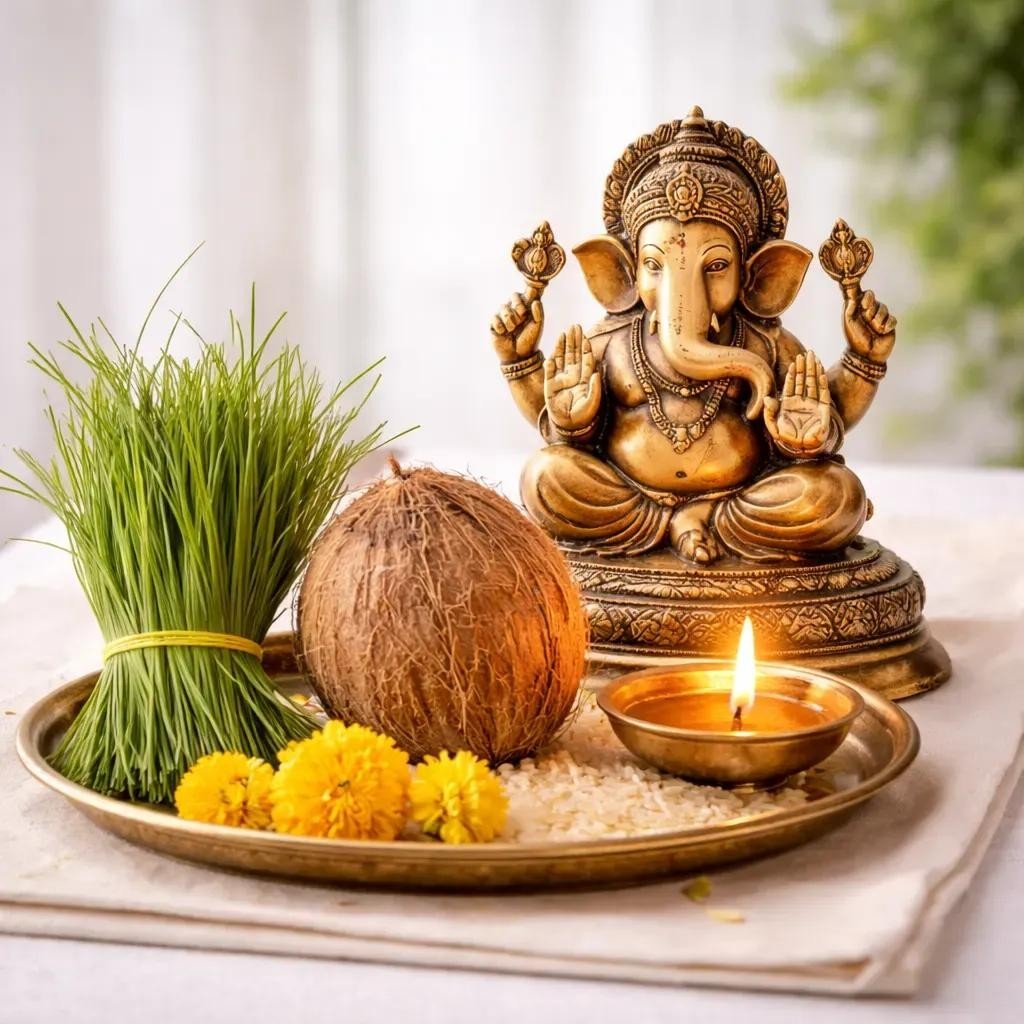
The puja can be kept simple. Common offerings include:
- Fresh Durva grass
- Flowers
- Akshat
- Kumkum
- Sandalwood
- Fruits
- Coconut
- Modak or other traditional sweets
- Naivedya
- Diya and incense
The most important part of the observance is devotion and sincerity, rather than an elaborate list of materials.
How Many Durva Should Be Offered to Ganesha?
A common Ganesh Puja tradition is to offer 21 Durva blades or 21 Durva bunches.
In some traditions, Durva is arranged into small bunches, while in others individual blades or specific groupings are used.
There is regional variation in how Durva is prepared and offered, so devotees can follow their family tradition or the instructions of their local priest.
Durva Ashtami Vrat Rules
Vrat practices can differ between families and regions. Those observing the fast traditionally maintain cleanliness, devotion and self-discipline throughout the day.
Common practices include:
- Taking a bath before the puja
- Wearing clean clothes
- Keeping the puja area clean
- Offering fresh Durva
- Avoiding unnecessary arguments and negative behaviour
- Spending time in prayer or devotional activities
- Listening to the vrat katha
- Taking food according to one’s family tradition
A person should choose the type of fasting appropriate for their own circumstances rather than assuming that everyone must observe a strict fast.
What Is the Spiritual Meaning of Durva?
Durva is a simple grass, yet it has an important place in Hindu rituals.
Its ability to grow again after being cut is often seen symbolically as representing renewal, resilience and continuity.
This gives Durva Ashtami a deeper spiritual message: meaningful spiritual practices do not always require expensive or elaborate materials. A simple natural offering made with devotion can become an important part of worship.
Durva Ashtami and Lord Ganesha
Durva is strongly associated with Lord Ganesha and is frequently used during Ganesh Puja.
Since Ganesha is traditionally worshipped as the remover of obstacles and the deity invoked before auspicious beginnings, offering Durva is an important part of many Ganesh worship traditions.
Devotees can use Durva Ashtami as an opportunity to spend time in prayer, chant Ganesha’s name and seek blessings for peace and harmony in the family.
Can Durva Be Offered Every Day to Ganesha?
Yes, Durva can be offered to Lord Ganesha as part of regular worship. It is not limited only to Durva Ashtami.
If fresh Durva is available and your family tradition permits it, you can offer it during daily Ganesh Puja or on occasions such as Ganesh Chaturthi.
Always use clean and fresh Durva for worship.
Durva Ashtami 2026: Important Points at a Glance
| Detail | Information |
|---|---|
| Festival | Durva Ashtami |
| Year | 2026 |
| Main Tithi | Bhadrapada Shukla Ashtami |
| Prokerala date | Friday, September 18, 2026 |
| Ashtami begins | September 18, around 1:01 PM |
| Ashtami ends | September 19, around 3:27 PM |
| Main association | Durva grass and Lord Ganesha |
| Important offering | Fresh Durva grass |
| Common tradition | Offering 21 Durva blades/bunches |
| Observance | Puja, vrat, prayer and devotional practices |
The date and exact tithi timings can vary according to location and Panchang calculation.
Frequently Asked Questions About Durva Ashtami
1. When is Durva Ashtami in 2026?
According to Prokerala’s Ujjain Panchang, Durva Ashtami is observed on Friday, September 18, 2026. The Shukla Paksha Ashtami tithi continues until September 19, so some regional calendars may list September 19.
2. Who is worshipped on Durva Ashtami?
Durva grass is the central focus of the observance, and Durva is especially associated with Lord Ganesha. Regional traditions may also include worship of Gauri, Shiva-Parvati or other deities.
3. How many Durva should be offered to Ganesha?
A common tradition is to offer 21 Durva blades or small bunches to Lord Ganesha. Practices can vary according to regional and family traditions.
4. What is the significance of Durva grass?
Durva is considered sacred in Hindu worship and is particularly associated with Lord Ganesha. Its continued growth is also traditionally viewed as a symbol of vitality and continuity.
5. Can Durva Ashtami vrat be observed by men?
Yes. Although the observance is traditionally associated with women in several regions, Hindu fasting and worship practices can vary by family and community. Men may also participate in the puja and offer Durva according to their tradition.
6. What should be offered to Ganesha on Durva Ashtami?
Devotees commonly offer fresh Durva, flowers, fruits, akshat, sandalwood, sweets and other traditional naivedya.
7. Is fasting compulsory on Durva Ashtami?
Fasting practices vary. Some devotees observe a full fast, while others follow a simpler vrat with permitted foods. The practice should follow one’s family tradition and personal circumstances.
8. What mantra can be chanted during Durva Ashtami?
A simple and widely used Ganesha mantra is:
Om Gan Ganapataye Namah
Devotees can chant it while offering Durva to Lord Ganesha.
Conclusion
Durva Ashtami is a meaningful Hindu observance that highlights the spiritual importance of Durva grass and its connection with Lord Ganesha. The day is traditionally observed with puja, offerings, prayer, vrat and the reading or listening of the vrat katha.
In 2026, the relevant Ashtami tithi falls across September 18–19, with Prokerala listing Durva Ashtami on September 18. Since Panchang-based observance can differ depending on location and sunrise rules, devotees should follow their local Panchang or family tradition for the final vrat date and puja timing.