n Hindu tradition, cows hold a special place and are often associated with nourishment, compassion, and dharma. Gau Seva, or serving and caring for cows, is considered by many devotees to be a meaningful form of seva.
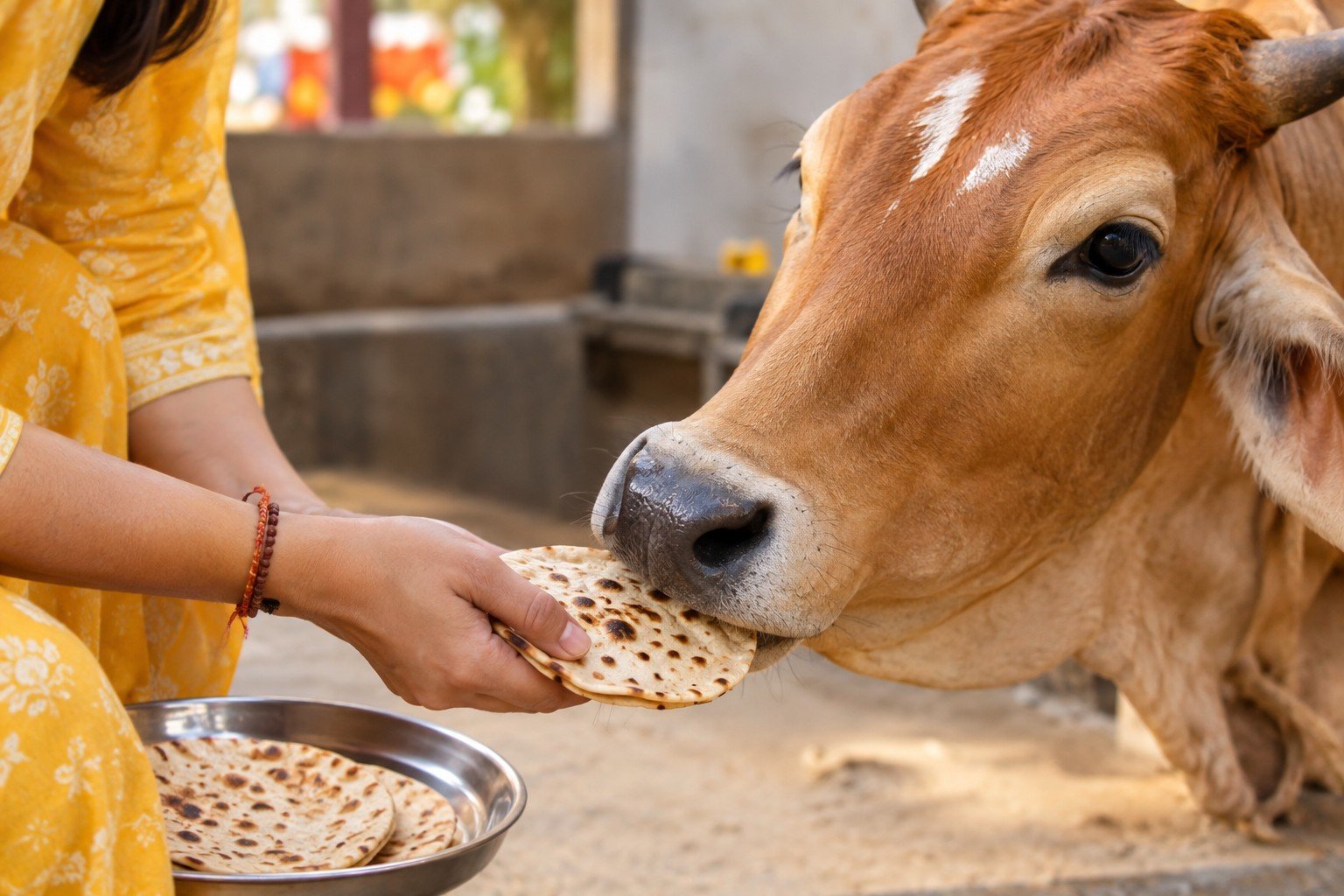
One simple way people practice Gau Seva is by feeding a cow. Some devotees offer a fresh roti, while others offer suitable green fodder, vegetables, or a small amount of jaggery (gud).
For many people, feeding a cow is not only about giving food. It is also an opportunity to practice daya (compassion), seva (selfless service), gratitude, and devotion.
But what does Hindu tradition actually say about feeding cows every day? And is there any spiritual significance associated with offering roti or gud?
Let’s understand the traditional perspective.
What Is Gau Seva?
The word Gau refers to a cow, while Seva means selfless service.
Gau Seva can include:
- Feeding cows suitable food
- Providing clean drinking water
- Offering green fodder
- Helping maintain a clean and safe environment
- Supporting a Gaushala
- Caring for sick or abandoned cows through appropriate organizations
- Spending time peacefully around cows
- Performing devotional practices while serving them
Gau Seva is traditionally connected with the broader Hindu value of compassion toward living beings.
It does not necessarily have to involve a large donation. Even a simple act such as providing food or water can become a personal practice of seva.
Benefits of Feeding a Cow Daily According to Hindu Tradition
There are several traditional beliefs associated with feeding cows. These should be understood as religious and devotional beliefs, rather than scientifically proven outcomes.
1. It Is Considered an Act of Seva
One of the simplest meanings of feeding a cow is seva.
Instead of doing something only for personal benefit, a person gives food to another living being without expecting anything in return. This can encourage a spirit of selfless service.
For devotees, this is one of the important reasons Gau Seva is practiced.
2. It Encourages Compassion
Feeding an animal can be a simple way to practice daya, or compassion.
When someone regularly takes time to provide food and water to a cow, it can encourage awareness of the needs of other living beings.
In this sense, daily Gau Seva can become a small reminder to live with kindness and responsibility.
3. Feeding a Cow Is Traditionally Considered Auspicious
In many Hindu households, offering food to a cow is regarded as an auspicious act.
Devotees may feed cows during everyday life or on particular religious occasions and days. The practice is often connected with gratitude and devotion.
However, the exact customs can differ between regions, families, and traditions.
Is Feeding Roti to a Cow Considered Good?
Yes, feeding a fresh, plain roti to a cow is a common form of Gau Seva in many Hindu households.
Some families make an extra roti specifically for a cow and offer it before or after their own meal.
The important idea is not simply the roti itself but the attitude of seva and respect behind the offering.
If you feed a cow, make sure the food is appropriate and safe. Avoid giving spoiled, mouldy, excessively salty, spicy, or otherwise unsuitable food.
What Is the Significance of Feeding Gud to a Cow?
Gud (jaggery) is also traditionally offered to cows by some devotees.
In Hindu devotional practice, offering gud along with suitable food is sometimes considered an act of Gau Seva and generosity.
However, gud should not be treated as an essential part of a cow’s diet. Cows have nutritional needs, and excessive sugary foods are not appropriate.
If you want to offer something to a cow, suitable fodder and clean water are generally more practical choices. When in doubt, follow the feeding guidance of the Gaushala or animal caretaker.
Can We Feed Green Fodder to a Cow?
Green fodder is commonly provided to cows, particularly at Gaushalas and farms.
Depending on the animal and local practice, suitable fodder may include certain grasses and other appropriate plant material.
If you are feeding a cow at a Gaushala, it is better to ask the caretakers what food they allow visitors to provide. This helps ensure that the cows receive food suitable for their dietary needs.
Why Do Hindus Consider the Cow Sacred?
The cow has an important place in Hindu religious and cultural traditions.
References to cows can be found throughout Hindu literature, and cows have historically been associated with agriculture, nourishment, generosity, and household life.
The cow is also connected with several revered figures and stories in Hindu tradition, including Shri Krishna, who is traditionally known as Govinda and Gopala.
Because of these associations, caring for cows has become an important devotional practice for many Hindus.
Gau Seva at a Gaushala
A Gaushala is a place where cows are cared for and maintained.
Visiting a Gaushala can provide an opportunity to participate in seva in different ways. Depending on the Gaushala, visitors may be able to:
- Feed cows
- Provide fodder
- Help with cleaning
- Offer financial support
- Donate useful supplies
- Spend time in prayer
- Participate in organized seva activities
If you visit a Gaushala, it is important to follow its rules. Not every type of food is suitable for every cow, so asking the caretakers before feeding is a good practice.
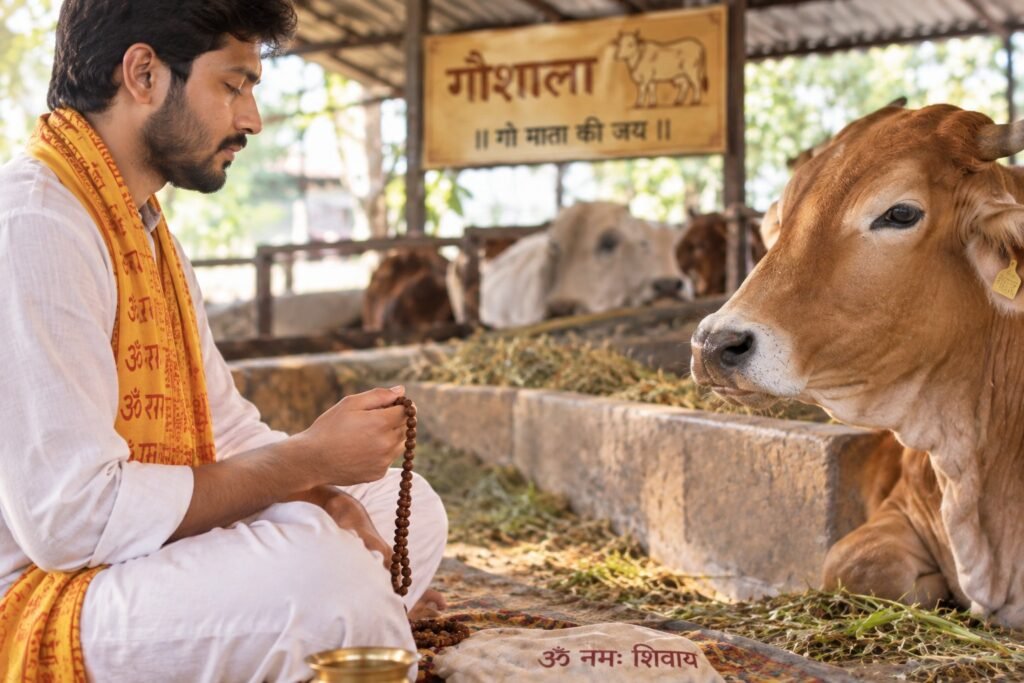
Can We Do Naam Jaap While Doing Gau Seva?

Yes. Many devotees combine Naam Jaap with their seva and devotional activities.
For example, a person may quietly chant the name or mantra they regularly practice while feeding cows, walking through a Gaushala, or performing other seva.
The purpose is not to turn Gau Seva into a transaction for spiritual rewards. Instead, the combination can help a devotee remain mindful and devotional while performing a simple act of service.
You may chant a chosen Naam or mantra according to your own spiritual tradition.
For example:
“Hare Krishna Hare Krishna, Krishna Krishna Hare Hare
Hare Rama Hare Rama, Rama Rama Hare Hare.”
Or you may simply repeat the divine name that is meaningful to you.
Is Naam Jaap in a Gaushala More Powerful?
There is a popular devotional belief that performing Naam Jaap in spiritually significant surroundings, including a Gaushala, can make the experience feel especially peaceful and devotional.
However, it is better not to claim that chanting in a Gaushala automatically gives a specific number of times more spiritual benefit.
The value of Naam Jaap traditionally depends on factors such as shraddha (faith), bhakti (devotion), concentration, sincerity, and regular practice.
A Gaushala can simply provide a calm environment where a devotee combines seva with remembrance of the divine.
A Simple Daily Gau Seva and Naam Jaap Routine
If you want to make Gau Seva part of your daily spiritual routine, you can keep it simple.
Step 1: Prepare suitable food
Keep a fresh roti or suitable fodder ready. You can also provide clean drinking water.
Step 2: Visit a nearby cow
Approach the cow calmly and respectfully. Do not force-feed the animal.
Step 3: Offer the food
Give the food in a safe manner. If you are at a Gaushala, follow the caretaker’s instructions.
Step 4: Practice Naam Jaap
After offering the food, you can sit or stand peacefully and chant your chosen Naam or mantra.
A Jaap Mala or digital Jaap Counter can help you keep track of repetitions while maintaining your focus.
Step 5: End with gratitude
Take a moment to feel grateful for the opportunity to perform seva.
The practice does not need to be complicated. Regularity and sincerity are more important than making the ritual elaborate.
Is Daily Gau Seva Necessary?
No particular daily routine should be treated as a universal requirement for every Hindu.
Some people practice Gau Seva every day, while others do it occasionally, on festivals, or whenever they have an opportunity.
What matters is that the practice is performed responsibly and with genuine respect.
Even providing clean water or supporting a Gaushala can be a meaningful form of seva.
Important Things to Remember Before Feeding a Cow
Gau Seva should always prioritize the welfare of the animal.
Keep these points in mind:
- Never feed spoiled or mouldy food.
- Avoid excessively spicy or salty food.
- Do not assume that every human food is suitable for cows.
- Do not force food into a cow’s mouth.
- Ask Gaushala caretakers what food is appropriate.
- Provide clean water where possible.
- Keep plastic and other harmful materials away from animals.
- If supporting a Gaushala financially, choose a responsible organization.
Seva should help the animal rather than create a health problem.
Gau Seva Is More Than Feeding a Cow
Feeding a cow is only one form of Gau Seva.
True seva can also mean helping ensure that cows have:
- Proper food
- Clean water
- Shelter
- Medical care
- Safe surroundings
- Protection from harmful waste
For devotees, this broader approach reflects the spirit of compassion behind seva.
Instead of focusing only on a particular food item such as roti or gud, the larger principle is care, kindness, and responsibility.
Gau Seva, Naam Jaap and Bhakti
Gau Seva and Naam Jaap can be combined naturally as part of a devotional lifestyle.
A devotee may begin the day with Naam Jaap, visit a Gaushala, offer food to cows, and continue chanting quietly during the seva.
This creates a simple connection between seva and sadhana.
Seva gives an opportunity to serve, while Naam Jaap gives an opportunity to remember the divine.
Together, they can become a meaningful spiritual routine for those who follow this path.
Final Thoughts
The benefits of feeding a cow daily are understood in Hindu tradition primarily through the ideas of Gau Seva, compassion, gratitude, and devotion.
Offering a fresh roti, suitable fodder, clean water, or supporting a Gaushala can all become ways of practicing seva. Some devotees also combine these activities with Naam Jaap as part of their daily spiritual practice.
Rather than looking at Gau Seva only as a way to receive a particular spiritual reward, it can be understood as an opportunity to practice kindness and selfless service.
Even a small act done with sincerity can become a meaningful part of one’s devotional journey.
Frequently Asked Questions
Is feeding a cow daily considered auspicious in Hinduism?
Yes. Feeding and caring for cows is traditionally considered a form of Gau Seva and is regarded as an auspicious devotional practice by many Hindus.
Can I feed a cow one roti every day?
A fresh, plain roti is commonly offered to cows. However, cows have specific dietary needs, so it is best to follow the advice of a Gaushala or animal caretaker regarding suitable food.
Can we feed gud to cows?
Gud is traditionally offered to cows by some devotees, but it should not be given excessively. Suitable fodder and clean water are generally more important for the animal’s wellbeing.
What is the benefit of Gau Seva?
In Hindu tradition, Gau Seva is associated with compassion, selfless service, gratitude, and devotion. Specific spiritual outcomes are matters of religious belief rather than scientifically established facts.
Can I do Naam Jaap in a Gaushala?
Yes. Devotees may practice Naam Jaap while visiting or serving at a Gaushala, provided they respect the rules of the place and do not disturb the animals or other visitors.
Is Naam Jaap in a Gaushala more powerful?
Some devotees consider a Gaushala a peaceful and spiritually meaningful environment for Naam Jaap. However, there is no reliable basis for assigning a specific multiplier or guaranteed additional spiritual benefit to chanting there.
What is the best way to perform Gau Seva?
A responsible approach includes providing suitable food or water, supporting proper animal care, following Gaushala guidelines, and treating the animals with patience and compassion.