Parivartini Ekadashi is an important Ekadashi dedicated to Lord Vishnu and is observed during the Shukla Paksha of the Bhadrapada month. It is also known by names such as Vamana Ekadashi, Parsva Ekadashi, Padma Ekadashi and Jayanti Ekadashi in different traditions.
In 2026, Parivartini Ekadashi will be observed on Tuesday, 22 September 2026. The Ekadashi tithi begins on the evening of September 21 and continues until the night of September 22, so the vrat is observed on September 22 according to the sunrise-based observance.
This Ekadashi is associated with the belief that during Lord Vishnu’s cosmic sleep in Chaturmas, He changes His sleeping position. The word “Parivartini” comes from the idea of change or turning. The day is also closely connected with the Vamana Avatar of Lord Vishnu and the story of King Bali.
Parivartini Ekadashi 2026 Date
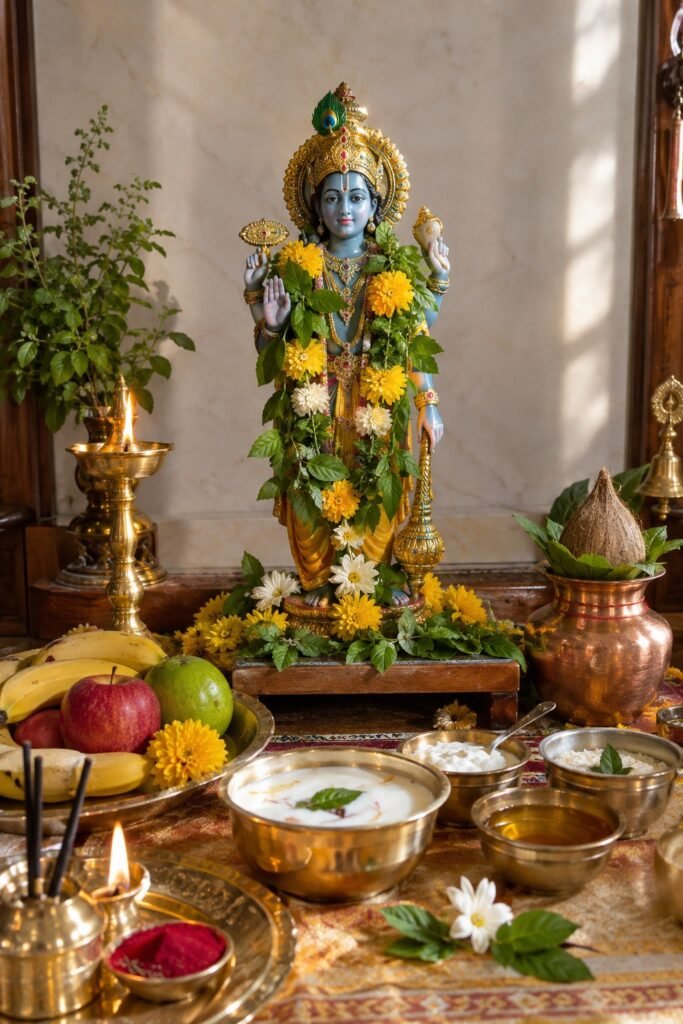
Parivartini Ekadashi 2026: Tuesday, 22 September 2026
Tithi: Bhadrapada Shukla Ekadashi
Parana: Wednesday, 23 September 2026
For New Delhi, one Panchang calculation gives the parana window as approximately 6:09 AM to 8:35 AM on September 23, 2026. However, Ekadashi parana timings can vary according to location and sunrise, so devotees should check their local Panchang for the exact time.
Why Is It Called Parivartini Ekadashi?
Parivartini means “changing” or “turning.”
According to Hindu tradition, Lord Vishnu enters His cosmic sleep on Shesha Nag during Chaturmas. Parivartini Ekadashi is associated with the time when Lord Vishnu is believed to change His sleeping position.
Because of this traditional belief, the Ekadashi is called Parivartini Ekadashi.
It is also connected with Lord Vishnu’s Vamana Avatar, which is why devotees worship Vamana on this day. Different regional traditions use different names for the same Ekadashi.
Other Names of Parivartini Ekadashi
Parivartini Ekadashi is known by several names, including:
- Vamana Ekadashi
- Parsva Ekadashi
- Padma Ekadashi
- Jayanti Ekadashi
- Jaljhilani Ekadashi
The name may differ according to the region and religious tradition followed by devotees.
Significance of Parivartini Ekadashi
Parivartini Ekadashi is considered an important day for devotion to Lord Vishnu.
Devotees traditionally observe a fast, perform Vishnu Puja, chant Vishnu mantras, listen to the Ekadashi vrat katha and spend time in prayer and bhajan.
The day is especially associated with:
- Devotion to Lord Vishnu
- Worship of Lord Vamana
- Fasting and self-discipline
- Naam Jaap and mantra chanting
- Reading or listening to Vishnu-related scriptures
- Charity and seva
- Spiritual reflection
Traditional religious texts and later Hindu traditions describe spiritual merit associated with observing this Ekadashi. These are religious beliefs rather than scientifically established claims.
Parivartini Ekadashi Puja Vidhi
Devotees can follow a simple Vishnu Puja at home on Parivartini Ekadashi.
1. Wake Up Early
Wake up early on Ekadashi and take a bath. Wear clean and preferably yellow or light-colored clothes.
Clean the area where you will perform the puja.
2. Set Up Lord Vishnu’s Puja
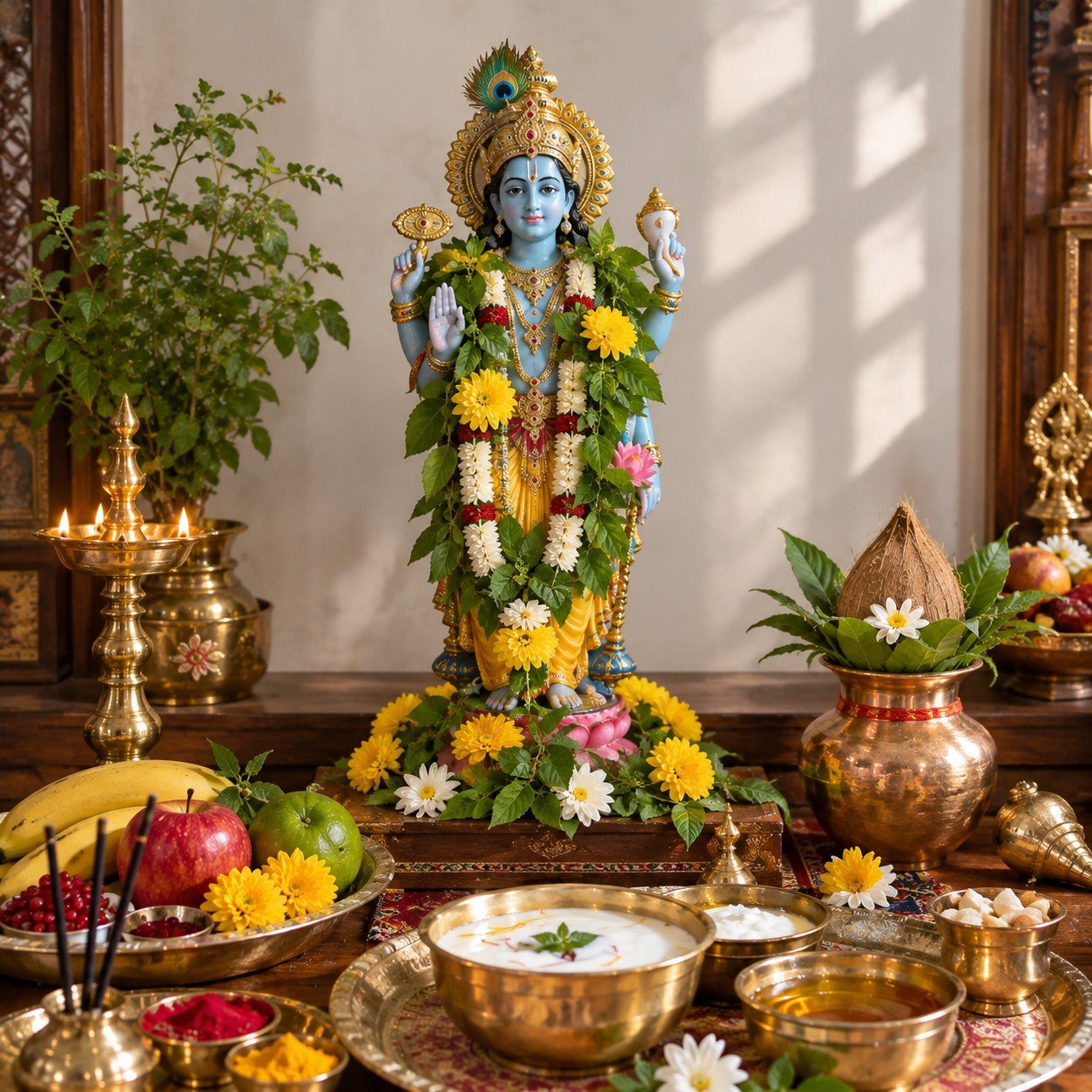
Place an image or idol of Lord Vishnu or Lord Vamana on a clean puja platform.
Light a diya and incense.
You can keep the following items ready:
- Tulsi leaves
- Yellow flowers
- Chandan
- Fruits
- Panchamrit
- Incense
- Diya
- Akshat
- Water
- Prasad
Tulsi is traditionally offered to Lord Vishnu during Vishnu worship. If you follow the practice of not plucking Tulsi leaves on Ekadashi, keep the required leaves ready beforehand.
3. Take the Vrat Sankalp
Sit peacefully in front of Lord Vishnu and take a sankalp to observe the Ekadashi vrat with devotion.
You can pray according to your personal tradition and intention.
4. Offer Puja to Lord Vishnu
Offer water, chandan, flowers, Tulsi leaves, fruits and other suitable offerings to Lord Vishnu.
If worshipping Lord Vamana, you can specifically remember the Vamana Avatar and the story of King Bali.
5. Chant Vishnu Mantra
One of the most popular mantras for Lord Vishnu is:
ॐ नमो भगवते वासुदेवाय।
Om Namo Bhagavate Vasudevaya
You can chant this mantra 108 times or according to your personal routine.
Another mantra associated with the Vamana form is:
ॐ नमो भगवते वामनाय।
Om Namo Bhagavate Vamanaya
Mantra chanting is traditionally used as a way to focus the mind on devotion and prayer.
6. Read Parivartini Ekadashi Vrat Katha
After the puja, devotees can read or listen to the traditional Parivartini Ekadashi Vrat Katha.
You can also listen to Vishnu Sahasranama, read the Bhagavad Gita or spend some time doing Naam Jaap.
7. Perform Aarti
In the evening, perform Lord Vishnu’s aarti and offer the prepared prasad.
Devotees may spend the evening in bhajan, kirtan and naam jaap.
Some traditions also observe a night vigil, although this may be followed according to individual family and regional practices.
Parivartini Ekadashi Vrat Katha
The traditional story of Parivartini Ekadashi is closely connected with Lord Vamana and King Bali.
According to the traditional account, King Bali was a powerful and generous ruler. He was known for his devotion, charity and religious practices. His growing power eventually caused concern among the Devas.
To restore the balance of the three worlds, Lord Vishnu appeared as Vamana, a young Brahmin.
Vamana approached King Bali and asked him for land that could be covered by three steps.
King Bali agreed to the request.
Lord Vamana then revealed His divine form and expanded to a tremendous size. With His first step, He covered the Earth. With His second step, He covered the heavens.
There was nowhere left for the third step.
King Bali then offered his own head for the third step.
Pleased with Bali’s devotion and commitment to his promise, Lord Vishnu granted him His blessings. The traditional story also describes Lord Vishnu’s connection with Bali during the period of His cosmic sleep.
This story is therefore associated with Parivartini Ekadashi and the worship of Lord Vamana.
What Does the Vamana-Bali Story Teach?
The story of Vamana and King Bali is traditionally remembered for themes such as:
- Keeping one’s promise
- Humility
- Devotion
- Charity
- Surrender to God
- Controlling pride
- Respecting one’s word
For devotees, the story provides a spiritual reminder that devotion and humility are important parts of religious life.
What to Eat During Parivartini Ekadashi Vrat?
Ekadashi fasting rules vary between families and traditions.
Many devotees avoid grains and beans during Ekadashi. Some observe a fruit-and-milk fast, while others follow a single sattvik meal or other forms of fasting.
Common fasting foods may include:
- Fruits
- Milk
- Curd
- Coconut
- Makhana
- Sabudana
- Singhara flour
- Kuttu flour
- Potatoes
- Peanuts
Devotees should follow the fasting rules of their own tradition.
A strict Nirjala Ekadashi means fasting without food or water, but it is not necessary for everyone. People who cannot safely fast should choose a suitable form of fasting rather than forcing themselves into an unsuitable practice.
What Not to Eat on Parivartini Ekadashi?
People observing a traditional Ekadashi fast generally avoid:
- Rice
- Wheat
- Regular grains
- Pulses and beans
- Regular flour-based foods
- Meat and eggs
- Alcohol
- Foods considered tamasic according to their tradition
The exact food restrictions can differ between communities.
Parivartini Ekadashi Mantra
The following Vishnu mantra is suitable for devotional chanting on Parivartini Ekadashi:
Om Namo Bhagavate Vasudevaya
ॐ नमो भगवते वासुदेवाय।
This is a widely used Vishnu mantra and can be chanted during puja, meditation or Naam Jaap.
For devotees focusing specifically on Lord Vamana:
Om Namo Bhagavate Vamanaya
ॐ नमो भगवते वामनाय।
You can chant the mantra 108 times using a traditional Japa Mala or a counting method that helps you maintain your practice.
Parivartini Ekadashi and Naam Jaap
Ekadashi is not only about food restrictions. For many devotees, it is also a day to increase spiritual practice.
You can use the day for:
- Vishnu Naam Jaap
- Hare Krishna Mahamantra Jaap
- Om Namo Bhagavate Vasudevaya Jaap
- Reading Bhagavad Gita
- Vishnu Sahasranama
- Listening to bhajans
- Temple visits
- Seva and charity
Even if you cannot observe a complete fast, spending some time in prayer and Naam Jaap can help make the day more spiritually meaningful.
Parivartini Ekadashi Daan and Seva
Charity and seva are traditionally considered important parts of Hindu religious observances.
On Parivartini Ekadashi, devotees may donate according to their ability.
Possible forms of seva include:
- Offering food to someone in need
- Donating fruits
- Donating clothes
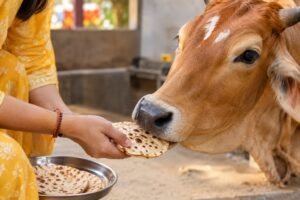
- Supporting a Gaushala
- Feeding cows
- Helping a temple
- Supporting a charitable organisation
- Giving devotional books
The spirit of daan is more important than making an elaborate donation.
Parana: When to Break Parivartini Ekadashi Fast?
The fast is traditionally broken on Dwadashi, the day after Ekadashi.
For 2026, Parivartini Ekadashi is observed on September 22 and the parana falls on September 23. For New Delhi, the published Panchang window is approximately 6:09 AM to 8:35 AM on September 23.
Because parana depends on the local sunrise and Panchang calculations, devotees in other cities should check their local timings.
It is traditionally recommended to complete parana within the prescribed Dwadashi period rather than delaying it unnecessarily.
Simple Parivartini Ekadashi Puja at Home
If you have limited time, you can follow this simple routine:
- Wake up and take a bath.
- Clean your puja space.
- Place Lord Vishnu or Lord Vamana’s image.
- Light a diya.
- Offer Tulsi and yellow flowers.
- Offer fruits and other suitable prasad.
- Chant Om Namo Bhagavate Vasudevaya.
- Read or listen to the Parivartini Ekadashi Vrat Katha.
- Perform Vishnu Aarti.
- Spend some time in Naam Jaap.
- Observe the fast according to your ability and tradition.
- Break the fast on Dwadashi during the appropriate parana time.
Parivartini Ekadashi 2026: Important Things to Remember
- Parivartini Ekadashi falls on 22 September 2026.
- It is observed during Bhadrapada Shukla Paksha.
- It is associated with Lord Vishnu and His Vamana Avatar.
- It is also called Parsva, Padma and Vamana Ekadashi in different traditions.
- Devotees traditionally avoid grains and beans during the fast.
- Tulsi is an important offering in Vishnu Puja.
- Om Namo Bhagavate Vasudevaya is a popular Vishnu mantra for chanting.
- The vrat katha of Vamana and King Bali is traditionally associated with this Ekadashi.
- Parana is performed on 23 September 2026, with the exact local timing depending on the Panchang.
- Naam Jaap, prayer, charity and seva can be included in the day’s observance.
Frequently Asked Questions About Parivartini Ekadashi 2026
When is Parivartini Ekadashi in 2026?
Parivartini Ekadashi will be observed on Tuesday, 22 September 2026.
What is another name for Parivartini Ekadashi?
It is also known as Vamana Ekadashi, Parsva Ekadashi, Padma Ekadashi and Jayanti Ekadashi in different traditions.
Which God is worshipped on Parivartini Ekadashi?
Parivartini Ekadashi is dedicated primarily to Lord Vishnu. Lord Vishnu’s Vamana form is especially associated with this Ekadashi.
What mantra should I chant on Parivartini Ekadashi?
You can chant:
Om Namo Bhagavate Vasudevaya
You may also chant:
Om Namo Bhagavate Vamanaya
Can we eat rice on Parivartini Ekadashi?
Traditionally, devotees observing an Ekadashi fast avoid rice and other grains. However, fasting rules differ between traditions.
When is Parivartini Ekadashi Parana in 2026?
Parana is on 23 September 2026. For New Delhi, a commonly published window is approximately 6:09 AM to 8:35 AM. Local timings can vary.
What is the significance of Parivartini Ekadashi?
According to Hindu tradition, Parivartini Ekadashi marks Lord Vishnu’s symbolic change of sleeping position during His cosmic sleep in Chaturmas. It is also connected with the Vamana Avatar and King Bali.
Can I do Naam Jaap on Parivartini Ekadashi?
Yes. Naam Jaap, Vishnu mantra chanting, bhajan and reading spiritual texts are commonly included in Ekadashi observances.
Conclusion
Parivartini Ekadashi 2026 is a sacred day dedicated to Lord Vishnu and is observed on 22 September 2026. The day brings together the traditions of Ekadashi fasting, Vishnu Puja, Vamana Avatar worship and the story of King Bali.
Whether you observe a complete fast, follow a simple sattvik vrat or simply spend some time in prayer and Naam Jaap, the essence of the day is devotion, self-discipline and remembrance of Lord Vishnu.
On this Parivartini Ekadashi, devotees can chant Om Namo Bhagavate Vasudevaya, read the Vrat Katha, perform Vishnu Puja and take part in seva according to their personal tradition.