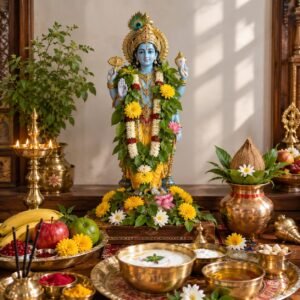

Neem Karoli Baba, lovingly called Maharaj Ji by his devotees, remains one of the most widely remembered spiritual figures of modern India. His name is closely associated with Hanuman Ji, Kainchi Dham, seva, devotion and the remembrance of God.
But behind the famous stories about his miracles and the growing popularity of Kainchi Dham lies something much simpler.
Baba’s teachings repeatedly pointed people toward love, selfless service, feeding others and remembering God rather than complicated spiritual practices.
His influence has also reached far beyond India. His American disciple Richard Alpert, later known as Ram Dass, became one of the major figures through whom Baba’s teachings reached a Western audience.
So, what was the deeper message behind Neem Karoli Baba’s life?
And why does naam jaap remain such an important part of the spiritual tradition associated with him?
Who Was Neem Karoli Baba?

Neem Karoli Baba was a Hindu mystic and devotee of Lord Hanuman who lived during the 20th century.
He is also known by names such as Neeb Karori Baba and Maharaj Ji.
Much of what is known about his life comes through the recollections and writings of devotees rather than conventional biographical records. Penguin Random House India notes that accounts of Baba’s life contain relatively few established facts alongside many stories and memories shared by devotees.
Baba became particularly associated with Kainchi Dham in Uttarakhand, where a Hanuman temple and ashram became an important centre of his spiritual legacy.
His teachings were generally simple rather than philosophical or complicated.
The central message often associated with his tradition can be expressed through four ideas:
Love everyone.
Serve everyone.
Feed everyone.
Remember God.
These ideas are also highlighted by organisations and devotional sources preserving his teachings.
Why Was Love So Important to Neem Karoli Baba?
One of the most striking aspects of Neem Karoli Baba’s teachings was his emphasis on love without discrimination.
For Baba, spirituality was not simply about sitting in meditation or performing rituals. How a person treated other people was also part of their spiritual life.
Accounts preserved by Ram Dass describe Baba encouraging devotees to see the divine in others and to move beyond divisions based on religion or social identity.
This gives a deeper meaning to the idea of bhakti.
Bhakti is not only about praying to God.
It can also mean developing compassion, humility and love toward other living beings.
In this way, serving another person can become a form of devotion.
The Meaning Behind “Serve All”
Seva means selfless service.
It is one of the most important concepts connected with Neem Karoli Baba’s teachings.
According to accounts compiled by Ram Dass, Baba generally did not encourage householders to pursue extreme austerities or complicated spiritual practices. Instead, he encouraged a form of karma yoga, where ordinary work could become an offering when performed with devotion and remembrance of God.
This is an important point.
You do not necessarily need to leave your home, become a monk or spend hours in meditation to begin practicing seva.
Seva can be simple:
- Helping someone who needs support
- Feeding a hungry person
- Helping an elderly family member
- Giving food to animals
- Supporting someone without expecting anything in return
- Volunteering for a meaningful cause
- Speaking kindly to someone who is struggling
The action may look ordinary.
The intention behind the action is what gives it spiritual meaning.
Why Did Baba Emphasize Feeding Others?
Another important part of this tradition is feeding people.
Food has a special place in Indian spiritual traditions. Offering food to others, especially those who are hungry, is commonly understood as annadaan.
The expression associated with Baba — “Feed All” — therefore has a very practical meaning.
Spirituality should not remain limited to words.
If someone is hungry, giving them food can itself become an act of devotion.
This also explains why bhandaras and prasad distribution became such an important part of the culture surrounding Kainchi Dham.
Kainchi Dham’s annual celebrations continue to attract large numbers of devotees, contributing to the site’s growing importance as a pilgrimage destination.
Neem Karoli Baba and Hanuman Ji
Neem Karoli Baba’s spiritual identity is deeply connected with Lord Hanuman.
Kainchi Dham itself is centred around a Hanuman temple, and Baba’s devotees have traditionally regarded him as an especially devoted worshipper of Hanuman Ji.
Why Hanuman?
Because Hanuman represents several qualities that fit naturally with Baba’s teachings:
Bhakti — devotion to God
Seva — selfless service
Vinay — humility
Bal — strength used for dharma
Samarpan — surrender to the Divine
Hanuman never placed himself above Shri Ram.
His strength was always used in service.
This makes Hanuman an especially powerful symbol for the principle:
“Serve God by serving others.”
The Lesser-Known Side of Neem Karoli Baba
When people hear the name Neem Karoli Baba, they often think first about miracles.
There are numerous stories associated with him — including stories about his extraordinary presence, his blanket, the famous train incident and other experiences described by devotees.
However, these stories should be understood as devotional accounts or traditions, rather than automatically treating supernatural claims as historically proven facts.
What is easier to understand is the lesson that devotees have drawn from Baba’s life.
He repeatedly brought people back to simple things:
Love.
Seva.
Food.
Faith.
Remembrance of God.
Ram Dass’s accounts similarly describe selfless loving service as a central practice encouraged by Baba.
Perhaps that is one of the reasons his teachings continue to resonate with people today.
What Did Neem Karoli Baba Teach About Naam Jaap?

This is where Baba’s teachings become especially interesting for anyone interested in naam jaap.
Naam jaap means repeatedly remembering and chanting the name of God.
Instead of allowing the mind to constantly move between worries, desires and distractions, naam jaap gives the mind a simple spiritual focus.
The tradition surrounding Neem Karoli Baba places strong importance on remembering God, particularly through Ram Naam and Hanuman devotion.
The important point is not simply the number of repetitions.
It is remembrance with devotion.
Even a few minutes of sincere chanting can become a daily spiritual practice.
Which Mantra Can You Chant?
For devotees following the Hanuman-oriented path associated with Neem Karoli Baba, a simple mantra is:
ॐ हनुमते नमः
Om Hanumate Namah
The meaning is essentially an invocation and salutation to Lord Hanuman.
You can chant it slowly and peacefully while focusing your attention on Hanuman Ji.
Another simple practice is the remembrance of:
श्री राम
Shri Ram
Ram Naam is deeply connected with Hanuman’s devotion because Hanuman is traditionally portrayed as the greatest devotee of Shri Ram.
How Many Times Should You Chant?
There is no need to begin with a very large target.
You can start with:
11 times — for a quick daily practice
21 times — for a slightly longer practice
108 times — traditional mala jaap
If you have a 108-bead mala, you can complete one round while chanting:
ॐ हनुमते नमः
The goal should not be to finish as quickly as possible.
Instead, try to keep your attention on the mantra.
A Simple Neem Karoli Baba-Inspired Naam Jaap Routine
You can create a simple 10-minute daily spiritual routine based on the principles associated with Baba.
Step 1: Sit quietly
Find a clean and peaceful place.
You can sit in front of Hanuman Ji or simply sit quietly with your eyes closed.
Step 2: Take a few deep breaths
Allow your mind to settle before beginning your chanting.
Step 3: Start the mantra
Chant:
ॐ हनुमते नमः
Repeat it slowly.
Step 4: Use a mala or jaap counter
You can use a Tulsi mala for traditional counting or a jaap counter if you prefer a simple digital method.
The counting can help you maintain consistency without constantly thinking about how many repetitions you have completed.
Step 5: End with Ram Naam
After completing your jaap, sit quietly for a minute and remember:
श्री राम
You can then make a simple prayer for strength, peace and the ability to serve others.
Can You Do Naam Jaap While Walking?
Yes, naam jaap does not have to be limited to a particular room or sitting position.
Walking can also become an opportunity for remembrance.
For example, while walking slowly, you can mentally repeat:
Ram… Ram… Ram…
or:
Om Hanumate Namah…
The idea is to bring remembrance into everyday life.
This fits naturally with the broader teaching that spiritual practice can be integrated into ordinary life rather than separated completely from it.
Love, Seva and Naam Jaap — How Are They Connected?
At first, these three things may appear different.
Love is about how you see others.
Seva is about how you act.
Naam Jaap is about where you keep your mind.
But together they create a simple spiritual path.
Love
See others with compassion.
Seva
Help without constantly expecting something in return.
Naam Jaap
Keep remembering God throughout your daily life.
This is why the message associated with Neem Karoli Baba can be understood as much more than a collection of miracle stories.
It is a way of bringing bhakti into everyday life.
A Simple Daily Practice You Can Follow
You do not need to completely change your lifestyle.
Try this simple routine:
Morning:
Chant ॐ हनुमते नमः 108 times.
During the day:
Do one small act of seva without expecting anything in return.
Before eating:
Remember God and be grateful for the food.
While walking or travelling:
Practice mental Ram Naam.
At night:
Spend two minutes remembering the good things you received during the day.
This kind of simple practice can make spirituality feel less like a separate activity and more like part of everyday life.
What Can We Learn From Neem Karoli Baba Today?
Perhaps the most useful lesson is that spirituality does not always have to be complicated.
You can start with very simple things.
Love someone.
Help someone.
Feed someone.
Remember God.
Repeat His Name.
And do these things consistently.
Neem Karoli Baba’s legacy continues to inspire devotees because his teachings can be practiced by ordinary people — including people living busy family and professional lives.
His connection with Hanuman Ji also makes his teachings particularly relevant to devotees interested in Hanuman bhakti, Ram Naam and naam jaap.
Final Thoughts
The most fascinating part of Neem Karoli Baba’s story may not be any single miracle.
It may be the simplicity of what he repeatedly pointed people toward.
Love.
Seva.
Feeding others.
Remembering God.
In a world where spiritual practices can sometimes become complicated, these teachings offer a remarkably simple starting point.
You can begin today with just a few minutes.
Sit quietly.
Take the name of Hanuman Ji.
ॐ हनुमते नमः
And then carry that remembrance into your actions — by helping someone, feeding someone or simply treating another person with love.
That may be the deeper meaning behind the path associated with Neem Karoli Baba: remember God, serve others and let devotion become part of everyday life.
Frequently Asked Questions
Who was Neem Karoli Baba?
Neem Karoli Baba, also known as Maharaj Ji or Neeb Karori Baba, was a 20th-century Hindu mystic and devotee of Lord Hanuman. His spiritual legacy is strongly associated with Kainchi Dham in Uttarakhand.
What did Neem Karoli Baba teach?
His teachings are commonly associated with love, selfless service, feeding others and remembering God. Ram Dass’s accounts particularly describe selfless loving service as an important practice encouraged by Baba.
Was Neem Karoli Baba a devotee of Hanuman Ji?
Yes. Neem Karoli Baba is strongly associated with Hanuman devotion, and Kainchi Dham is centred around a Hanuman temple.
Which mantra can I chant for Hanuman Ji?
A simple Hanuman mantra is:
ॐ हनुमते नमः — Om Hanumate Namah
You can repeat it 11, 21 or 108 times according to your preference.
Can I do naam jaap while walking?
Yes. Many people practice mental naam jaap while walking, travelling or doing routine activities. The important part is maintaining attention and devotion toward the Divine.
Can I use a mala for Neem Karoli Baba-inspired naam jaap?
Yes. A 108-bead mala can be used to count repetitions of a mantra such as Om Hanumate Namah or for Ram Naam. A digital jaap counter can also be used if you prefer electronic counting.