The human body is home to trillions of microorganisms. Most of them live with us without causing disease and form what scientists call the human microbiome.
But scientists are discovering that the relationship between humans and their resident microbes is more dynamic than previously understood.
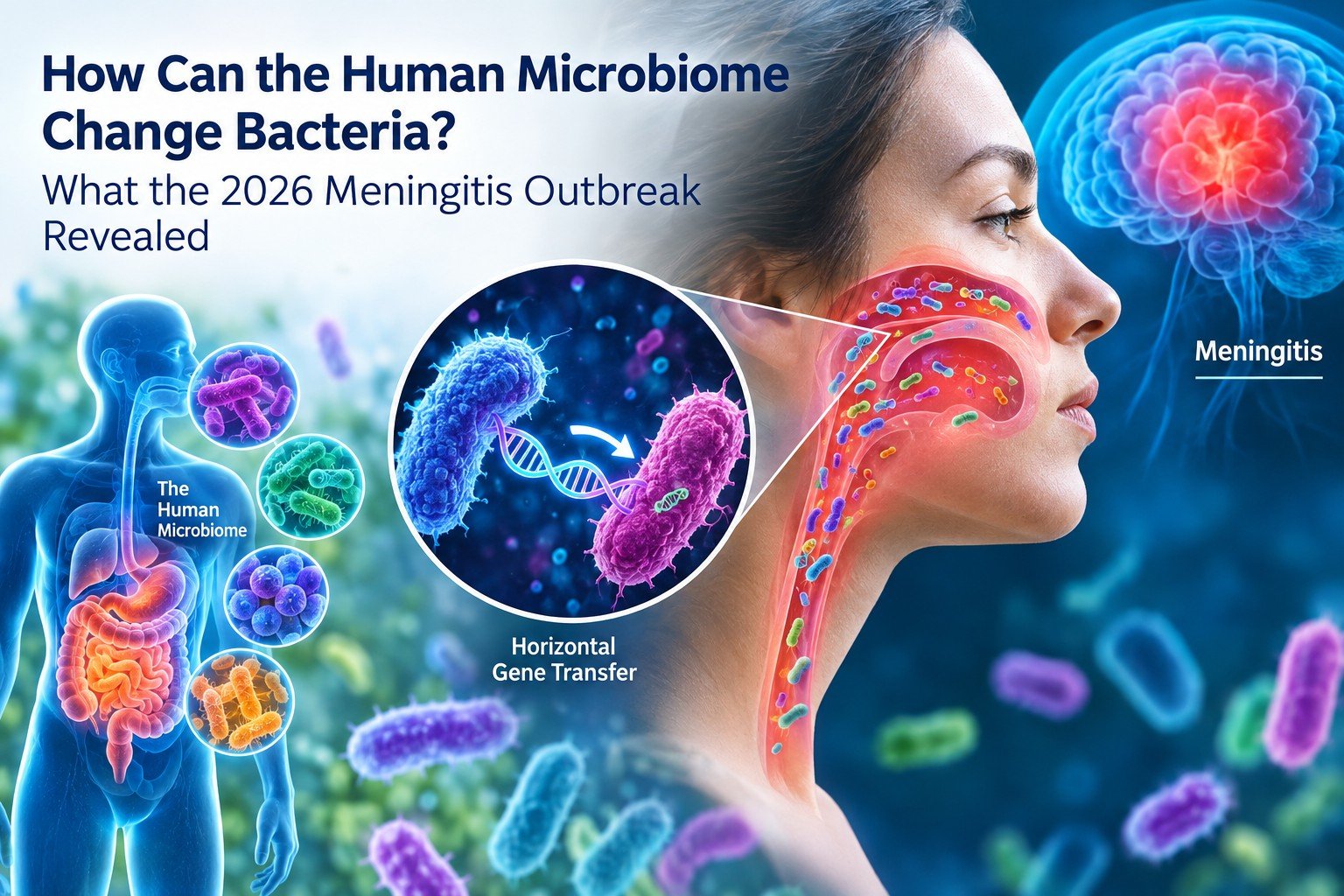
A recent investigation into a severe meningococcal disease outbreak in Kent, England, in March 2026 has highlighted one fascinating part of bacterial biology: bacteria can sometimes acquire genetic material from other bacteria living in the same environment.
The process is known as horizontal gene transfer.
Researchers from the UK Health Security Agency (UKHSA), the University of Oxford and collaborating institutions found that the bacteria responsible for the Kent outbreak had acquired genetic material from other bacteria naturally found in the human throat. These genetic changes may have contributed to the unusual ability of the outbreak strain to cause severe disease.
So, what exactly happened, and what does it mean for our understanding of the microbiome?
What Happened in the 2026 Meningitis Outbreak?
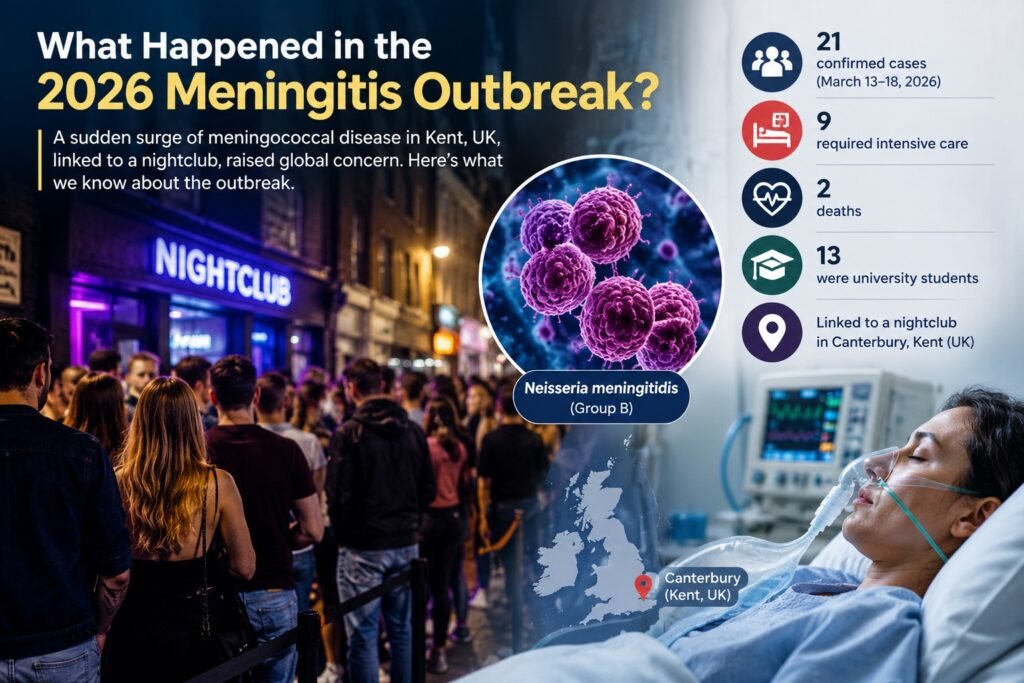
In March 2026, an unusually large outbreak of invasive meningococcal disease occurred among young adults in southeast England.
The outbreak was linked to a nightclub in Canterbury. According to UKHSA and the published outbreak investigation, 21 cases were confirmed between March 13 and March 18, including two deaths. Thirteen of those affected were university students, and 19 had attended the same nightclub over a three-day period.
All 21 patients required hospital treatment, while nine required intensive care.
The outbreak was caused by serogroup B Neisseria meningitidis, commonly called MenB.
Meningococcal bacteria can sometimes live in the nose and throat without causing illness. However, in rare circumstances, they can invade the bloodstream or the membranes surrounding the brain and spinal cord, causing serious disease.
Why Was This Outbreak So Severe?
Scientists initially considered several possible factors.
These included:
- Characteristics of the bacterial strain
- Immunity within the affected population
- Close social contact
- Environmental conditions
- The intense mixing of young adults in a crowded social setting
UKHSA’s earlier assessment concluded that bacterial characteristics likely contributed to the outbreak, while population immunity and social and environmental factors contributed to its speed and scale.
The new genomic research provides additional clues about the bacteria themselves.
What Is the Human Microbiome?
The human microbiome refers to the community of microorganisms living in and on the human body.
These microorganisms include:
- Bacteria
- Viruses
- Fungi
- Other microscopic organisms
They can be found in places such as the gut, mouth, skin and respiratory tract.
Many of these microorganisms are harmless or beneficial. Some help compete with potentially harmful microbes, while others participate in processes that influence our health.
Importantly, not every bacterium found in the human body is dangerous.
The throat, for example, contains a complex microbial community made up of many different bacterial species.
And this is where the recent meningitis research becomes particularly interesting.
Can Bacteria Exchange Genes?
Yes.
Bacteria don’t always acquire new characteristics simply through ordinary reproduction.
They can also obtain DNA from other bacteria through a process called horizontal gene transfer.
Think of it as bacteria sharing or acquiring genetic instructions from their surroundings.
There are several mechanisms through which bacteria can exchange genetic material. In this particular research, scientists found evidence that the outbreak strain had acquired genetic material from other bacteria found naturally in the human throat.
This doesn’t mean bacteria are intentionally “communicating” or making decisions.
It is a biological process that can occur when different microorganisms occupy the same environment.
What Did Scientists Discover About the Meningitis Bacteria?
Researchers used genome sequencing to investigate the bacteria responsible for the Kent outbreak.
They compared the outbreak strain with tens of thousands of meningococcal genomes available in international databases.
The analysis showed that the outbreak bacteria contained genetic material acquired from other, less harmful bacteria naturally present in the throat.
UKHSA described this as horizontal gene transfer.
The acquired genetic changes appear to have affected how the bacteria interact with human cells and how they are recognized by the immune system.
Scientists believe these changes may have helped make this particular strain unusually effective at causing severe disease.
However, this does not mean that every bacterium in the human microbiome can suddenly become dangerous.
The finding concerns a particular bacterial strain and a specific combination of genetic changes.
How Could Gene Transfer Make Bacteria More Dangerous?
Bacterial genes contain instructions for making proteins and carrying out biological functions.
If a bacterium acquires useful genetic material, those new instructions can sometimes change its characteristics.
For example, genetic changes can potentially affect:
- How bacteria attach to human cells
- How they interact with surrounding tissues
- How they obtain nutrients
- How they avoid parts of the immune response
- How efficiently they survive in particular environments
In the Kent outbreak, researchers found genetic changes that may have altered the way the bacteria interacted with human cells and the immune system.
This is one reason bacterial genome sequencing is so important during outbreaks.
Scientists aren’t simply asking “Which bacteria caused the illness?”
They can also investigate:
“What makes this particular strain different from related strains?”
Does the Human Microbiome Create Dangerous Bacteria?
This is where an important distinction is necessary.
It would be misleading to say that “the human microbiome created the meningitis outbreak.”
The human microbiome contains an enormous variety of microorganisms, most of which do not cause serious disease.
The research instead suggests that a disease-causing bacterium acquired genetic material from other bacteria living in the same environment.
The outbreak itself involved several factors, including bacterial characteristics, population immunity and intense social mixing.
So the discovery provides one piece of the biological puzzle, rather than a complete explanation for why the outbreak happened.
Why Is Horizontal Gene Transfer Important?
Horizontal gene transfer is important because it provides bacteria with another way to adapt.
Instead of waiting for genetic changes to accumulate slowly through generations, bacteria can sometimes acquire genetic material that already exists elsewhere.
This is also one reason scientists closely monitor bacterial genomes.
Similar processes can play roles in the development or spread of characteristics such as antibiotic resistance in some bacterial species.
However, the Kent research does not mean that the outbreak strain suddenly became an antibiotic-resistant “superbug.”
The main focus of this investigation is the genetic changes associated with the strain’s disease-causing characteristics.
What Is Meningococcal Disease?
Meningococcal disease is an uncommon but potentially life-threatening infection caused by Neisseria meningitidis.
Two major forms are:
Meningococcal meningitis
This occurs when infection affects the protective membranes surrounding the brain and spinal cord.
Common symptoms can include:
- Fever
- Headache
- Stiff neck
- Sensitivity to light
- Confusion
- Nausea or vomiting
Meningococcal bloodstream infection
The bacteria can also cause a severe bloodstream infection known as meningococcemia or meningococcal septicemia.
Symptoms may include:
- Fever and chills
- Severe muscle or body pain
- Rapid breathing
- Extreme fatigue
- Cold hands and feet
- A dark purple rash in later stages
According to the CDC, meningococcal disease can progress rapidly and can be fatal within hours, making prompt medical attention extremely important.
How Does Meningococcal Disease Spread?
Meningococcal bacteria can live in the nose and throat of people who have no symptoms.
The bacteria can spread through respiratory or throat secretions during close or prolonged contact.
The CDC identifies several settings associated with increased risk, including close household contact, first-year college students living in residence halls and certain other higher-risk groups.
This helps explain why crowded social environments can sometimes contribute to outbreaks.
In the 2026 Kent outbreak, most cases had a connection to the same nightclub over a three-day period.
What Does This Mean for People in the United States?
Although the 2026 outbreak discussed here occurred in England, the underlying science is relevant internationally.
Meningococcal disease also occurs in the United States.
The CDC says that serogroups B, C and Y cause the majority of meningococcal disease in the United States, although other serogroups can also cause illness.
The CDC also reports that U.S. meningococcal disease cases have increased sharply since 2021 and are above pre-pandemic levels.
At the same time, the CDC states that meningococcal outbreaks in the United States remain rare and unpredictable.
Therefore, the Kent outbreak should not be interpreted as evidence that a similar outbreak is currently occurring across the United States.
Can Vaccination Help Prevent Meningococcal Disease?
Yes.
Vaccination is one of the important tools used to prevent meningococcal disease.
The CDC recommends routine meningococcal vaccination for adolescents and recommends vaccination for children and adults with certain increased-risk conditions or circumstances.
There are vaccines targeting different meningococcal groups, including MenACWY and MenB vaccines.
The appropriate vaccine and schedule can depend on age, health conditions, risk factors and current recommendations.
People should therefore discuss vaccination with a healthcare professional rather than relying on general information from an online article.
What Does This Discovery Tell Us About the Microbiome?
Perhaps the biggest lesson is that the human microbiome is not simply a collection of microorganisms sitting passively inside our bodies.
It is a dynamic biological ecosystem.
Microorganisms interact with one another and with their environment. Genetic material can sometimes move between bacteria, potentially changing their characteristics.
This is one reason scientists are increasingly interested in studying the microbiome not only as a collection of “good” and “bad” bacteria, but as a complex ecosystem.
The discovery also demonstrates why genomic surveillance is becoming increasingly important in infectious disease research.
Why Genome Sequencing Matters During Outbreaks
Traditional laboratory testing can identify the bacteria responsible for an infection.
Genome sequencing can provide another level of information.
Scientists can compare the DNA of bacteria from different patients and determine:
- Whether infections are genetically related
- How closely strains are related
- Whether unusual genetic changes are present
- How a strain differs from historical strains
- Whether a particular outbreak strain has characteristics that require additional investigation
UKHSA’s national surveillance program routinely uses whole-genome sequencing for culture-confirmed invasive meningococcal disease in England. This allowed investigators to identify and characterize the Kent outbreak strain quickly.
Could Something Like This Happen Again?
Scientists cannot predict exactly when or where another unusual meningococcal strain will emerge.
UKHSA has emphasized that highly invasive strains can emerge unexpectedly and that similar outbreaks may occur again, although their timing and location cannot be predicted.
This does not mean people should be constantly worried about a new meningitis outbreak.
Instead, the research highlights the importance of:
- Disease surveillance
- Genome sequencing
- Vaccination
- Rapid public-health responses
- Awareness of serious symptoms
- Appropriate treatment of close contacts when advised by health authorities
The Bigger Lesson From the 2026 Meningitis Outbreak
The Kent outbreak provides scientists with a remarkable example of how complex bacterial evolution can be.
A bacterium living in a human environment can sometimes acquire genetic material from another microorganism. In certain circumstances, those changes may alter how the bacterium behaves.
But the discovery also reinforces an important point:
The microbiome is not simply “good bacteria versus bad bacteria.”
It is a complex ecosystem in which microorganisms interact, compete and exchange genetic material.
Understanding these interactions could help scientists better recognize dangerous bacterial strains before they cause larger outbreaks.
For the public, the most important takeaway is not to fear the microbiome. Instead, it is to understand that infectious diseases can evolve in complicated ways—and that vaccination, medical awareness and modern genomic surveillance are important parts of protecting public health.
When Should You Seek Medical Help?
Meningococcal disease can progress very quickly.
The CDC advises seeking immediate medical attention when meningococcal disease is suspected. Symptoms can initially resemble other illnesses but may worsen rapidly.
Symptoms such as fever, severe headache, stiff neck, confusion, sensitivity to light, vomiting, difficulty breathing or a dark/purple rash should not be ignored, particularly when they appear suddenly or become severe.
A rash that does not fade when pressure is applied can be a warning sign, but waiting for a rash before seeking medical attention is not recommended because meningococcal disease can progress rapidly.
This article is for general educational purposes and is not a substitute for medical diagnosis or treatment.
Frequently Asked Questions
What is the human microbiome?
The human microbiome is the community of microorganisms living in and on the human body, including bacteria, fungi and other microbes.
Can bacteria exchange genes?
Yes. Bacteria can acquire genetic material from other bacteria through processes known collectively as horizontal gene transfer.
What did scientists discover in the 2026 meningitis outbreak?
Researchers found that the MenB strain responsible for the Kent outbreak had acquired genetic material from other bacteria naturally found in the human throat. The changes may have contributed to the strain’s unusual disease-causing characteristics.
Does the microbiome cause meningitis?
No. The microbiome itself does not simply “cause” meningitis. The 2026 research found evidence of genetic exchange involving bacteria in the throat, while the outbreak also involved bacterial, immunity, social and environmental factors.
What bacteria causes meningococcal disease?
Meningococcal disease is caused by Neisseria meningitidis.
Is meningococcal disease common in the United States?
It is uncommon, but it can be extremely serious. The CDC says U.S. cases have increased since 2021 and are now above pre-pandemic levels.
Can meningococcal disease be prevented?
Vaccination can help prevent meningococcal disease, and public-health authorities may recommend antibiotics or vaccination for certain close contacts during outbreaks.
What are the warning signs of meningococcal disease?
Common symptoms include fever, headache and stiff neck. Other symptoms can include confusion, vomiting, sensitivity to light, severe body pain, rapid breathing and a dark purple rash. The disease can worsen rapidly, so urgent medical care is important.