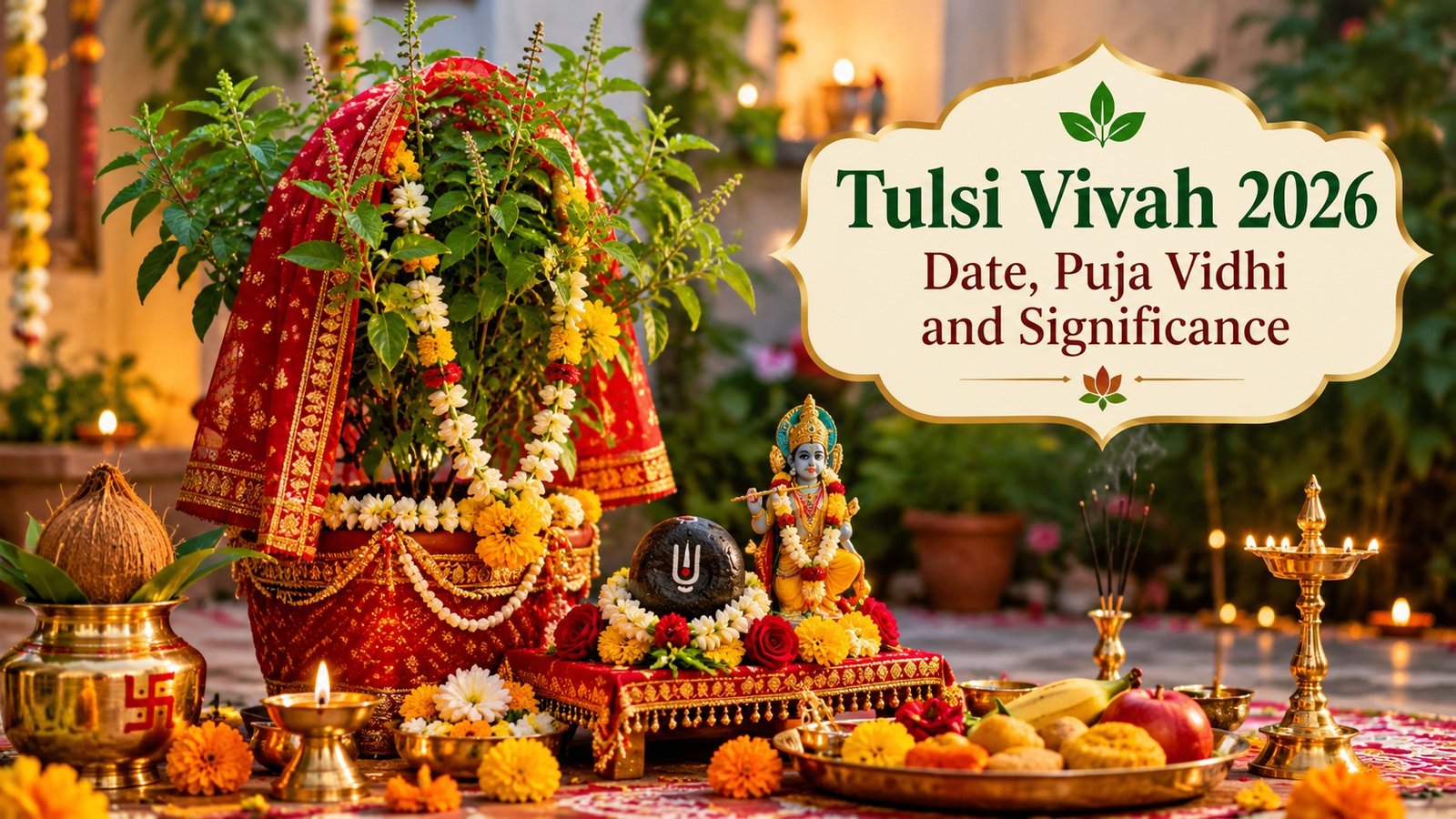
Tulsi Vivah is one of the most sacred Hindu festivals dedicated to Goddess Tulsi and Lord Vishnu. On this day, devotees perform the symbolic marriage of the holy Tulsi plant with Lord Vishnu, usually worshipped in the form of Shaligram or Shri Krishna. The festival is celebrated with devotion, traditional wedding rituals, prayers, diyas and offerings.
Tulsi Vivah holds special importance in Hindu households because Tulsi is considered sacred and closely associated with Lord Vishnu. Many devotees believe that performing Tulsi Vivah brings peace, happiness and prosperity to the family.
In this article, we will explain the Tulsi Vivah 2026 date, puja vidhi, puja samagri, traditional katha, important mantras and spiritual significance.
Tulsi Vivah 2026 Date and Tithi
Tulsi Vivah 2026 will be celebrated on Saturday, 21 November 2026, according to several Hindu calendars. It falls on Kartik Shukla Dwadashi, the twelfth day of the bright fortnight of the Hindu month of Kartik.
Some families and temples perform Tulsi Vivah on the evening of Dev Uthani Ekadashi, which falls on Friday, 20 November 2026. The exact observance may differ according to regional traditions and family customs.
| Event | Date |
|---|---|
| Dev Uthani Ekadashi | Friday, 20 November 2026 |
| Tulsi Vivah | Saturday, 21 November 2026 |
| Hindu month | Kartik |
| Tithi | Shukla Dwadashi |
| Main deities | Goddess Tulsi and Lord Vishnu |
| Traditional puja time | Evening, according to local Panchang |
The exact auspicious time for the ceremony depends on the location. Devotees should check their local Panchang or consult their family priest for the appropriate muhurat.
What Is Tulsi Vivah?
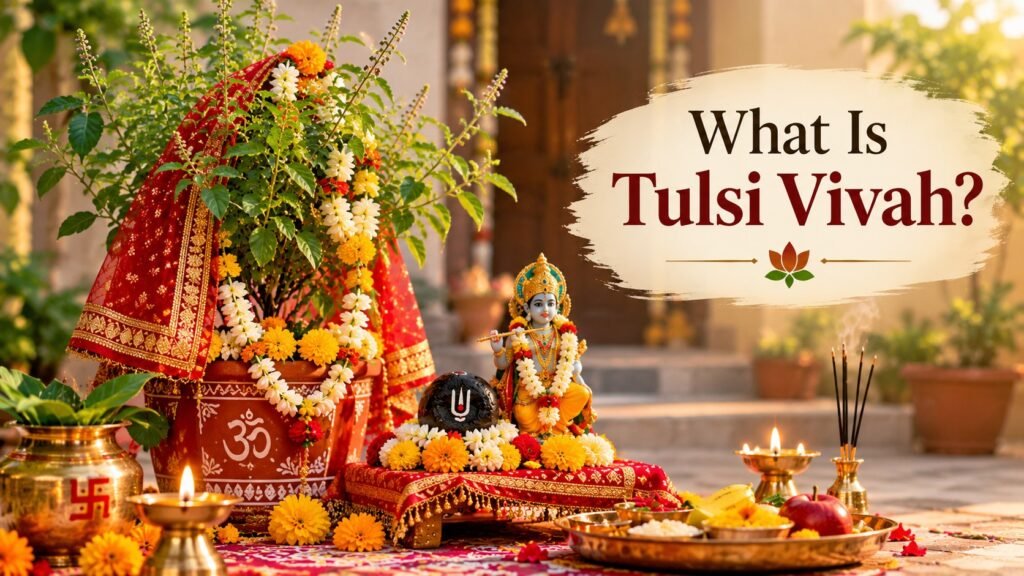
Tulsi Vivah is a traditional Hindu festival that celebrates the symbolic marriage of Goddess Tulsi with Lord Vishnu. During the ceremony, devotees decorate the Tulsi plant as a bride and place a Shaligram stone or an image of Lord Vishnu or Shri Krishna beside it as the groom.
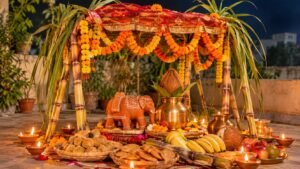
The ceremony is performed much like a traditional Hindu wedding. Families decorate the area with flowers, prepare a small mandap, offer prayers, sing devotional songs and perform aarti.
Tulsi Vivah is associated with the end of Chaturmas, the sacred four-month period during which many auspicious ceremonies are traditionally avoided. In many Hindu communities, the festival also marks the beginning of the wedding season.
Tulsi Vivah Puja Samagri
Before beginning the puja, devotees can arrange the following items:
- Tulsi plant in a pot
- Shaligram stone or an idol of Lord Vishnu or Shri Krishna
- Red or yellow chunri for the Tulsi plant
- Flowers and garlands
- Kumkum, turmeric and sandalwood paste
- Akshat (unbroken rice grains)
- Diya, ghee or oil, and cotton wicks
- Incense sticks and camphor
- Fruits, sweets and other traditional offerings
- Water in a small kalash or lota
- Sugarcane or other decorative items for the mandap, if available
- A small piece of cloth and other wedding-related offerings according to family tradition
You do not need an elaborate arrangement to perform a simple Tulsi Vivah at home. A Tulsi plant, a picture or idol of Lord Vishnu, basic puja items and sincere devotion are sufficient for a simple prayer ceremony.
Tulsi Vivah Puja Vidhi: How to Perform Tulsi Vivah at Home
Devotees can perform Tulsi Vivah at home by following these traditional steps. The exact rituals may vary by region and family tradition.
1. Clean the Puja Area
Clean the place where the Tulsi plant is kept. Many families decorate the area with rangoli, flowers and a small mandap.
Take a bath, wear clean clothes and prepare the puja items before beginning the ceremony.
2. Decorate the Tulsi Plant
Decorate the Tulsi plant with a red or yellow chunri, flowers and a garland. Some families also decorate the pot with rangoli or traditional designs.
Treat the Tulsi plant as the bride during the symbolic wedding ceremony.
3. Place Lord Vishnu or Shaligram Nearby
Place a Shaligram stone, if your family worships one, or an idol or picture of Lord Vishnu or Shri Krishna beside the Tulsi plant.
The Tulsi plant represents the bride, while Lord Vishnu or Shaligram represents the groom.
4. Light a Diya and Offer Prayers
Light a diya and incense sticks. Offer flowers, kumkum, turmeric, sandalwood paste, akshat and water according to your family’s custom.
Begin with a prayer to Lord Ganesha if that is part of your usual worship practice.
5. Chant Tulsi and Vishnu Mantras
Chant a Tulsi mantra and a Lord Vishnu mantra with devotion. You can also recite the names of Lord Vishnu or sing a devotional bhajan.
Repeat the mantra at a comfortable pace while keeping your attention on the prayer.
6. Perform the Symbolic Wedding Ritual
Perform the traditional wedding rituals followed by your family. Some households use a small mandap, offer a garland to the deities, and conduct symbolic wedding rounds or other customary rites.
If you are unfamiliar with the complete ceremony, you can follow a simple home puja or seek guidance from a priest.
7. Perform Aarti and Offer Prasad
Conclude the ceremony by performing aarti for Goddess Tulsi and Lord Vishnu. Offer fruits, sweets or other customary prasad to the deities.
Distribute the prasad among family members and pray for peace, devotion and well-being.
Tulsi Vivah Katha: The Story of Goddess Tulsi and Lord Vishnu
The traditional story of Tulsi Vivah is associated with Vrinda, her devotion to Lord Vishnu and the demon king Jalandhar. Details of the story vary across religious texts and regional retellings.
According to a widely told version, Vrinda was a deeply devoted woman and the wife of Jalandhar. Her devotion and chastity were believed to protect her husband, making him extremely powerful.
Jalandhar became a threat to the gods, and a conflict arose between him and the divine forces. In the traditional account, Lord Vishnu intervened, and Vrinda’s faith in her husband was broken through a divine deception.
When Vrinda discovered what had happened, she was deeply hurt and cursed Lord Vishnu. In some versions of the story, the curse led to Lord Vishnu becoming a stone, which is associated with the worship of Shaligram.
Vrinda eventually gave up her mortal life, and according to the legend, she was transformed into the sacred Tulsi plant. Lord Vishnu granted her a special place in his worship and promised to remain closely associated with her.
The annual Tulsi Vivah ceremony commemorates this divine connection between Goddess Tulsi and Lord Vishnu.
The story reminds devotees of Vrinda’s devotion and explains why Tulsi leaves hold a special place in many forms of Vishnu worship.
Tulsi Vivah Mantras
Devotees chant Tulsi and Lord Vishnu mantras during the ceremony. You can choose one or more of the following mantras according to your family’s tradition.
1. Tulsi Mata Mantra
Mantra:
ॐ तुलस्यै नमः॥
Transliteration: Om Tulasyai Namah.
Meaning: I offer my respectful salutations to Goddess Tulsi.
You can chant this mantra while offering flowers or praying near the Tulsi plant.
2. Lord Vishnu Mantra
Mantra:
ॐ नमो भगवते वासुदेवाय॥
Transliteration: Om Namo Bhagavate Vasudevaya.
Meaning: I bow with devotion to Lord Vasudeva, a form of Lord Vishnu.
This is a widely recited mantra among devotees of Lord Vishnu. You can repeat it during the puja or while meditating.
3. Shri Krishna Mantra
Mantra:
ॐ श्री कृष्णाय नमः॥
Transliteration: Om Shri Krishnaya Namah.
Meaning: I offer my salutations to Lord Shri Krishna.
Devotees who worship Shri Krishna may chant this mantra during Tulsi Vivah.
4. Tulsi Mata Prayer
Devotees can also offer a simple prayer in their own words:
“O Goddess Tulsi, may our home be filled with devotion, peace and kindness. Please guide us towards a life of truth, faith and spiritual growth.”
There is no need to rush through the mantras. Chant with a calm mind and follow the pronunciation and ritual practices you have learned from your family or spiritual teacher.
Spiritual Significance of Tulsi Vivah
Tulsi Vivah has an important place in Hindu religious traditions. The festival represents devotion, the sacred relationship between Goddess Tulsi and Lord Vishnu, and the importance of maintaining spiritual practices at home.
1. Connection Between Tulsi and Lord Vishnu
Tulsi is especially associated with Lord Vishnu and Shri Krishna. Many devotees offer Tulsi leaves during Vishnu worship as part of their family traditions.
Tulsi Vivah celebrates this sacred connection through a symbolic wedding ceremony.
2. Marks the End of Chaturmas
Chaturmas is a four-month sacred period in Hindu tradition. Tulsi Vivah is celebrated after Dev Uthani Ekadashi, which marks the symbolic awakening of Lord Vishnu.
In many communities, this period signals the return of auspicious wedding ceremonies.
3. Encourages Devotion and Prayer
The festival encourages families to come together for prayer, mantra chanting, aarti and other devotional practices.
For many devotees, these rituals provide an opportunity to strengthen their faith and make time for spiritual reflection.
4. Represents Harmony and Commitment
The symbolic marriage of Tulsi and Lord Vishnu reflects the importance of commitment, respect and devotion in Hindu religious culture.
Families often use the occasion to pray for harmony and well-being in their homes.
5. Preserves Hindu Traditions
Tulsi Vivah helps preserve traditional rituals, devotional songs, stories and customs across generations.
Children and younger family members can learn about Goddess Tulsi, Lord Vishnu and the significance of worship through participation in the ceremony.
What Should You Do on Tulsi Vivah?
Here are some simple devotional practices you can follow on Tulsi Vivah:
- Offer prayers to Goddess Tulsi and Lord Vishnu.
- Decorate the Tulsi plant with flowers and a chunri.
- Light a diya safely near the puja area.
- Chant Tulsi or Vishnu mantras.
- Listen to or read the Tulsi Vivah Katha.
- Perform aarti and offer prasad.
- Spend time with family in prayer and devotional activities.
- Follow your family’s customs regarding fasting and other observances.
Fasting is a matter of family tradition and individual practice. Devotees should follow a routine appropriate to their health and circumstances rather than assuming that a strict fast is compulsory for everyone.
Frequently Asked Questions About Tulsi Vivah 2026
When is Tulsi Vivah in 2026?
Tulsi Vivah will be observed on Saturday, 21 November 2026, according to several Hindu calendars. Some families perform the ceremony on the evening of Dev Uthani Ekadashi, on 20 November.
Why is Tulsi Vivah celebrated?
Tulsi Vivah celebrates the symbolic marriage of Goddess Tulsi with Lord Vishnu, often represented by Shaligram or Shri Krishna. It also marks an important transition in the Hindu religious calendar after Chaturmas.
Which God is worshipped on Tulsi Vivah?
Devotees worship Goddess Tulsi and Lord Vishnu. Lord Vishnu may be represented by a Shaligram stone or an image of Vishnu or Shri Krishna.
What is the best time for Tulsi Vivah puja?
The ceremony is traditionally performed in the evening in many communities. The precise auspicious time depends on the local Panchang, location and family custom.
Can Tulsi Vivah be performed at home?
Yes. Many families perform Tulsi Vivah at home by decorating the Tulsi plant, placing an image of Lord Vishnu or a Shaligram nearby, offering prayers, chanting mantras and performing aarti.
Which mantra should be chanted on Tulsi Vivah?
Devotees may chant “Om Tulasyai Namah” for Goddess Tulsi and “Om Namo Bhagavate Vasudevaya” for Lord Vishnu.
Is Tulsi Vivah performed on Ekadashi or Dwadashi?
Both practices are followed in different traditions. Many calendars observe Tulsi Vivah on Kartik Shukla Dwadashi, while some families perform the ceremony on the evening of Dev Uthani Ekadashi. Follow your local Panchang and family tradition.
What is the significance of the Tulsi Vivah Katha?
The traditional Katha explains the connection between Vrinda, Goddess Tulsi and Lord Vishnu. It is an important part of the festival and helps devotees understand why Tulsi is specially revered in Vishnu worship.
Conclusion
Tulsi Vivah is a meaningful Hindu festival that celebrates the sacred bond between Goddess Tulsi and Lord Vishnu. The occasion brings families together through puja, mantra chanting, devotional songs and traditional wedding rituals.
In 2026, Tulsi Vivah will be observed on Saturday, 21 November, according to several Hindu calendars, although some families follow the Ekadashi-evening tradition.
Whether you perform an elaborate ceremony or a simple prayer at home, the festival offers an opportunity to remember the importance of devotion, faith and spiritual discipline. Celebrate Tulsi Vivah with sincerity and follow the customs that are meaningful to your family.