
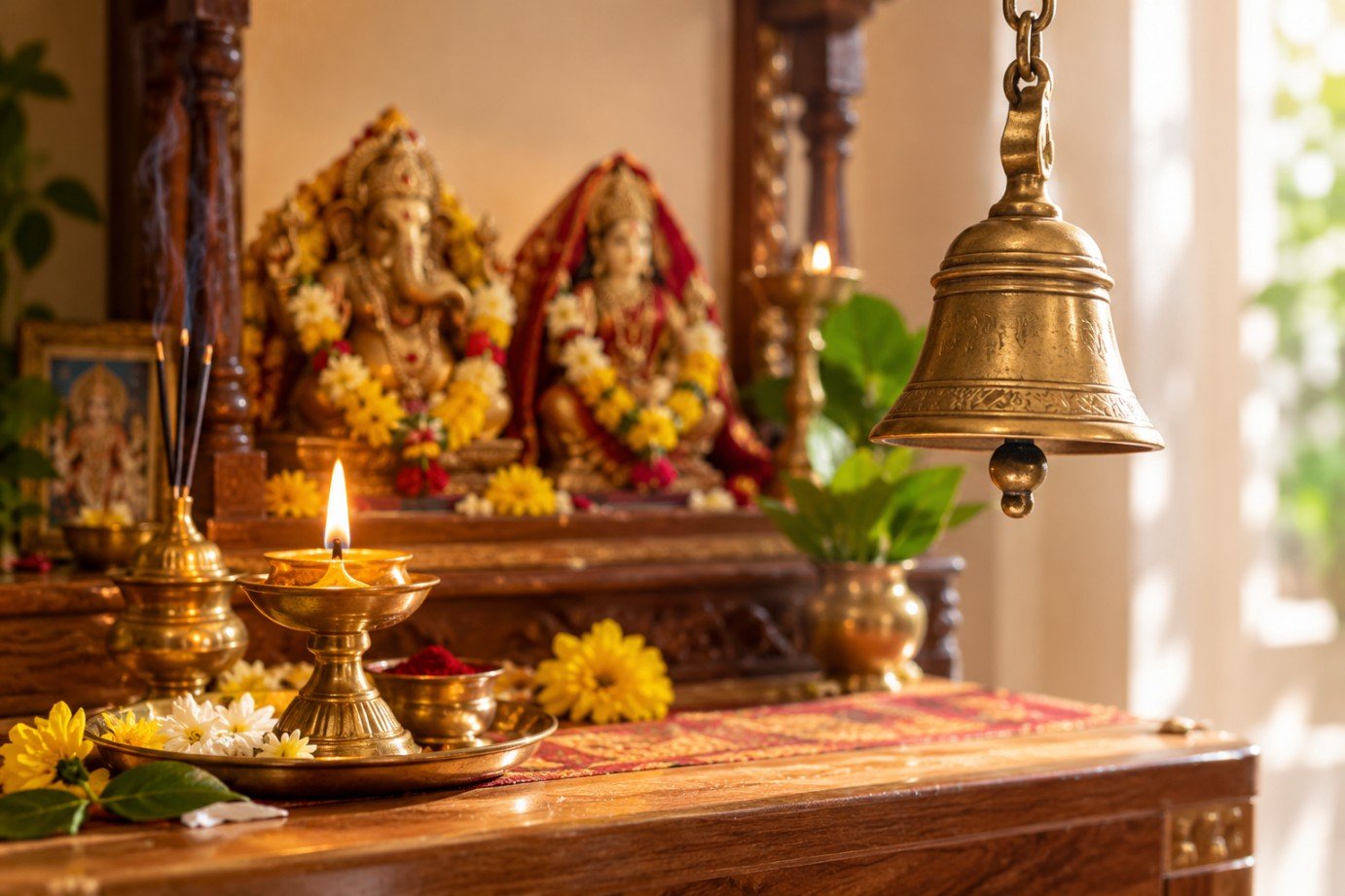
If you have ever visited a Hindu temple or watched a traditional puja at home, you may have noticed one simple ritual: ringing a bell, or ghanti, before beginning worship.
For many devotees, ringing the bell is an ordinary part of puja. But the practice has a deeper spiritual meaning in Hindu traditions. The sound of the bell is traditionally associated with creating a sacred atmosphere, focusing the mind, and announcing the beginning of worship.
So, why do Hindus ring a bell before puja? What does the ghanti symbolize, and why is it commonly found in temples and home prayer spaces?
Let’s understand the tradition.
What Is a Ghanti in Hindu Puja?
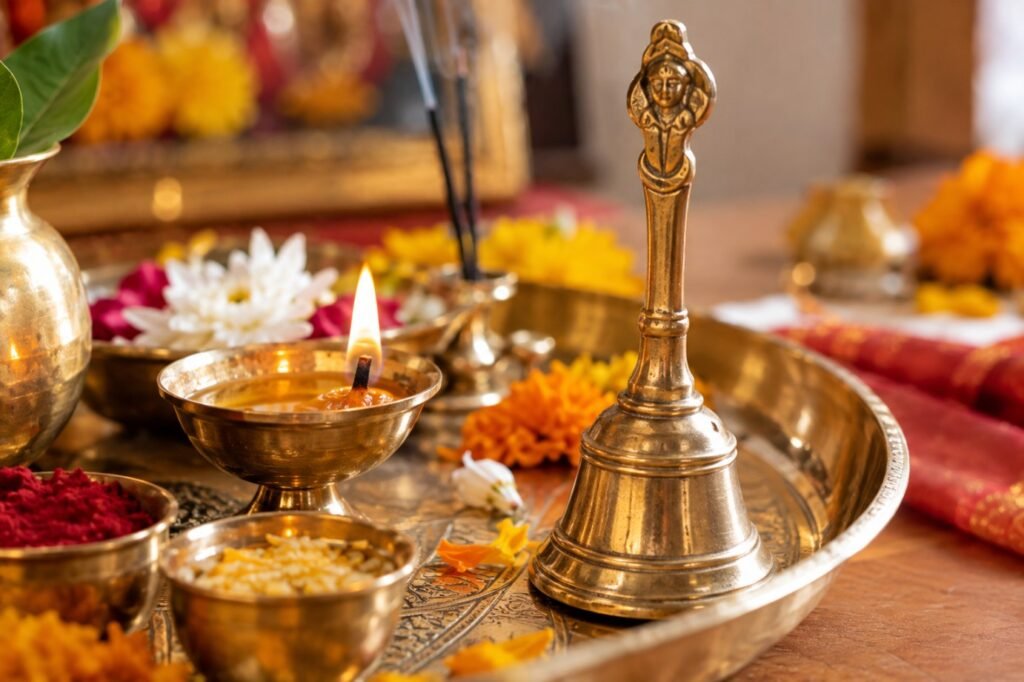
A ghanti is a small ritual bell commonly used during Hindu worship. Bells can be found in temples, near home mandirs, and in puja rooms.
A devotee may ring the bell before starting puja, while performing aarti, or at certain moments during worship.
The physical act is simple, but traditionally the sound of the bell is considered part of preparing the mind and surroundings for prayer.
The ghanti is therefore not simply a musical instrument. In Hindu worship, it has become a symbol of devotion, awareness and the beginning of a sacred activity.
Why Do Hindus Ring a Bell Before Puja?
There are several traditional explanations for ringing a bell before puja.
1. It Marks the Beginning of Worship
Ringing the bell can be understood as an announcement that the devotee is beginning worship.
Just as a temple bell may signal the beginning of a religious ceremony, the bell in a home puja can mark the transition from ordinary daily activities to a period of prayer and devotion.
The sound creates a clear beginning to the ritual.
2. It Helps Bring the Mind Into the Present Moment
Daily life is full of distractions. When someone sits down for puja, the mind may still be occupied with work, family responsibilities, conversations or other thoughts.
The sound of a bell provides a simple sensory point of focus.
When the bell rings, the devotee can use that moment to pause, take a breath and turn attention toward the deity and the prayer.
In this sense, the ghanti can become a symbolic reminder to be mentally present during worship.
3. The Sound Creates a Sacred Atmosphere
Sound has an important place in Hindu worship.
Mantras, shlokas, conch sounds, bells and aarti songs are commonly used during religious rituals.
The sound of the ghanti adds to this devotional atmosphere. For devotees, it can help distinguish the time of worship from ordinary activities.
The purpose is not merely to make noise. Traditionally, the sound is part of creating an environment suitable for prayer.
4. It Symbolizes Removing Distractions
A common spiritual interpretation of the bell is that its sound helps the devotee leave worldly distractions behind.
When the bell rings, the devotee may mentally shift attention away from everyday concerns and toward prayer.
The idea can be expressed simply:
The bell rings outside, but it also reminds us to become quiet within.
This is a spiritual interpretation of the practice rather than a scientific claim.
What Does the Ghanti Symbolize?
The Hindu puja bell carries several symbolic meanings.
Depending on the tradition and interpretation, it may represent:
- Awareness
- Devotion
- Concentration
- The beginning of worship
- Sacred sound
- Leaving distractions behind
- Turning the mind toward the Divine
For many devotees, the bell is a reminder that worship is not only about performing physical rituals. It is also about bringing attention and sincerity into prayer.
Why Are Bells Found at Hindu Temples?
Temple bells are one of the most recognizable features of Hindu temples.
A devotee may ring the bell after entering the temple or before approaching the deity for darshan.
This practice varies between temples and traditions, but the bell commonly forms part of the devotional environment.
The sound of the temple bell can become associated with entering a sacred space and beginning a moment of prayer.
For someone who regularly visits a temple, even hearing a bell from a distance may immediately bring a feeling of familiarity and devotion.
Is There a Religious Story Behind the Temple Bell?
There are different traditional explanations and scriptural interpretations concerning bells and their use in worship.
The exact symbolism is not identical across every Hindu tradition, so it is better to understand the bell as part of a broader ritual tradition rather than assigning one universal meaning to it.
In many Hindu worship practices, sound is treated as spiritually significant. Mantras, Vedic recitations, conch sounds and bells all form part of different ritual settings.
Therefore, the ghanti can be understood within the larger Hindu idea that sound can accompany and support sacred practice.
The Connection Between Ghanti and Aarti
The bell is especially noticeable during aarti.
During aarti, devotees may ring bells while a lamp is offered before the deity. The combination of:
- Diya or aarti lamp
- Bell
- Mantra or devotional song
- Incense
- Prayer
creates a recognizable atmosphere of Hindu worship.
The bell helps accompany the rhythm of the aarti and becomes part of the devotional experience.
For many families, ringing the bell during aarti is a tradition passed from one generation to another.
Why Is the Bell Used Along With Mantras?
Mantra chanting and bell ringing often appear together during puja.
A mantra gives the mind words or sacred sounds on which to focus, while the bell adds another sensory element to the ritual.
For example, while performing aarti, a devotee may chant a devotional prayer while another person rings the bell.
The combination creates a more immersive worship experience.
For a devotee practicing naam jaap, the same principle of focused attention can be important. The goal is not simply to repeat words mechanically but to bring the mind toward the Divine Name.
Does the Sound of the Bell Purify the Environment?
You may hear the traditional belief that the sound of a temple bell purifies the surroundings or removes negative energy.
This is a spiritual and religious belief rather than something that should be presented as a scientifically established fact.
Within the devotional understanding of Hindu worship, however, the bell’s sound is associated with creating a sacred atmosphere and helping the devotee prepare for prayer.
The important distinction is between traditional spiritual meaning and scientifically demonstrated effects.
Why Do Some Bells Have a Particular Shape?
Traditional Hindu puja bells are often designed with decorative features and symbolic elements.
Different bells may have different designs depending on the region, temple tradition and craftsmanship.
Some bells include figures or decorative motifs associated with Hindu deities or sacred symbols.
The exact meaning of these designs can vary, so there is no single interpretation that applies to every ghanti.
What remains common is the bell’s role as a ritual object used during worship.
Should You Ring the Bell Before Every Puja?
There is no single universal rule followed by every Hindu family.
Some devotees ring a bell at the beginning of every puja. Others use it mainly during aarti or temple worship.
Household traditions also differ.
If your family tradition includes ringing the bell before worship, you can continue that practice with devotion and understanding. If it does not, performing sincere prayer does not become meaningless simply because a bell is not used.
The heart of puja is devotion and remembrance of the Divine.
How to Ring a Puja Bell Traditionally
If you have a bell in your home mandir, you can keep the practice simple.
Step 1: Prepare for Puja
Clean yourself and the puja space as appropriate for your tradition.
Step 2: Begin With a Moment of Prayer
Before ringing the bell, bring your attention to the deity or your chosen form of worship.
Step 3: Ring the Bell
Ring the ghanti gently and respectfully.
There is no need to ring it aggressively or continuously.
Step 4: Begin Your Puja or Mantra
After ringing the bell, continue with your normal puja, mantra, naam jaap, or aarti.
The bell can serve as a simple mental signal:
“Now I am giving my attention to prayer.”
Is There a Specific Number of Times to Ring the Bell?
Many people ask whether a bell must be rung a particular number of times.
There is no single number that is universally required for every Hindu puja tradition.
Practices may differ between families, temples and sampradayas.
Instead of becoming overly focused on counting the rings, the devotee can focus on the purpose of the ritual: beginning worship with attention and devotion.
Ghanti and Naam Jaap
The tradition of ringing a bell has an interesting connection with naam jaap.
Naam jaap means repeatedly remembering or chanting the Divine Name.
Whether someone chants with a japa mala, uses a jaap counter, or simply repeats the Name mentally, concentration is an important part of the practice.
The bell can act as a small transition between everyday life and spiritual practice.
For example:
Ring the bell → take a moment to settle the mind → begin naam jaap → continue with attention and devotion.
The bell itself is not the source of spiritual practice. It is a reminder to begin that practice with awareness.
Can You Ring the Bell During Mantra Chanting?
Yes, bells are commonly used during certain forms of Hindu worship and aarti.
However, you do not need to ring the bell continuously during personal mantra or naam jaap.
If you are doing quiet japa, keeping the environment peaceful may be more suitable for your particular practice.
The best approach is to follow the tradition you are practicing and focus on the mantra rather than the ritual object itself.
Ghanti in Home Puja vs Temple Puja
There can be a difference between how a bell is used at home and in a temple.
At Home
A small bell may be kept near the home mandir and used during:
- Daily puja
- Aarti
- Special festival worship
- Mantra or devotional ceremonies
At a Temple
A larger bell may be installed near the entrance or inside the temple.
Devotees may ring it before proceeding toward the deity for darshan.
Temple practices vary considerably, so visitors should follow the customs of the particular temple.
Is Ringing a Bell Necessary for Puja?
No single ritual item should be considered the only requirement for sincere devotion.
Different Hindu traditions have different puja procedures.
A person may worship with elaborate rituals, a simple diya, silent prayer, mantra chanting, or naam jaap.
The bell is a traditional aid and symbol, not a replacement for devotion.
A simple prayer performed with sincerity can be meaningful even without a ghanti.
The Deeper Spiritual Meaning of the Ghanti
Perhaps the simplest way to understand the ghanti is this:
The bell marks a transition.
Before the bell rings, the mind may be occupied with the outside world.
After the bell rings, the devotee is reminded to turn inward and toward the Divine.
Its sound can remind us to:
- Pause
- Become aware
- Leave distractions aside
- Remember the Divine
- Begin prayer with sincerity
This is why such a small object has an important place in many Hindu homes and temples.
Frequently Asked Questions About Hindu Puja Bells
Why do Hindus ring a bell before puja?
Hindus traditionally ring a bell before or during puja to mark the beginning of worship, create a devotional atmosphere and help focus attention on the Divine.
What is the spiritual meaning of a ghanti?
The ghanti can symbolize awareness, devotion, concentration and the transition from everyday activities to worship.
Why do people ring bells when entering a Hindu temple?
In many temple traditions, devotees ring a bell as part of entering the sacred space and beginning their devotional interaction with the deity. Practices vary between temples.
Is ringing a bell scientifically proven to remove negative energy?
The belief that a bell removes negative energy is a spiritual or traditional interpretation, not an established scientific fact.
Is it necessary to ring a bell during puja?
No. Hindu worship practices vary. A bell is a traditional ritual object, but sincere prayer, mantra and devotion do not depend solely on ringing a bell.
Can I ring a bell during naam jaap?
You can use a bell at the beginning of your practice if it is part of your tradition. During quiet naam jaap, however, continuous bell ringing is not necessary.
Is there a specific number of times to ring a puja bell?
There is no single number that applies universally to all Hindu traditions. Follow your family or spiritual tradition.
Final Thoughts
The ghanti may look like a simple object, but its place in Hindu worship carries a deeper symbolic meaning.
For many devotees, the sound of the bell marks the beginning of prayer, creates a sacred atmosphere and serves as a reminder to bring the mind toward the Divine.
Whether you worship in a temple or have a small mandir at home, the most important part of puja is not the sound of the bell alone. It is the bhakti, attention and sincerity with which you remember the Divine.
So the next time you ring a ghanti before puja, take a moment to listen to its sound—and let it remind you that it is time to pause, pray and remember the Divine.